

Prairie Turnips, raw (Northern Plains Indians)
Whole food · American Indian/Alaska Native Foods

Photo: Wikipedia
Prairie turnips (Psoralea esculenta) are the starchy, protein-rich roots of a legume native to the North American Great Plains. When raw, they have a firm, crisp texture similar to a jicama or water chestnut, with a mild, earthy, and slightly nutty flavor. They are a standout for their high fiber content and notable plant-based protein for a root vegetable.
Calorie split: 7% protein · 91% carbs · 2% fat
↓ Full nutrition💚 Why it's loved
People cherish prairie turnips for their unique, subtly sweet and earthy flavor that anchors traditional Plains Indian dishes. Their versatility—eaten raw, dried for storage, or boiled into stews—makes them a culturally significant and practical food.
⚠️ Watch-outs & how to enjoy it better
Raw prairie turnips contain natural compounds that can cause digestive discomfort if consumed in large quantities. To minimize this, they should be cooked (boiled or roasted) or dried, which also concentrates their flavor. Those monitoring blood sugar should be aware of their carbohydrate content (35.67g per 100g) and pair them with protein or fat in a meal.
Key benefits
- Excellent source of dietary fiber (8g per 100g).
- Provides significant plant-based protein (2.62g per 100g).
- Very low in fat (0.36g per 100g).
- Naturally low in sugar (0.82g per 100g).
- A traditional, nutrient-dense food source.
🍽️ Popular dishes
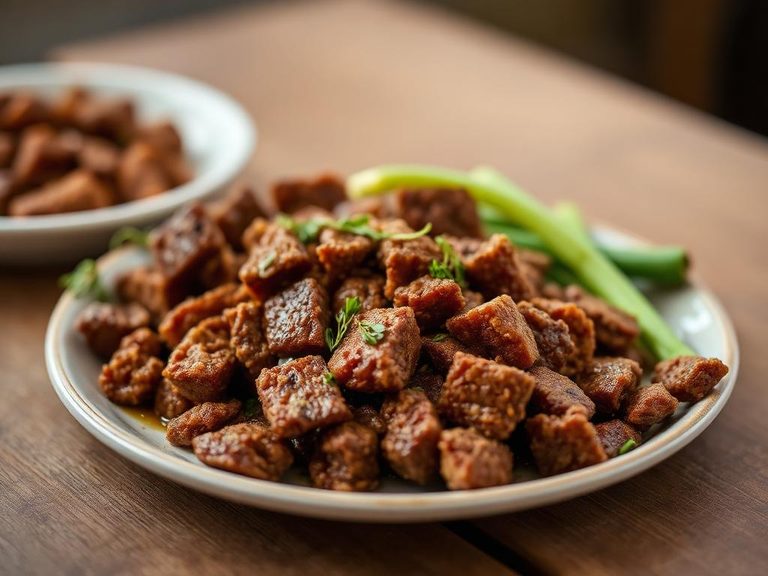
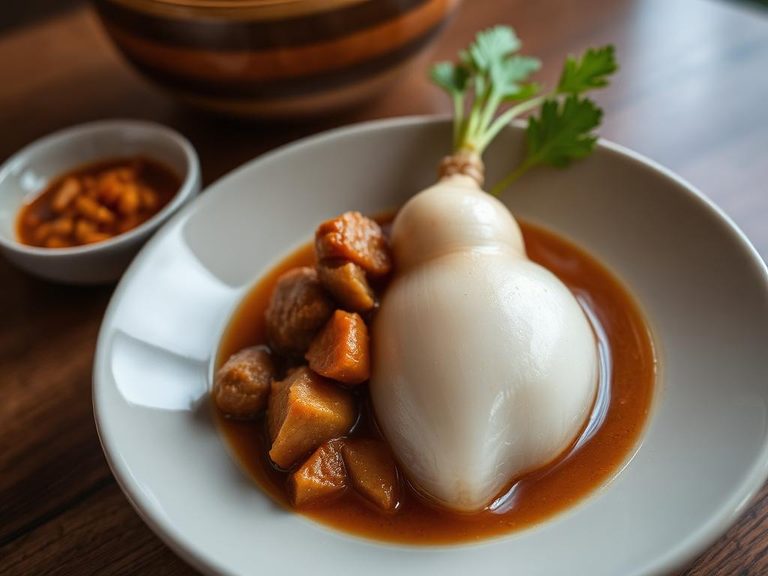
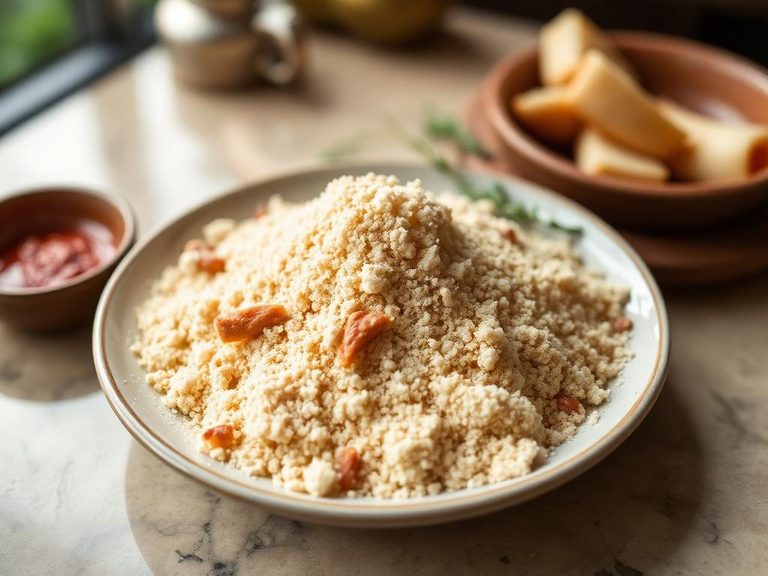
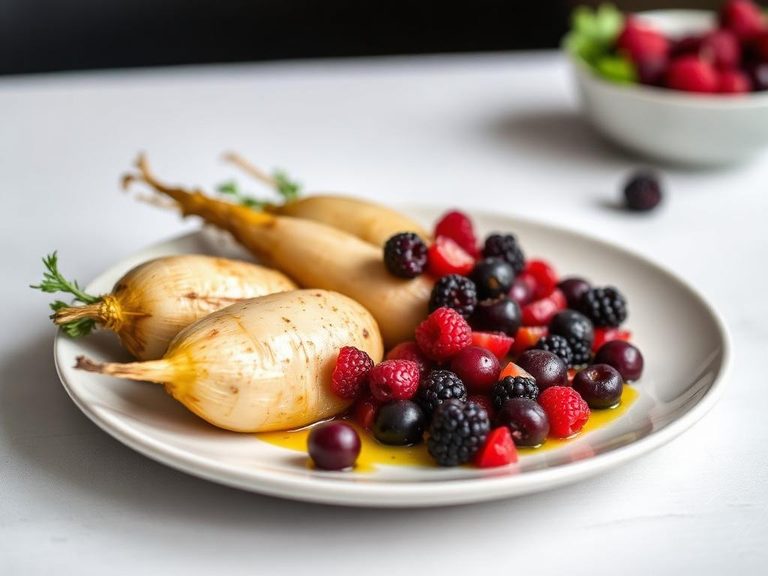
🌍 Where it's eaten
💡 Did you know?
The prairie turnip was so vital to Plains tribes that its harvesting season was a major community event, and the roots were often braided into long strands for sun-drying and winter storage.
Full nutrition (USDA data · scales with serving)
| Water | 60.7 g |
| Energy | 156 kcal |
| Energy | 654 kj |
| Protein | 2.6 g |
| Total lipid (fat) | 0.36 g |
| Ash | 0.65 g |
| Carbohydrate, by difference | 35.7 g |
| Fiber, total dietary | 8.0 g |
| Total Sugars | 0.82 g |
| Sucrose | 0.16 g |
| Glucose | 0.42 g |
| Fructose | 0.17 g |
| Lactose | 0.00 g |
| Maltose | 0.07 g |
| Galactose | 0.00 g |
| Starch | 23.5 g |
| Calcium, Ca | 130 mg |
| Iron, Fe | 1.3 mg |
| Magnesium, Mg | 63.0 mg |
| Phosphorus, P | 31.0 mg |
| Potassium, K | 156 mg |
| Sodium, Na | 5.0 mg |
| Zinc, Zn | 0.37 mg |
| Copper, Cu | 0.05 mg |
| Manganese, Mn | 0.27 mg |
| Selenium, Se | 14.7 ug |
| Vitamin C, total ascorbic acid | 5.5 mg |
| Thiamin | 0.18 mg |
| Riboflavin | 0.09 mg |
| Niacin | 1.1 mg |
| Vitamin B-6 | 0.47 mg |
| Folate, total | 10.0 ug |
| Folate, food | 10.0 ug |
| Choline, total | 4.8 mg |
| Betaine | 0.10 mg |
| Vitamin K (phylloquinone) | 0.00 ug |
| Vitamin K (Dihydrophylloquinone) | 0.00 ug |
| Vitamin K (Menaquinone-4) | 0.00 ug |
FAQ
Are prairie turnips the same as regular turnips?
No. Prairie turnips (Psoralea esculenta) are the root of a legume, while common turnips (Brassica rapa) are from the mustard family. They are botanically unrelated and have different flavors and nutritional profiles.
How were prairie turnips traditionally prepared?
They were often peeled, sliced, and sun-dried into thin chips for long-term storage. The dried chips could be rehydrated in soups or ground into a flour to thicken stews and make bread.
Can I eat prairie turnips raw?
Yes, they can be eaten raw when young and tender, offering a crisp, nutty flavor. However, cooking is recommended for older roots and for easier digestion.
Nutrient density (calculated · NRF9.3)
Nutrient Rich Foods index: beneficial nutrients (protein, fiber, vitamins, minerals) minus saturated fat, added sugar & sodium, per 100 kcal.
NRF9.3 index — Fulgoni, Keast & Drewnowski, 2009. Computed from USDA nutrients.
Weight-loss friendliness (composite index)
Energy density 1.56 kcal/g · 7% calories from protein · 8.0 g fiber · 0.8 g sugar per 100 g.
Composite of energy density (Rolls et al., 1999), protein & fiber satiety, minus sugar. A calculated heuristic — ranks satiety-per-calorie, not a clinical measure.
Dietary load (calculated from USDA values)
Potential renal acid load. Positive = acid-forming, negative = alkaline-forming.
Sodium-to-potassium ratio: 0.03 (lower is better — aim for ≤ 1)
Sodium:potassium per WHO potassium guidance. Computed from USDA nutrients.