

Malabar spinach, cooked
Whole food · Vegetables and Vegetable Products

Photo: Wikipedia
Malabar spinach, or Basella alba, is a lush, vining plant often used as a leafy green in hot climates where true spinach wilts. When cooked, its thick, succulent leaves and stems develop a slightly mucilaginous, silky texture similar to okra, with a mild, earthy flavor. Nutritionally, it's a low-calorie powerhouse, providing a solid dose of fiber and protein for its caloric cost.
Calorie split: 40% protein · 36% carbs · 24% fat
↓ Full nutrition💚 Why it's loved
People love Malabar spinach for its ability to thrive in heat and rain, providing a reliable, nutritious green when other crops fail. Its unique, hearty texture holds up beautifully in stews and curries, adding body and a subtle, earthy flavor without overpowering other ingredients.
⚠️ Watch-outs & how to enjoy it better
The mucilaginous (slimy) texture when cooked can be off-putting to some, similar to okra or natto. To minimize this, cook it quickly with acidic ingredients like tomatoes, tamarind, or lemon juice, which help break down the mucilage. It also contains oxalates, which can contribute to kidney stones in susceptible individuals; pairing it with calcium-rich foods and staying well-hydrated can help mitigate this.
Key benefits
- Excellent source of vitamins A and C, supporting immune and skin health.
- High in calcium and iron, important for bone health and oxygen transport.
- Rich in antioxidants like beta-carotene and lutein.
- Provides dietary fiber for digestive health.
- Very low in calories, making it ideal for volume eating.
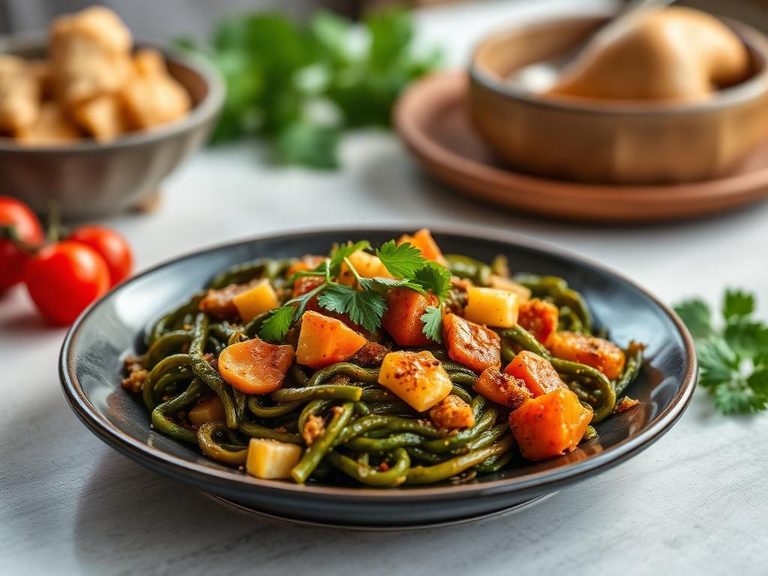
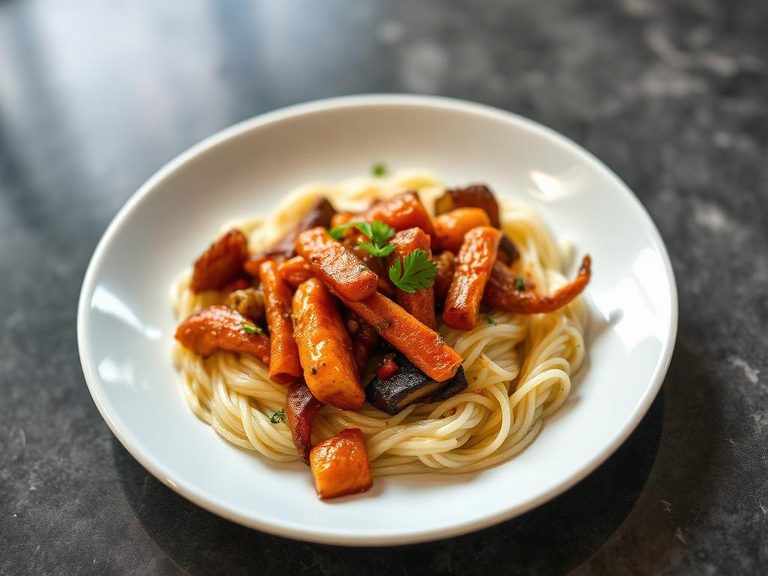
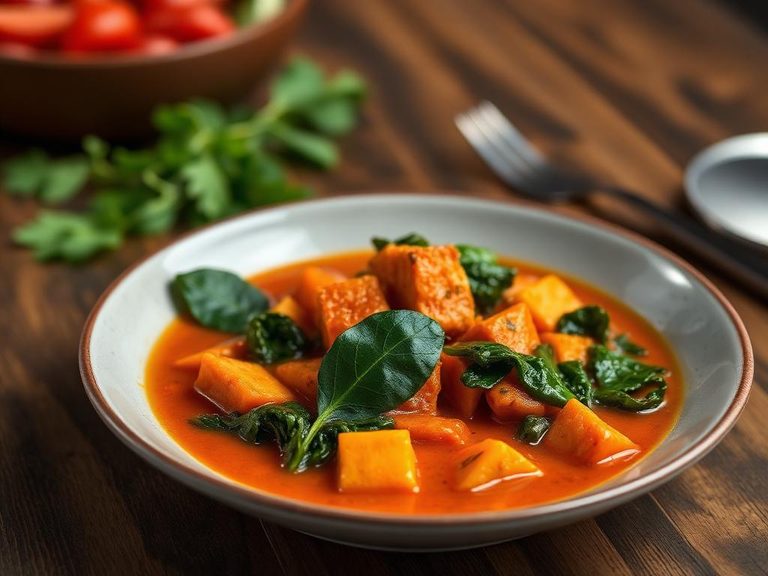
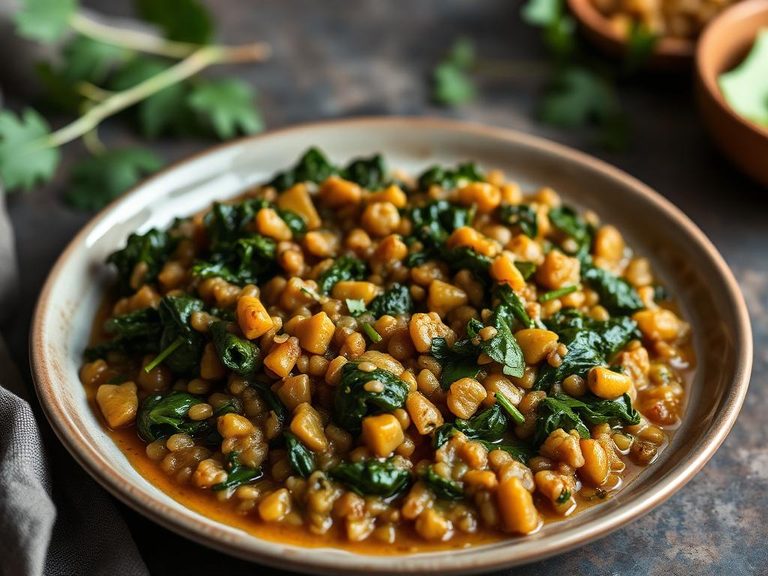
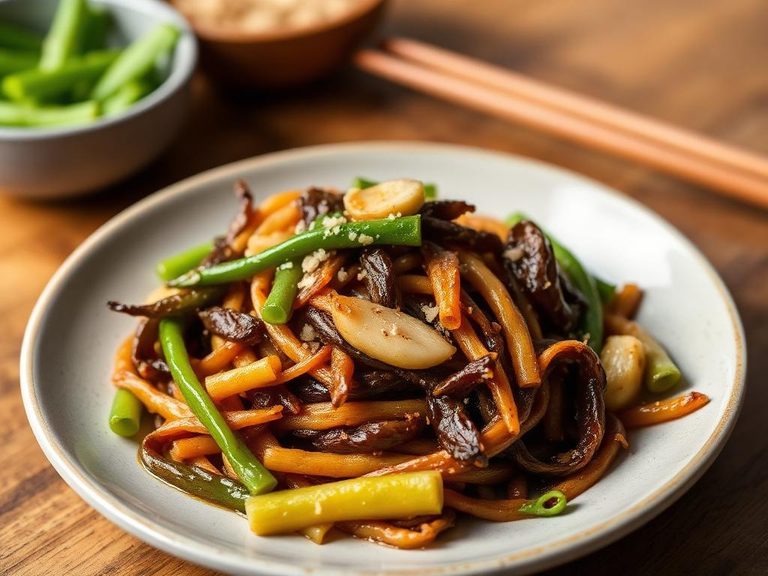
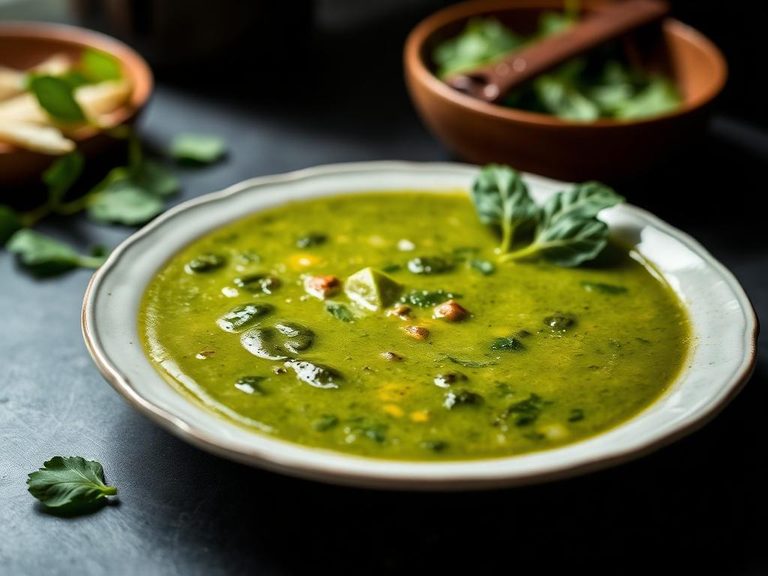
🍽️ Popular dishes
🌍 Where it's eaten
💡 Did you know?
Despite its common name, Malabar spinach is not a true spinach (Spinacia oleracea) at all; it belongs to the Basellaceae family, making it more closely related to plants like beets and quinoa.
Full nutrition (USDA data · scales with serving)
| Water | 92.5 g |
| Energy | 23.0 kcal |
| Energy | 96.0 kj |
| Protein | 3.0 g |
| Total lipid (fat) | 0.78 g |
| Ash | 1.0 g |
| Carbohydrate, by difference | 2.7 g |
| Fiber, total dietary | 2.1 g |
| Calcium, Ca | 124 mg |
| Iron, Fe | 1.5 mg |
| Magnesium, Mg | 48.0 mg |
| Phosphorus, P | 36.0 mg |
| Potassium, K | 256 mg |
| Sodium, Na | 55.0 mg |
| Zinc, Zn | 0.30 mg |
| Copper, Cu | 0.11 mg |
| Manganese, Mn | 0.26 mg |
| Selenium, Se | 0.90 ug |
| Vitamin C, total ascorbic acid | 5.9 mg |
| Thiamin | 0.11 mg |
| Riboflavin | 0.13 mg |
| Niacin | 0.79 mg |
| Pantothenic acid | 0.14 mg |
| Vitamin B-6 | 0.09 mg |
| Folate, total | 114 ug |
| Folic acid | 0.00 ug |
| Folate, food | 114 ug |
| Folate, DFE | 114 ug |
| Vitamin B-12 | 0.00 ug |
| Vitamin A, RAE | 58.0 ug |
| Retinol | 0.00 ug |
| Vitamin A, IU | 1158 iu |
| Vitamin D (D2 + D3), International Units | 0.00 iu |
| Vitamin D (D2 + D3) | 0.00 ug |
Fat & fatty acid profile (per 100g)
| Fatty acids, total trans | 0.00 g |
| Cholesterol | 0.00 mg |
FAQ
Is Malabar spinach the same as regular spinach?
No. They are from completely different plant families. Malabar spinach (Basella alba) is a heat-loving vine, while true spinach (Spinacia oleracea) is a cool-season crop. They have different textures and nutritional profiles.
How do I reduce the sliminess when cooking?
Cook it briefly with acidic ingredients like tomatoes, vinegar, or citrus juice. Adding a splash of yogurt or coconut milk can also balance the texture. Avoid overcooking in large volumes of water.
Can I eat Malabar spinach raw?
While possible, it's not common. The leaves are thick and can have a slightly sticky texture uncooked. It is most commonly enjoyed cooked in soups, curries, and stir-fries.
Nutrient density (calculated · NRF9.3)
Nutrient Rich Foods index: beneficial nutrients (protein, fiber, vitamins, minerals) minus saturated fat, added sugar & sodium, per 100 kcal.
NRF9.3 index — Fulgoni, Keast & Drewnowski, 2009. Computed from USDA nutrients.
Weight-loss friendliness (composite index)
Energy density 0.23 kcal/g · 52% calories from protein · 2.1 g fiber · 0.0 g sugar per 100 g.
Composite of energy density (Rolls et al., 1999), protein & fiber satiety, minus sugar. A calculated heuristic — ranks satiety-per-calorie, not a clinical measure.
Dietary load (calculated from USDA values)
Potential renal acid load. Positive = acid-forming, negative = alkaline-forming.
Sodium-to-potassium ratio: 0.21 (lower is better — aim for ≤ 1)
Sodium:potassium per WHO potassium guidance. Computed from USDA nutrients.