

Fungi, Cloud ears, dried
Whole food · Vegetables and Vegetable Products

Photo: Wikipedia
Cloud ear fungus, when dried, becomes a brittle, dark, crinkled disc that transforms into a springy, crunchy, and mildly earthy delight upon rehydration. It is prized not for a strong flavor, but for its unique, snappy texture that absorbs sauces beautifully. Nutritionally, it is a fiber powerhouse, offering an impressive 70g of dietary fiber per 100g in its dried form.
Calorie split: 11% protein · 87% carbs · 2% fat
↓ Full nutrition💚 Why it's loved
People love it for its unparalleled crunchy texture that adds a delightful contrast to stir-fries and soups. Its neutral taste makes it a versatile canvas for absorbing the flavors of garlic, ginger, and savory sauces in countless Asian dishes.
⚠️ Watch-outs & how to enjoy it better
Its high fiber content can cause digestive discomfort or bloating if consumed in large quantities, especially for those not accustomed to a high-fiber diet. To counteract this, start with small portions, ensure thorough chewing, and drink plenty of water. It is also often sold with added salt, so rinsing it well after soaking can reduce sodium intake.
Key benefits
- Extremely high in dietary fiber, promoting gut health.
- Very low in fat and sugar, suitable for calorie-conscious diets.
- Provides a good source of plant-based protein.
- Contains essential minerals like iron and copper.
- Adds satisfying texture and volume to dishes with minimal calories.
🍽️ Popular dishes

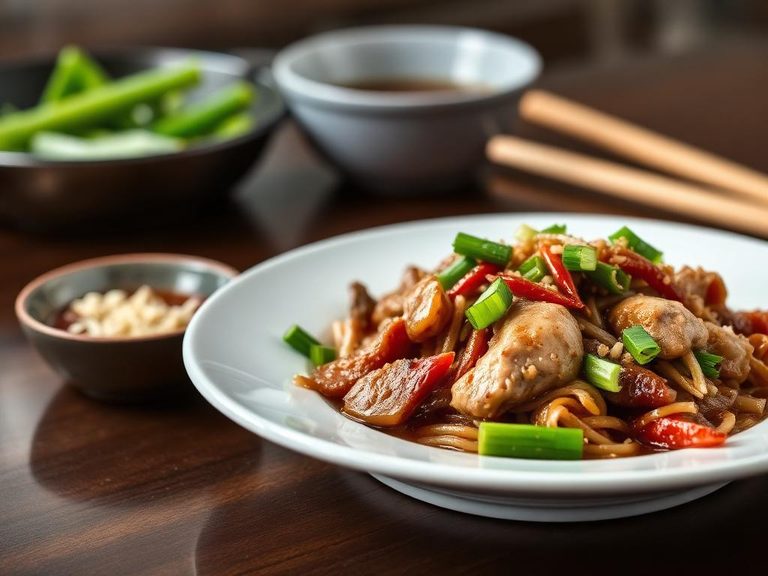

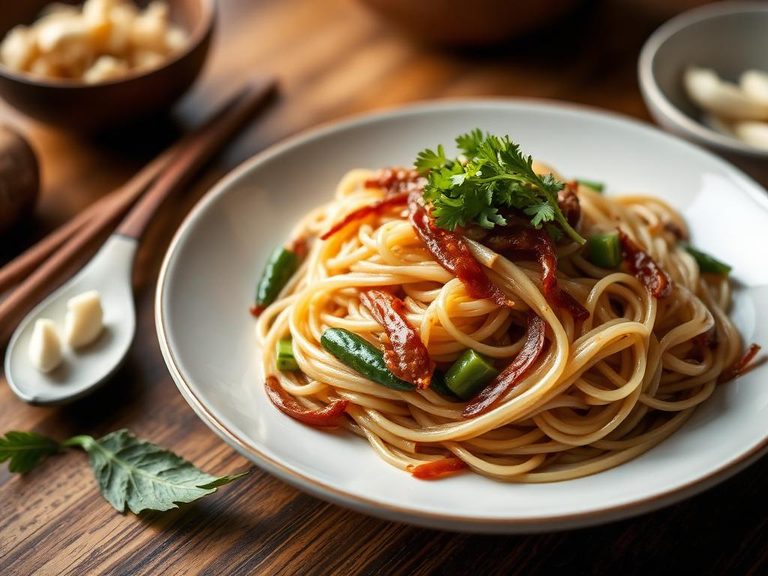

🌍 Where it's eaten
💡 Did you know?
The 'cloud ear' name comes from its shape, which resembles a human ear, and its tendency to grow on decaying wood in misty, humid forests, giving it a cloud-like, ephemeral appearance in its natural habitat.
Full nutrition (USDA data · scales with serving)
| Water | 14.8 g |
| Energy | 284 kcal |
| Energy | 1190 kj |
| Protein | 9.3 g |
| Total lipid (fat) | 0.73 g |
| Ash | 2.2 g |
| Carbohydrate, by difference | 73.0 g |
| Fiber, total dietary | 70.1 g |
| Calcium, Ca | 159 mg |
| Iron, Fe | 5.9 mg |
| Magnesium, Mg | 83.0 mg |
| Phosphorus, P | 184 mg |
| Potassium, K | 754 mg |
| Sodium, Na | 35.0 mg |
| Zinc, Zn | 1.3 mg |
| Copper, Cu | 0.18 mg |
| Manganese, Mn | 2.0 mg |
| Selenium, Se | 43.4 ug |
| Vitamin C, total ascorbic acid | 0.00 mg |
| Thiamin | 0.01 mg |
| Riboflavin | 0.84 mg |
| Niacin | 6.3 mg |
| Pantothenic acid | 0.48 mg |
| Vitamin B-6 | 0.11 mg |
| Folate, total | 38.0 ug |
| Folic acid | 0.00 ug |
| Folate, food | 38.0 ug |
| Folate, DFE | 38.0 ug |
| Vitamin B-12 | 0.00 ug |
| Vitamin A, RAE | 0.00 ug |
| Retinol | 0.00 ug |
| Vitamin A, IU | 0.00 iu |
| Vitamin D (D2 + D3), International Units | 0.00 iu |
| Vitamin D (D2 + D3) | 0.00 ug |
Fat & fatty acid profile (per 100g)
| Fatty acids, total trans | 0.00 g |
| Cholesterol | 0.00 mg |
FAQ
How do I rehydrate dried cloud ear fungus?
Soak it in warm water for 20-30 minutes until it becomes soft and pliable. It will expand significantly. Rinse thoroughly to remove any grit from the crevices before cooking.
What does it taste like?
It has a very mild, slightly earthy flavor on its own. Its primary culinary value is its unique, springy, crunchy texture and its ability to absorb the flavors of the sauces and seasonings it's cooked with.
Is it the same as wood ear mushroom?
Yes, they are the same thing. 'Cloud ear' and 'wood ear' (or 'black fungus') are common names for the same species, Auricularia auricula-judae.
Nutrient density (calculated · NRF9.3)
Nutrient Rich Foods index: beneficial nutrients (protein, fiber, vitamins, minerals) minus saturated fat, added sugar & sodium, per 100 kcal.
NRF9.3 index — Fulgoni, Keast & Drewnowski, 2009. Computed from USDA nutrients.
Weight-loss friendliness (composite index)
Energy density 2.84 kcal/g · 13% calories from protein · 70.1 g fiber · 0.0 g sugar per 100 g.
Composite of energy density (Rolls et al., 1999), protein & fiber satiety, minus sugar. A calculated heuristic — ranks satiety-per-calorie, not a clinical measure.
Dietary load (calculated from USDA values)
Potential renal acid load. Positive = acid-forming, negative = alkaline-forming.
Sodium-to-potassium ratio: 0.05 (lower is better — aim for ≤ 1)
Sodium:potassium per WHO potassium guidance. Computed from USDA nutrients.