Stir-fried Glass Noodles with Wood Ear
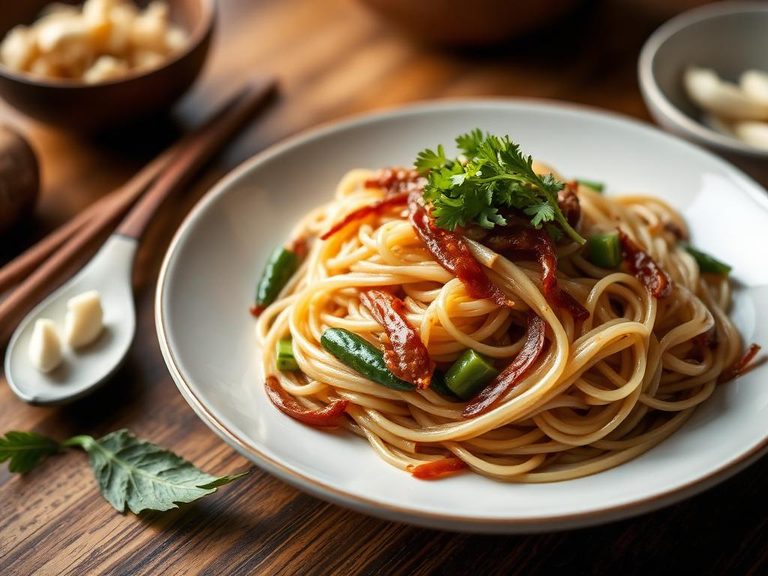
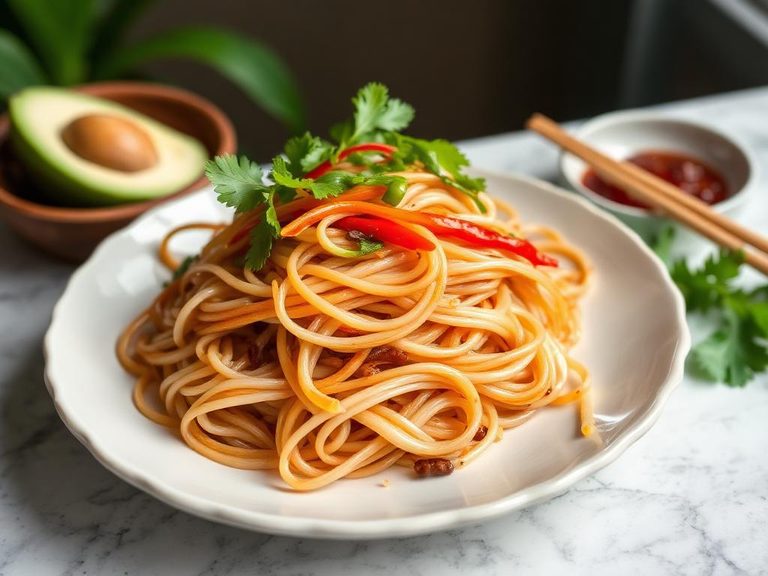
Stir-fried Glass Noodles with Wood Ear, known as 'Mùxū Fěnsī' (木须粉丝) in Chinese, is a classic home-style dish featuring translucent mung bean starch noodles stir-fried with black wood ear mushrooms, often with scrambled egg and a savory sauce. It originates from Northern Chinese cuisine, particularly associated with Beijing and Shandong styles, and is valued for its contrasting textures and quick preparation.
🍽️ Nutrition at a glance
This dish is primarily a carbohydrate source from the starch noodles, with moderate protein from eggs and very little fat if prepared traditionally. It provides dietary fiber from the wood ear mushrooms and is a relatively low-calorie, satisfying meal option.
Nutrition breakdown
| Calories | 220 kcal |
| Protein | 6 g |
| Carbs | 38 g |
| Fat | 5 g |
| Fiber | 3 g |
| Sugar | 2 g |
| Sodium | 480 mg |
| Iron | 3 mg |
| Potassium | 180 mg |
| Calcium | 40 mg |
| Magnesium | 25 mg |
| Phosphorus | 80 mg |
| Vitamin B2 (Riboflavin) | 0.1 mg |
| Selenium | 8 µg |
| Copper | 0.2 mg |
Per 1 cup (240 g) · estimated, varies by recipe
💡 What's interesting
Culturally, it's a staple of 'jiācháng cài' (home-style cooking), showcasing how simple, pantry-stable ingredients like dried noodles and mushrooms can create a flavorful dish. Nutritionally, wood ear mushrooms are unique for containing iron and are prized in Chinese cuisine for their crunchy texture and purported health benefits.