

McDONALD'S, Sausage McMUFFIN
Whole food · Fast Foods
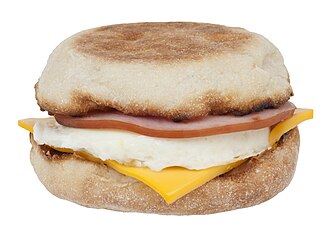
Photo: Wikipedia
The McDonald's Sausage McMuffin is a hot, savory breakfast sandwich featuring a seasoned pork sausage patty, a slice of American cheese, and a toasted English muffin. It delivers a satisfyingly salty, umami-rich flavor with a crisp, crumbly sausage texture contrasted by the soft, slightly chewy muffin. Nutritionally, it's a dense source of calories and fat, providing a quick energy boost but with minimal fiber.
Calorie split: 15% protein · 29% carbs · 56% fat
↓ Full nutrition💚 Why it's loved
People love it for its reliable, comforting combination of salty, savory sausage and melted cheese on a warm muffin, making it a classic, convenient breakfast staple. It's deeply embedded in fast-food culture as a go-to morning meal.
⚠️ Watch-outs & how to enjoy it better
It is high in saturated fat, sodium, and calories, which can contribute to blood pressure and blood sugar spikes, especially for those with sensitivities. To counteract this, pair it with a side of fruit or a small salad for fiber, drink water instead of soda, and consider eating only half or sharing it.
Key benefits
- High in protein for satiety
- Provides quick energy from carbohydrates
- Contains calcium from the cheese
- Convenient and widely available
- Consistent taste and portion size
🍽️ Popular dishes
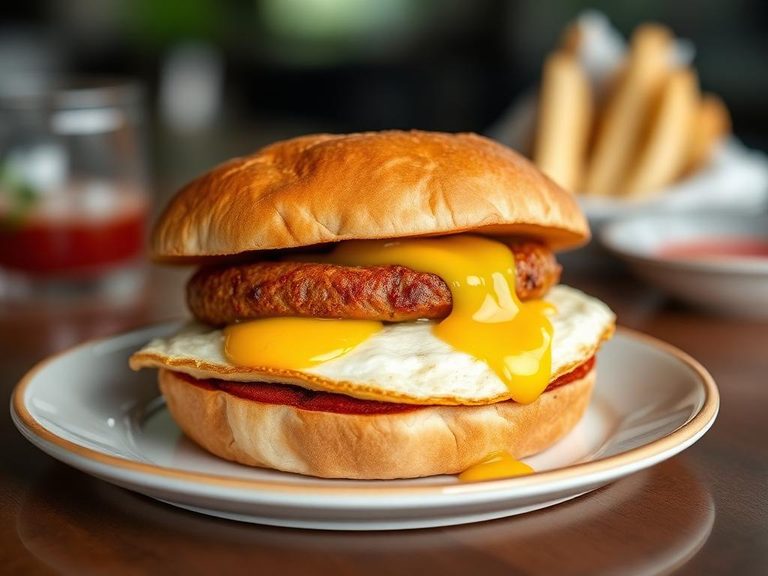
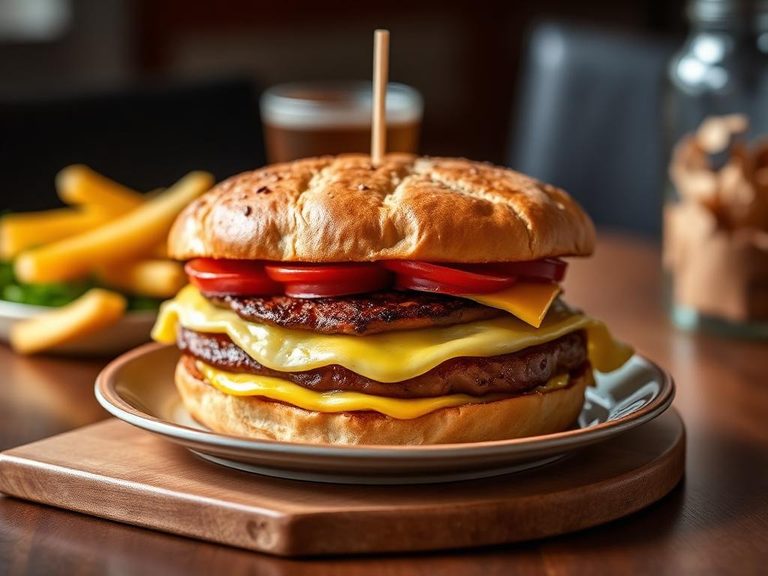


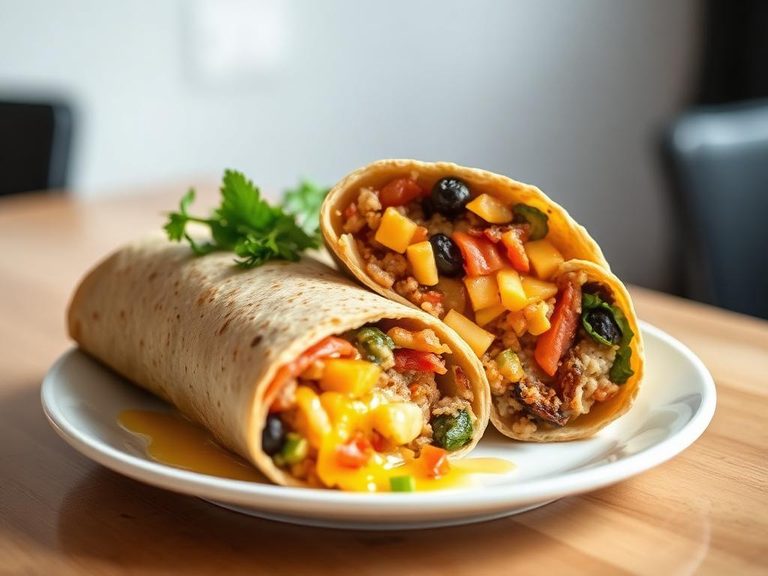
🌍 Where it's eaten
💡 Did you know?
The original Egg McMuffin was created in 1972 by a McDonald's franchisee to mimic Eggs Benedict, and the Sausage McMuffin followed shortly after as a popular variant.
Full nutrition (USDA data · scales with serving)
| Water | 38.9 g |
| Energy | 333 kcal |
| Energy | 1395 kj |
| Protein | 12.7 g |
| Total lipid (fat) | 21.1 g |
| Ash | 2.8 g |
| Carbohydrate, by difference | 24.5 g |
| Fiber, total dietary | 1.4 g |
| Total Sugars | 1.9 g |
| Sucrose | 0.08 g |
| Glucose | 0.46 g |
| Fructose | 0.29 g |
| Lactose | 0.43 g |
| Maltose | 0.68 g |
| Galactose | 0.00 g |
| Calcium, Ca | 224 mg |
| Iron, Fe | 2.0 mg |
| Magnesium, Mg | 21.0 mg |
| Phosphorus, P | 163 mg |
| Potassium, K | 188 mg |
| Sodium, Na | 693 mg |
| Zinc, Zn | 1.3 mg |
| Copper, Cu | 0.09 mg |
| Manganese, Mn | 0.25 mg |
| Vitamin C, total ascorbic acid | 0.00 mg |
| Thiamin | 0.35 mg |
| Riboflavin | 0.29 mg |
| Niacin | 4.2 mg |
| Pantothenic acid | 0.55 mg |
| Vitamin B-6 | 0.15 mg |
| Folate, total | 69.0 ug |
| Vitamin B-12 | 0.45 ug |
| Vitamin A, IU | 260 iu |
| Vitamin E (alpha-tocopherol) | 0.28 mg |
Fat & fatty acid profile (per 100g)
| Fatty acids, total saturated | 7.3 g |
| Fatty acids, total monounsaturated | 7.7 g |
| Fatty acids, total polyunsaturated | 3.2 g |
| Cholesterol | 39.0 mg |
FAQ
How does the Sausage McMuffin compare nutritionally to the regular Egg McMuffin?
The Sausage McMuffin is higher in calories, fat, and sodium but also has slightly more protein than the standard Egg McMuffin, which uses Canadian bacon.
Is the sausage patty made from pork?
Yes, the sausage patty is primarily made from seasoned pork, along with water, salt, and spices.
Can I customize my order at McDonald's?
Yes, you can typically request it without cheese or ask for extra pickles on the side, though menu modifications vary by location.
Nutrient density (calculated · NRF9.3)
Nutrient Rich Foods index: beneficial nutrients (protein, fiber, vitamins, minerals) minus saturated fat, added sugar & sodium, per 100 kcal.
NRF9.3 index — Fulgoni, Keast & Drewnowski, 2009. Computed from USDA nutrients.
Weight-loss friendliness (composite index)
Energy density 3.33 kcal/g · 15% calories from protein · 1.4 g fiber · 1.9 g sugar per 100 g.
Composite of energy density (Rolls et al., 1999), protein & fiber satiety, minus sugar. A calculated heuristic — ranks satiety-per-calorie, not a clinical measure.
Dietary load (calculated from USDA values)
Potential renal acid load. Positive = acid-forming, negative = alkaline-forming.
Sodium-to-potassium ratio: 3.69 (lower is better — aim for ≤ 1)
Sodium:potassium per WHO potassium guidance. Computed from USDA nutrients.