

Cereals ready-to-eat, QUAKER, QUAKER OAT CINNAMON LIFE
Whole food · Breakfast Cereals

Photo: Wikipedia
QUAKER OAT CINNAMON LIFE is a sweetened, whole-grain oat cereal shaped like tiny, crunchy letters. It delivers a warm, comforting cinnamon flavor with a satisfyingly crisp texture that softens slightly in milk. Nutritionally, it's a high-carb, high-sugar option that provides a quick energy boost.
Calorie split: 9% protein · 81% carbs · 9% fat
↓ Full nutrition💚 Why it's loved
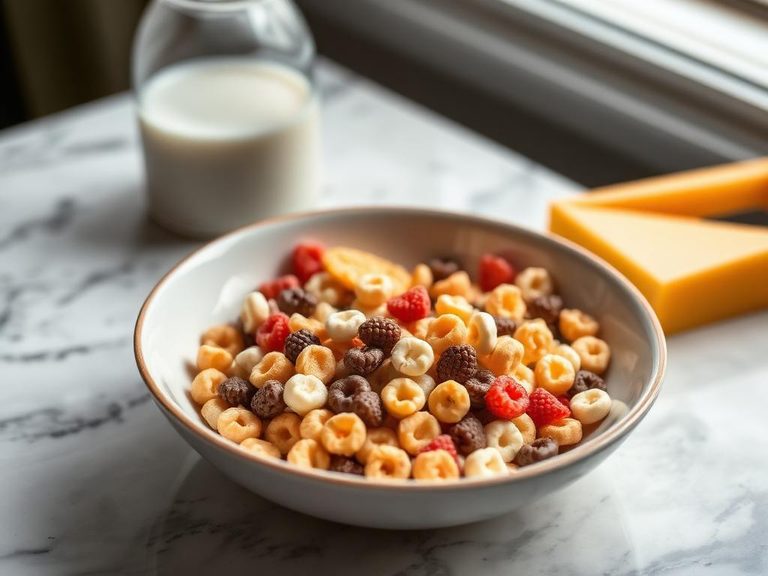
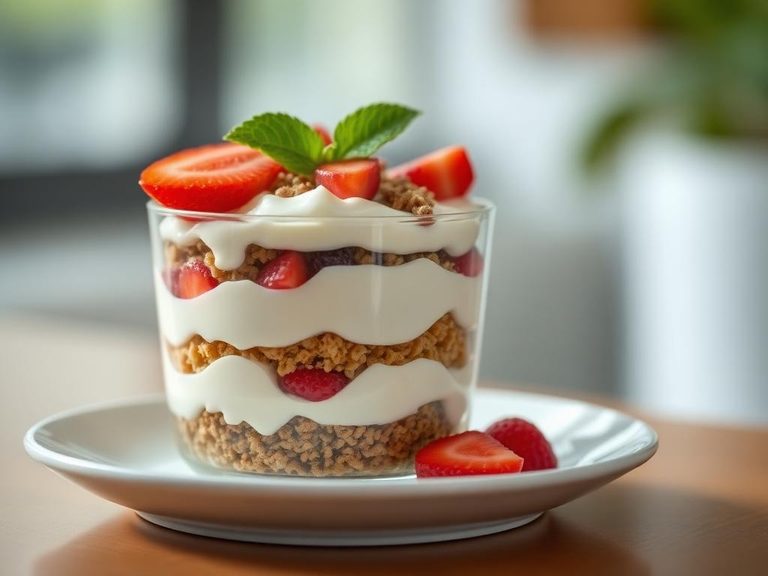
People love it for its nostalgic, comforting cinnamon-sugar flavor and the fun, playful letter shapes that make breakfast engaging for all ages. It's a versatile staple that works as a quick cereal, a crunchy yogurt topping, or a snack straight from the box.
⚠️ Watch-outs & how to enjoy it better
With 25.18g of sugar per 100g, it can cause a rapid blood-sugar spike, making it a poor choice for those managing diabetes or seeking sustained energy. To counteract this, pair it with a source of protein and healthy fat like Greek yogurt or a handful of nuts, and practice strict portion control. It also contains common allergens like wheat.
Key benefits
- Excellent source of whole-grain oats
- Good source of dietary fiber
- Fortified with essential vitamins and minerals
- Provides a quick, convenient energy source
- Contains plant-based protein from oats
🍽️ Popular dishes

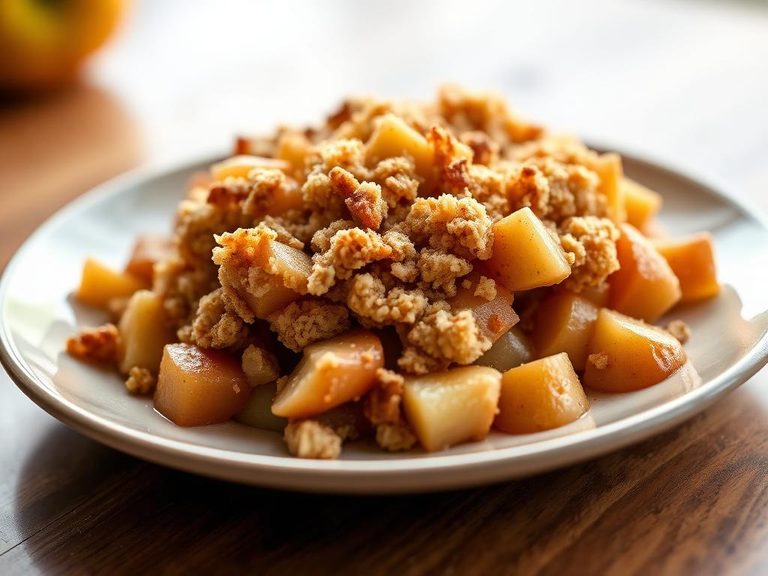
🌍 Where it's eaten
💡 Did you know?
The cereal was originally introduced in 1958 and was one of the first to use edible ink to print letters on each piece, making it a pioneer in interactive breakfast foods.
Full nutrition (USDA data · scales with serving)
| Water | 4.3 g |
| Energy | 374 kcal |
| Energy | 1563 kj |
| Protein | 9.1 g |
| Total lipid (fat) | 4.1 g |
| Ash | 3.4 g |
| Carbohydrate, by difference | 79.0 g |
| Fiber, total dietary | 6.3 g |
| Total Sugars | 25.2 g |
| Calcium, Ca | 387 mg |
| Iron, Fe | 23.2 mg |
| Magnesium, Mg | 90.0 mg |
| Phosphorus, P | 390 mg |
| Potassium, K | 260 mg |
| Sodium, Na | 463 mg |
| Zinc, Zn | 13.8 mg |
| Vitamin C, total ascorbic acid | 0.10 mg |
| Thiamin | 1.4 mg |
| Riboflavin | 1.6 mg |
| Niacin | 18.2 mg |
| Vitamin B-6 | 1.8 mg |
| Folate, total | 1318 ug |
| Folic acid | 1299 ug |
| Folate, food | 19.0 ug |
| Folate, DFE | 2227 ug |
| Vitamin B-12 | 0.00 ug |
| Vitamin A, RAE | 2.0 ug |
| Vitamin A, IU | 35.0 iu |
| Vitamin E (alpha-tocopherol) | 0.55 mg |
| Vitamin E, added | 0.00 mg |
| Vitamin D (D2 + D3), International Units | 0.00 iu |
| Vitamin D (D2 + D3) | 0.00 ug |
| Alcohol, ethyl | 0.00 g |
| Caffeine | 0.00 mg |
| Theobromine | 0.00 mg |
Fat & fatty acid profile (per 100g)
| Fatty acids, total saturated | 0.77 g |
| Fatty acids, total monounsaturated | 1.4 g |
| Fatty acids, total polyunsaturated | 1.3 g |
| Fatty acids, total trans | 0.00 g |
| Cholesterol | 0.00 mg |
FAQ
Is this cereal healthy?
It's a source of whole grains and fiber, but it is also high in added sugar. It can be part of a balanced diet when eaten in moderation and paired with protein and fat to mitigate blood sugar impact.
Is it gluten-free?
No. While oats are naturally gluten-free, this cereal is processed in facilities that handle wheat, and the ingredients list may include wheat. It is not certified gluten-free.
Can I eat it on a diet?
Due to its high sugar and calorie density, it requires strict portion control. A measured serving (about 1 cup/42g) paired with unsweetened milk and protein can fit into a calorie-controlled plan.
Nutrient density (calculated · NRF9.3)
Nutrient Rich Foods index: beneficial nutrients (protein, fiber, vitamins, minerals) minus saturated fat, added sugar & sodium, per 100 kcal.
NRF9.3 index — Fulgoni, Keast & Drewnowski, 2009. Computed from USDA nutrients.
Weight-loss friendliness (composite index)
Energy density 3.74 kcal/g · 10% calories from protein · 6.3 g fiber · 25.2 g sugar per 100 g.
Composite of energy density (Rolls et al., 1999), protein & fiber satiety, minus sugar. A calculated heuristic — ranks satiety-per-calorie, not a clinical measure.
Dietary load (calculated from USDA values)
Potential renal acid load. Positive = acid-forming, negative = alkaline-forming.
Sodium-to-potassium ratio: 1.78 (lower is better — aim for ≤ 1)
Sodium:potassium per WHO potassium guidance. Computed from USDA nutrients.