

Cereals ready-to-eat, MALT-O-MEAL, CHOCOLATE MARSHMALLOW MATEYS
Whole food · Breakfast Cereals

Photo: Wikipedia
Malt-O-Meal Chocolate Marshmallow Mateys is a sweet, crunchy ready-to-eat cereal featuring chocolate-flavored oat pieces and colorful dehydrated marshmallow shapes. It delivers a nostalgic, sugary crunch with a light, airy texture. Nutritionally, it is a high-carbohydrate, high-sugar option providing quick energy but minimal protein or fat.
Calorie split: 4% protein · 88% carbs · 8% fat
↓ Full nutrition💚 Why it's loved
People love it for the sweet, chocolatey flavor and the playful, crunchy texture contrast with the marshmallows. It evokes strong childhood nostalgia and is a beloved, convenient breakfast or snack staple.
⚠️ Watch-outs & how to enjoy it better
The very high sugar content (over 55g per 100g) can lead to rapid blood-sugar spikes and crashes, offering little sustained energy. To counteract this, pair it with a source of protein (like milk or yogurt) or healthy fat (like nuts) to slow digestion, and practice strict portion control by measuring a single serving.
Key benefits
- Provides quick energy from simple carbohydrates
- Fortified with essential vitamins and minerals
- Convenient and requires no preparation
- Offers a fun, colorful visual appeal
- A familiar, nostalgic comfort food for many
🍽️ Popular dishes
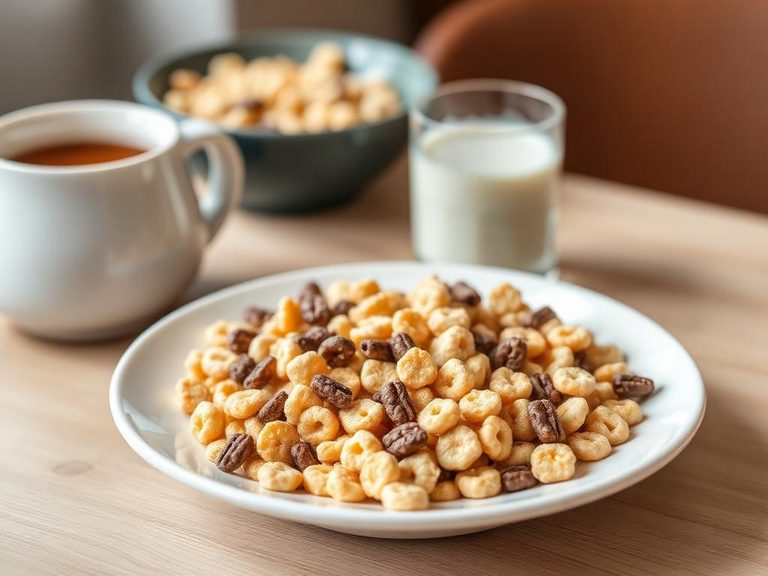


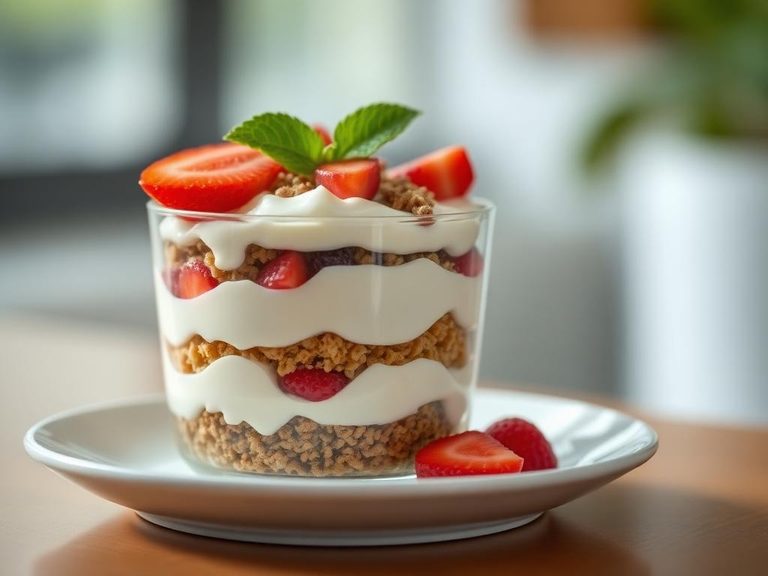
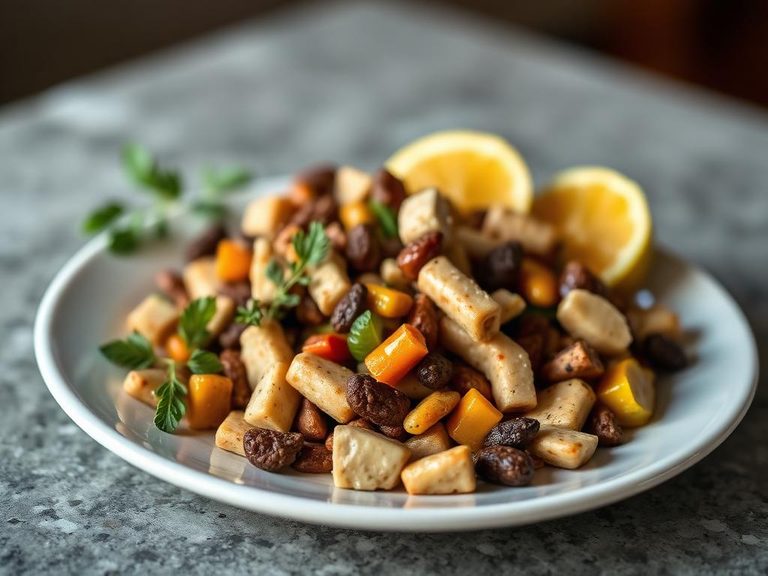
🌍 Where it's eaten
💡 Did you know?
Malt-O-Meal, the brand, was founded in 1919 and was one of the first to sell hot cereal in a box; their ready-to-eat cereals, like this one, are produced in a massive facility in Northfield, Minnesota, that can produce over 2 million pounds of cereal per day.
Full nutrition (USDA data · scales with serving)
| Water | 2.0 g |
| Energy | 392 kcal |
| Energy | 1642 kj |
| Protein | 3.5 g |
| Total lipid (fat) | 3.7 g |
| Ash | 2.6 g |
| Carbohydrate, by difference | 88.2 g |
| Fiber, total dietary | 2.5 g |
| Total Sugars | 55.5 g |
| Calcium, Ca | 267 mg |
| Iron, Fe | 24.0 mg |
| Magnesium, Mg | 30.0 mg |
| Phosphorus, P | 85.0 mg |
| Potassium, K | 183 mg |
| Sodium, Na | 368 mg |
| Zinc, Zn | 10.0 mg |
| Vitamin C, total ascorbic acid | 16.0 mg |
| Thiamin | 1.0 mg |
| Riboflavin | 1.1 mg |
| Niacin | 13.3 mg |
| Vitamin B-6 | 1.3 mg |
| Folate, total | 533 ug |
| Folic acid | 514 ug |
| Folate, food | 19.0 ug |
| Folate, DFE | 893 ug |
| Vitamin B-12 | 4.0 ug |
| Vitamin A, IU | 1333 iu |
| Vitamin E (alpha-tocopherol) | 0.00 mg |
| Vitamin D (D2 + D3), International Units | 133 iu |
| Vitamin D (D2 + D3) | 3.3 ug |
| Vitamin D3 (cholecalciferol) | 3.3 ug |
| Vitamin K (phylloquinone) | 0.00 ug |
| Caffeine | 5.0 mg |
Fat & fatty acid profile (per 100g)
| Fatty acids, total saturated | 1.6 g |
| Fatty acids, total monounsaturated | 1.6 g |
| Fatty acids, total polyunsaturated | 0.00 g |
| Fatty acids, total trans | 0.00 g |
| Cholesterol | 0.00 mg |
FAQ
Is Chocolate Marshmallow Mateys a healthy breakfast?
It is considered a sugary treat rather than a nutritionally balanced breakfast. While it is fortified with vitamins, its high sugar and low protein/fat content means it provides quick energy but lacks staying power. It's best enjoyed occasionally or paired with protein-rich foods like Greek yogurt or milk.
What are the main ingredients?
The primary ingredients are whole grain oat flour, sugar, corn flour, and dehydrated marshmallows (sugar, corn starch, and food coloring). It also contains cocoa processed with alkali, salt, and a vitamin/mineral blend.
Can it be part of a weight management plan?
Due to its high calorie density from sugar and low satiety factors (protein, fiber, fat), it can be challenging for weight management. A measured portion (about 1 cup or 40g) can fit into a calorie-controlled plan, but it's crucial to account for its calories and pair it with filling foods to avoid overeating.
Nutrient density (calculated · NRF9.3)
Nutrient Rich Foods index: beneficial nutrients (protein, fiber, vitamins, minerals) minus saturated fat, added sugar & sodium, per 100 kcal.
NRF9.3 index — Fulgoni, Keast & Drewnowski, 2009. Computed from USDA nutrients.
Weight-loss friendliness (composite index)
Energy density 3.92 kcal/g · 4% calories from protein · 2.5 g fiber · 55.5 g sugar per 100 g.
Composite of energy density (Rolls et al., 1999), protein & fiber satiety, minus sugar. A calculated heuristic — ranks satiety-per-calorie, not a clinical measure.
Dietary load (calculated from USDA values)
Potential renal acid load. Positive = acid-forming, negative = alkaline-forming.
Sodium-to-potassium ratio: 2.01 (lower is better — aim for ≤ 1)
Sodium:potassium per WHO potassium guidance. Computed from USDA nutrients.