

Beverages, V8 V-FUSION Juices, Peach Mango
Whole food · Beverages

Photo: Wikipedia
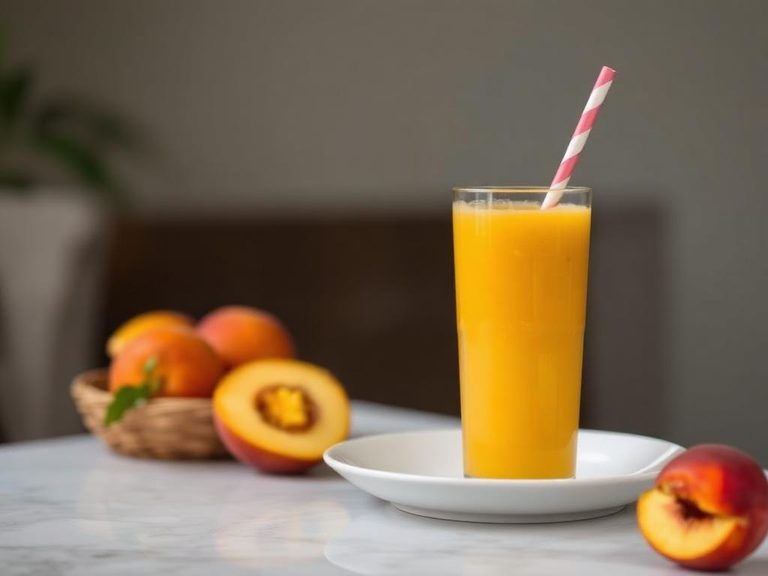
V8 V-Fusion Peach Mango is a smooth, non-carbonated fruit and vegetable juice blend that delivers a vibrant, tropical sweetness from peaches and mangoes, balanced by a subtle, earthy undertone from its vegetable base. It offers a light, refreshing texture with no pulp, making it an easy-to-drink option. Nutritionally, it provides a quick source of energy from its 11.38g of carbohydrates, primarily from natural sugars, with virtually no fat or fiber.
Calorie split: 3% protein · 97% carbs · 0% fat
↓ Full nutrition💚 Why it's loved
People love it for its refreshing, tropical taste that feels like a treat while still being a juice blend. Its smooth consistency and balanced sweetness make it a popular choice for a quick breakfast drink, a post-workout refreshment, or a flavorful addition to smoothies.
⚠️ Watch-outs & how to enjoy it better
The primary concern is its high sugar content (10.57g per 100g), which can cause a rapid blood-sugar spike, especially for those managing diabetes or insulin resistance. To counteract this, pair it with a source of protein or healthy fat (like a handful of nuts or yogurt) to slow sugar absorption, and stick to a smaller portion size (e.g., 120ml) as a treat rather than a full serving.
Key benefits
- Provides a quick source of energy from natural fruit sugars.
- Contains vitamins A and C from its fruit and vegetable blend.
- Offers a convenient way to increase daily fruit and vegetable intake.
- Fat-free and cholesterol-free beverage option.
- Hydrating with a pleasant, sweet flavor profile.
🍽️ Popular dishes
🌍 Where it's eaten
💡 Did you know?
V8 V-Fusion juices are designed to contain one combined serving of fruits and vegetables per 8-ounce glass, a clever way to blend nutritional goals with consumer taste preferences.
Full nutrition (USDA data · scales with serving)
| Water | 87.8 g |
| Energy | 49.0 kcal |
| Energy | 204 kj |
| Protein | 0.41 g |
| Total lipid (fat) | 0.00 g |
| Ash | 0.41 g |
| Carbohydrate, by difference | 11.4 g |
| Fiber, total dietary | 0.00 g |
| Total Sugars | 10.6 g |
| Calcium, Ca | 8.0 mg |
| Iron, Fe | 0.15 mg |
| Magnesium, Mg | 7.0 mg |
| Potassium, K | 85.0 mg |
| Sodium, Na | 28.0 mg |
| Vitamin C, total ascorbic acid | 24.4 mg |
| Vitamin B-6 | 0.02 mg |
| Folate, total | 3.0 ug |
| Folate, food | 3.0 ug |
| Vitamin A, IU | 407 iu |
| Vitamin E (alpha-tocopherol) | 0.55 mg |
Fat & fatty acid profile (per 100g)
| Fatty acids, total trans | 0.00 g |
Amino acid profile (per 100g)
Estimated from Beverages, carbonated, tonic water — USDA does not publish this profile for Beverages.
| Tryptophan | 0.00 g |
| Threonine | 0.00 g |
| Isoleucine | 0.00 g |
| Leucine | 0.00 g |
| Lysine | 0.00 g |
| Methionine | 0.00 g |
| Cystine | 0.00 g |
| Phenylalanine | 0.00 g |
| Tyrosine | 0.00 g |
| Valine | 0.00 g |
| Arginine | 0.00 g |
| Histidine | 0.00 g |
| Alanine | 0.00 g |
| Aspartic acid | 0.00 g |
| Glutamic acid | 0.00 g |
| Glycine | 0.00 g |
| Proline | 0.00 g |
| Serine | 0.00 g |
FAQ
Is V8 V-Fusion Peach Mango juice considered a healthy drink?
It's a better alternative to soda or sugary cocktails as it contains vitamins and no added sugars, but it is still high in natural fruit sugars and lacks the fiber of whole fruit. It's best enjoyed in moderation as part of a balanced diet.
Can I use this juice in cooking or baking?
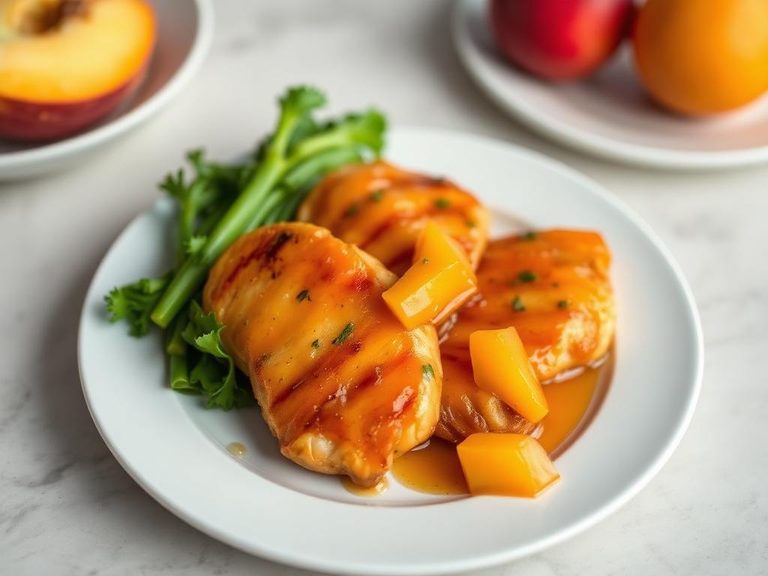
Yes, its sweet and tangy flavor works well as a glaze for meats like chicken or pork, a base for salad dressings, or in place of other fruit juices in recipes for muffins or fruit sauces.
How does the sugar content compare to whole fruit?
While it contains natural sugars, juicing removes the beneficial fiber found in whole peaches and mangoes. This means the sugars are absorbed more quickly, leading to a higher glycemic impact than eating the whole fruit.
Nutrient density (calculated · NRF9.3)
Nutrient Rich Foods index: beneficial nutrients (protein, fiber, vitamins, minerals) minus saturated fat, added sugar & sodium, per 100 kcal.
NRF9.3 index — Fulgoni, Keast & Drewnowski, 2009. Computed from USDA nutrients.
Weight-loss friendliness (composite index)
Energy density 0.49 kcal/g · 3% calories from protein · 0.0 g fiber · 10.6 g sugar per 100 g.
Composite of energy density (Rolls et al., 1999), protein & fiber satiety, minus sugar. A calculated heuristic — ranks satiety-per-calorie, not a clinical measure.
Dietary load (calculated from USDA values)
Sodium-to-potassium ratio: 0.33 (lower is better — aim for ≤ 1)
Sodium:potassium per WHO potassium guidance. Computed from USDA nutrients.