

Sweet Potatoes, french fried, crosscut, frozen, unprepared
Whole food · Vegetables and Vegetable Products
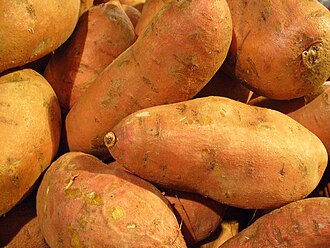
Photo: Wikipedia
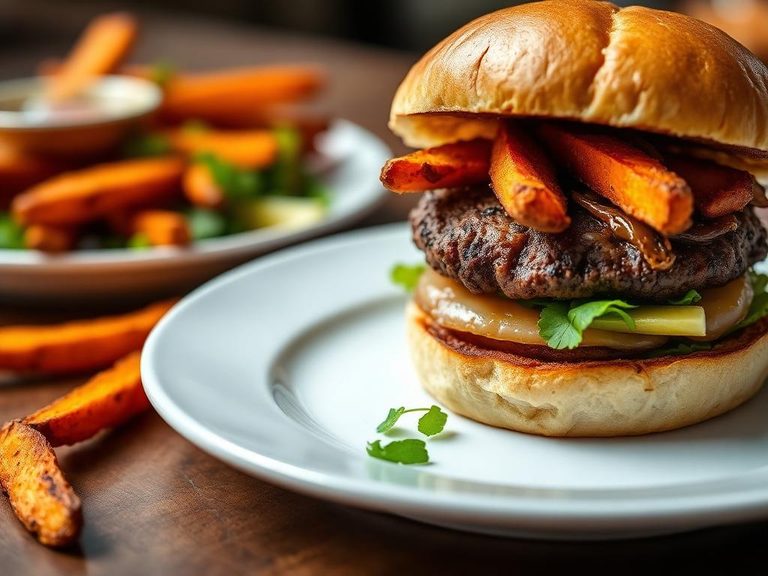
These are cross-cut, frozen sweet potato fries, pre-cut into thick, criss-crossed wedges for maximum crunch. When cooked, they offer a crisp, golden exterior that gives way to a soft, creamy, and naturally sweet interior. Nutritionally, they provide a solid dose of fiber and a moderate amount of fat from their pre-fried state, making them more energy-dense than raw sweet potatoes.
Calorie split: 3% protein · 49% carbs · 48% fat
↓ Full nutrition💚 Why it's loved
People love them for the irresistible combination of a crunchy, salty exterior and a sweet, tender inside. They are a beloved, versatile side dish that pairs well with everything from burgers to grilled meats and can be seasoned in countless ways.
⚠️ Watch-outs & how to enjoy it better
As a pre-fried product, they are higher in fat and calories than baked or air-fried versions, which can contribute to blood sugar spikes. To mitigate this, pair them with a protein source (like grilled chicken) or a healthy fat (like avocado) to slow digestion, practice portion control, and consider finishing them in an air fryer to crisp without adding more oil.
Key benefits
- Good source of dietary fiber (3.4g per 100g).
- Contains beta-carotene, a precursor to vitamin A.
- Provides a quick source of energy from carbohydrates.
- Convenient and consistent for home cooking.
🍽️ Popular dishes
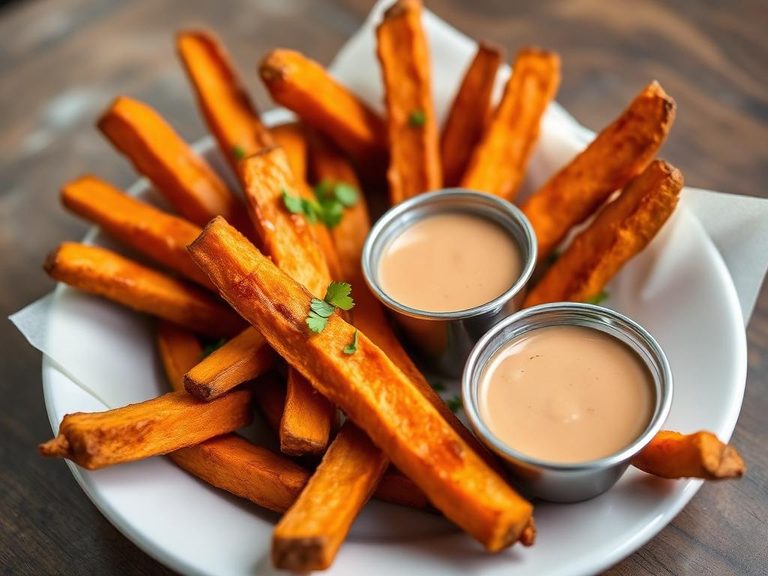

🌍 Where it's eaten
💡 Did you know?
The cross-cut or 'criss-cross' pattern isn't just for looks; it increases the surface area, allowing more edges to become crispy during cooking and creating more nooks to hold seasoning.
Full nutrition (USDA data · scales with serving)
| Water | 60.6 g |
| Energy | 209 kcal |
| Energy | 874 kj |
| Protein | 1.7 g |
| Total lipid (fat) | 11.1 g |
| Ash | 1.1 g |
| Carbohydrate, by difference | 25.5 g |
| Fiber, total dietary | 3.4 g |
| Total Sugars | 6.5 g |
| Calcium, Ca | 39.0 mg |
| Iron, Fe | 0.44 mg |
| Potassium, K | 244 mg |
| Sodium, Na | 214 mg |
| Vitamin C, total ascorbic acid | 4.2 mg |
| Vitamin A, IU | 3320 iu |
Fat & fatty acid profile (per 100g)
| Fatty acids, total saturated | 0.93 g |
| Fatty acids, total trans | 0.21 g |
| Cholesterol | 0.00 mg |
Amino acid profile (per 100g)
Estimated from Babyfood, vegetables, sweet potatoes strained — USDA does not publish this profile for Sweet Potatoes.
| Tryptophan | 0.02 g |
| Threonine | 0.05 g |
| Isoleucine | 0.05 g |
| Leucine | 0.08 g |
| Lysine | 0.04 g |
| Methionine | 0.02 g |
| Cystine | 0.01 g |
| Phenylalanine | 0.06 g |
| Tyrosine | 0.04 g |
| Valine | 0.07 g |
| Arginine | 0.05 g |
| Histidine | 0.03 g |
| Alanine | 0.06 g |
| Aspartic acid | 0.20 g |
| Glutamic acid | 0.12 g |
| Glycine | 0.05 g |
| Proline | 0.06 g |
| Serine | 0.05 g |
FAQ
How do I get them crispy from frozen?
For best results, cook in a single layer on a preheated baking sheet at a high temperature (425°F/220°C), flipping halfway. An air fryer also works exceptionally well for achieving crispiness.
Are they healthier than regular potato fries?
They offer more fiber and beta-carotene than regular fries, but their calorie and fat content can be similar or higher due to pre-frying. The healthiest preparation is unbaked or air-fried without added oil.
Can I cook them from frozen without thawing?
Yes, they are designed to be cooked directly from frozen. Thawing can make them soggy and affect the final texture.
Nutrient density (calculated · NRF9.3)
Nutrient Rich Foods index: beneficial nutrients (protein, fiber, vitamins, minerals) minus saturated fat, added sugar & sodium, per 100 kcal.
NRF9.3 index — Fulgoni, Keast & Drewnowski, 2009. Computed from USDA nutrients.
Weight-loss friendliness (composite index)
Energy density 2.09 kcal/g · 3% calories from protein · 3.4 g fiber · 6.5 g sugar per 100 g.
Composite of energy density (Rolls et al., 1999), protein & fiber satiety, minus sugar. A calculated heuristic — ranks satiety-per-calorie, not a clinical measure.
Dietary load (calculated from USDA values)
Sodium-to-potassium ratio: 0.88 (lower is better — aim for ≤ 1)
Sodium:potassium per WHO potassium guidance. Computed from USDA nutrients.