

McDONALD'S, DOUBLE QUARTER POUNDER with Cheese
Whole food · Fast Foods

Photo: Wikipedia
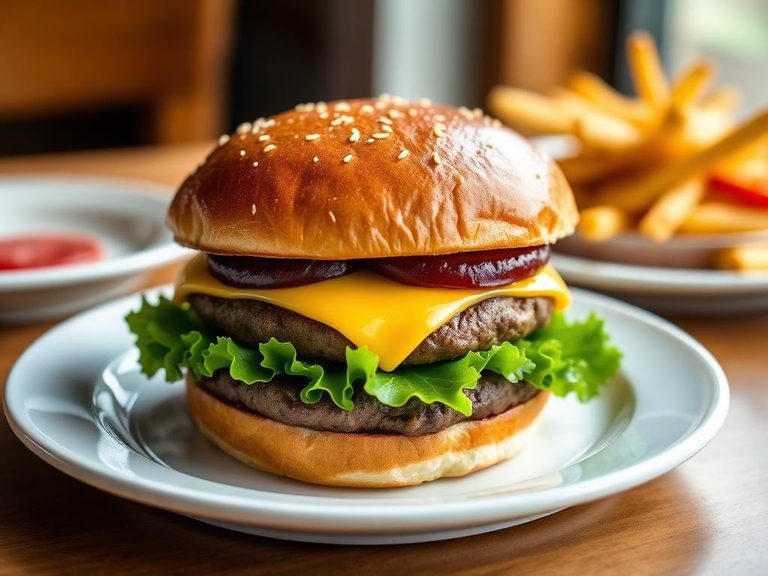
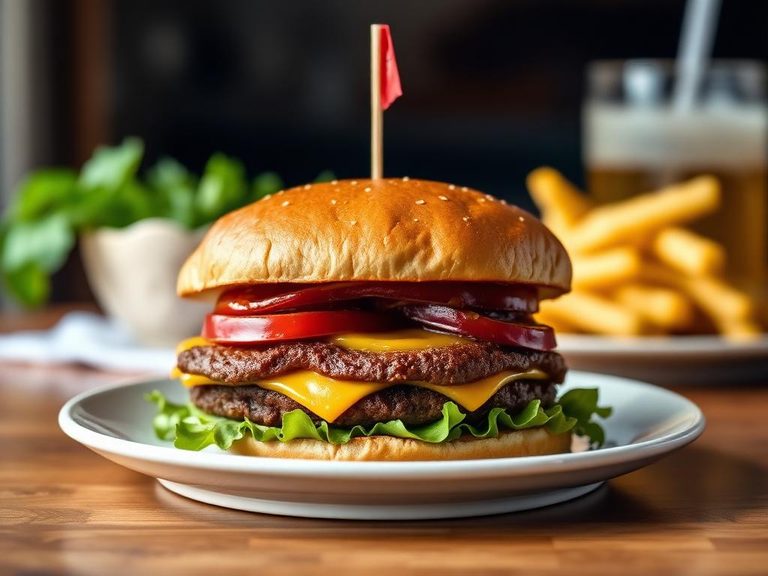
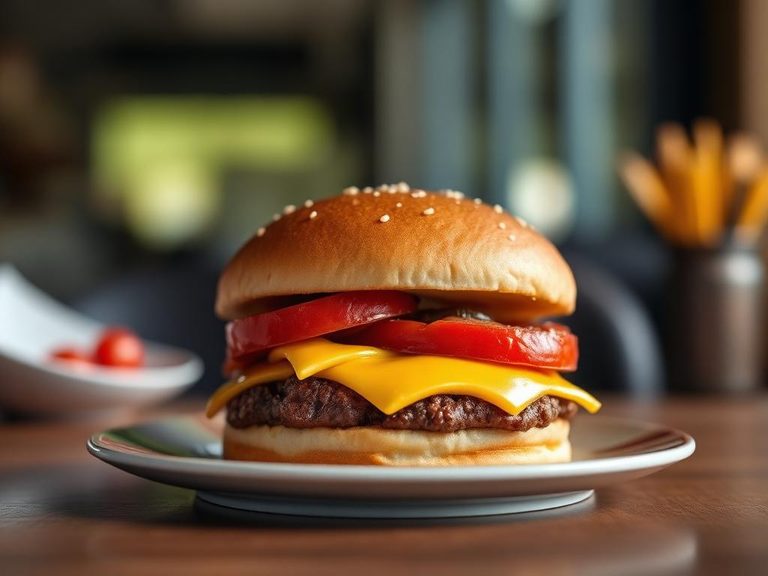
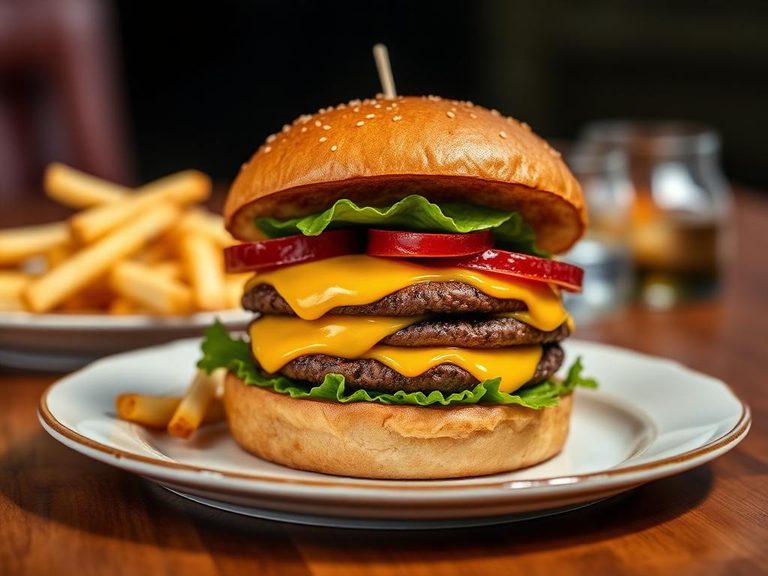
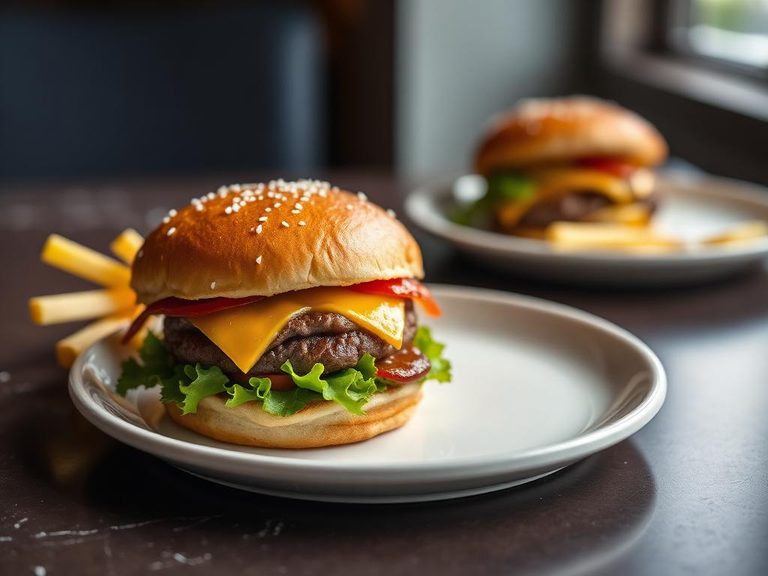
The McDonald's Double Quarter Pounder with Cheese is a towering, indulgent burger featuring two quarter-pound (113g) beef patties, two slices of American cheese, pickles, onions, ketchup, mustard, and mayonnaise on a toasted sesame seed bun. Its taste profile is a savory, salty, umami-rich explosion with a juicy, beefy texture and a creamy, tangy counterpoint from the cheese and condiments. Nutritionally, it's a calorie-dense, high-protein meal that delivers a significant portion of daily fat and sodium in a single serving.
Calorie split: 25% protein · 21% carbs · 54% fat
↓ Full nutrition💚 Why it's loved
People love it for its unapologetic, satisfying richness—the combination of juicy, seared beef patties, melted cheese, and the classic McDonald's condiment profile creates a deeply comforting and craveable experience. It's a cultural icon, representing the ultimate fast-food indulgence and a go-to for a hearty, no-fuss meal.
⚠️ Watch-outs & how to enjoy it better
This burger is high in sodium, saturated fat, and calories, which can contribute to blood-sugar spikes and cardiovascular strain if consumed frequently. To counteract, pair it with a side salad or fruit instead of fries, practice portion control by sharing or choosing a single patty version, and ensure the rest of your day's meals are lower in sodium and fat.
Key benefits
- High protein content supports muscle maintenance and satiety
- Provides a quick, calorie-dense energy source
- Contains iron and B-vitamins from the beef
- Offers a convenient, ready-to-eat meal option
- The cheese adds calcium and additional protein
🍽️ Popular dishes
🌍 Where it's eaten
💡 Did you know?
The 'Quarter Pounder' name refers to the pre-cooked weight of each beef patty (a quarter of a pound, or about 113 grams), which shrinks to about 4 ounces (113g) after cooking, making it one of the thickest patties on the McDonald's menu.
Full nutrition (USDA data · scales with serving)
| Water | 50.3 g |
| Energy | 262 kcal |
| Energy | 1096 kj |
| Protein | 17.0 g |
| Total lipid (fat) | 16.2 g |
| Ash | 2.0 g |
| Carbohydrate, by difference | 14.4 g |
| Fiber, total dietary | 1.0 g |
| Total Sugars | 3.5 g |
| Sucrose | 0.14 g |
| Glucose | 1.2 g |
| Fructose | 1.4 g |
| Lactose | 0.39 g |
| Maltose | 0.45 g |
| Galactose | 0.00 g |
| Calcium, Ca | 106 mg |
| Iron, Fe | 2.2 mg |
| Magnesium, Mg | 21.0 mg |
| Phosphorus, P | 165 mg |
| Potassium, K | 242 mg |
| Sodium, Na | 476 mg |
| Zinc, Zn | 3.3 mg |
| Copper, Cu | 0.09 mg |
| Manganese, Mn | 0.13 mg |
| Vitamin C, total ascorbic acid | 0.60 mg |
| Thiamin | 0.13 mg |
| Riboflavin | 0.30 mg |
| Niacin | 4.2 mg |
| Folate, total | 45.0 ug |
| Vitamin B-12 | 1.7 ug |
| Vitamin A, IU | 200 iu |
Fat & fatty acid profile (per 100g)
| Fatty acids, total saturated | 6.5 g |
| Fatty acids, total monounsaturated | 5.9 g |
| Fatty acids, total polyunsaturated | 0.48 g |
| Fatty acids, total trans | 1.0 g |
| Cholesterol | 57.0 mg |
FAQ
How many calories are in a Double Quarter Pounder with Cheese?
A single burger contains approximately 740 calories, making it a very high-calorie meal.
Is the Double Quarter Pounder with Cheese high in protein?
Yes, it contains about 48 grams of protein, primarily from the beef patties and cheese, which is a substantial portion of the daily recommended intake.
What are the main allergens in a Double Quarter Pounder with Cheese?
The main allergens are wheat (in the bun), milk (in the cheese and mayonnaise), and soy (in the bun and condiments). It may also contain sesame from the bun.
How does the Double Quarter Pounder compare nutritionally to a Big Mac?
The Double Quarter Pounder with Cheese is higher in calories, protein, and fat than a Big Mac, but the Big Mac has more carbohydrates and sugar due to its special sauce and extra bun layers.
Nutrient density (calculated · NRF9.3)
Nutrient Rich Foods index: beneficial nutrients (protein, fiber, vitamins, minerals) minus saturated fat, added sugar & sodium, per 100 kcal.
NRF9.3 index — Fulgoni, Keast & Drewnowski, 2009. Computed from USDA nutrients.
Weight-loss friendliness (composite index)
Energy density 2.62 kcal/g · 26% calories from protein · 1.0 g fiber · 3.5 g sugar per 100 g.
Composite of energy density (Rolls et al., 1999), protein & fiber satiety, minus sugar. A calculated heuristic — ranks satiety-per-calorie, not a clinical measure.
Dietary load (calculated from USDA values)
Potential renal acid load. Positive = acid-forming, negative = alkaline-forming.
Sodium-to-potassium ratio: 1.97 (lower is better — aim for ≤ 1)
Sodium:potassium per WHO potassium guidance. Computed from USDA nutrients.