

Cranberry sauce, jellied, canned, OCEAN SPRAY
Whole food · Fruits and Fruit Juices

Photo: Wikipedia
This is the classic, ruby-red gel that wobbles on the Thanksgiving table. It offers a bright, tart-sweet flavor with a smooth, sliceable texture that provides a refreshing counterpoint to rich, savory dishes. Nutritionally, it's a concentrated source of quick energy from carbohydrates, with virtually no fat.
Calorie split: 3% protein · 97% carbs · 0% fat
↓ Full nutrition💚 Why it's loved
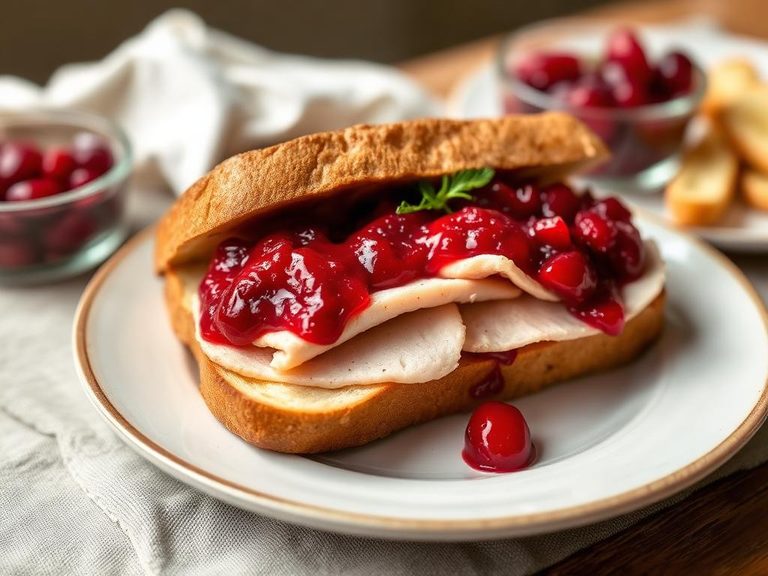
People love it for its iconic sweet-tart flavor and unique, jiggly texture that has become synonymous with holiday feasts. Its versatility makes it a beloved condiment for everything from turkey sandwiches to glazes for meats.
⚠️ Watch-outs & how to enjoy it better
Its high sugar content (over 32g per 100g) can cause rapid blood-sugar spikes, making it a concern for diabetics or those monitoring sugar intake. To enjoy it more healthily, practice strict portion control (a tablespoon or two) and pair it with protein-rich foods like turkey or nuts to slow sugar absorption.
Key benefits
- Provides a quick source of energy from carbohydrates.
- Contains a small amount of dietary fiber.
- Offers a tart flavor that can balance rich, fatty foods.
- A traditional staple for holiday meals and cultural gatherings.
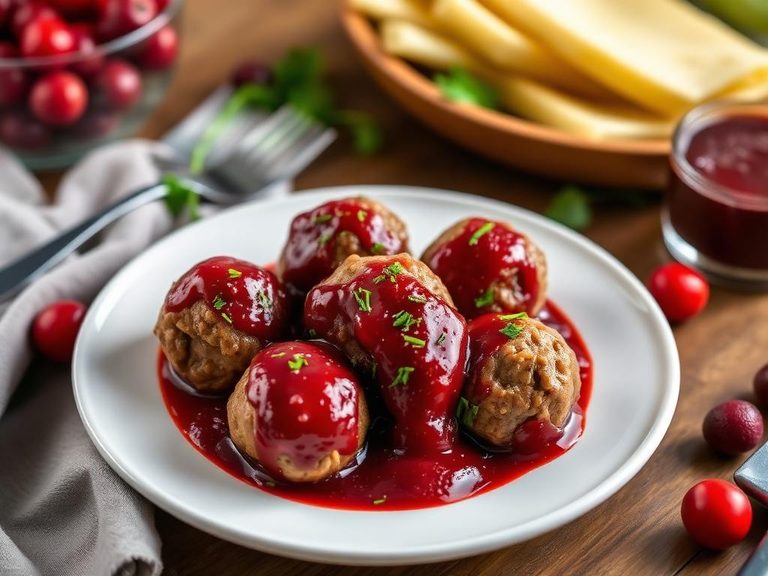
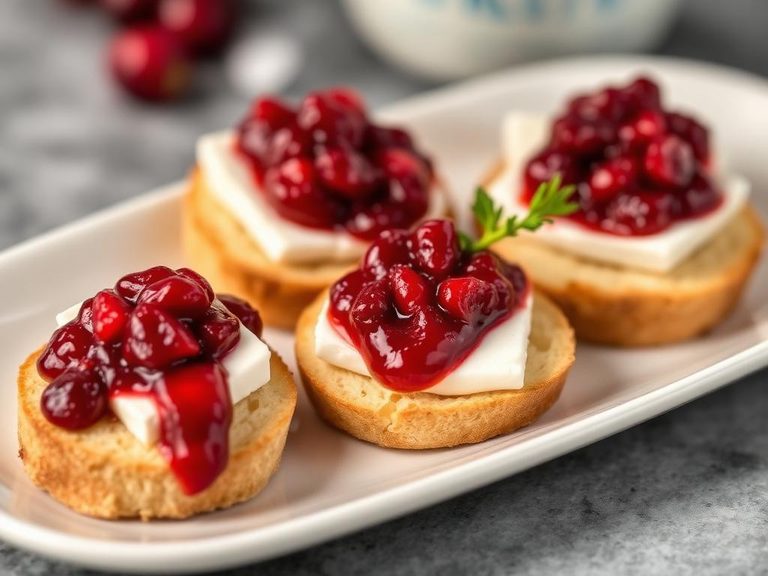
🍽️ Popular dishes

🌍 Where it's eaten
💡 Did you know?
The jellied texture in canned sauce comes from natural pectin in the cranberries, which gels when cooked with sugar, but modern recipes often add extra pectin for a firmer, more sliceable consistency.
Full nutrition (USDA data · scales with serving)
| Water | 58.2 g |
| Energy | 160 kcal |
| Energy | 669 kj |
| Protein | 1.1 g |
| Total lipid (fat) | 0.04 g |
| Ash | 0.10 g |
| Carbohydrate, by difference | 40.6 g |
| Fiber, total dietary | 1.0 g |
| Total Sugars | 32.2 g |
| Sucrose | 0.10 g |
| Glucose | 17.8 g |
| Fructose | 9.8 g |
| Lactose | 0.00 g |
| Maltose | 4.5 g |
| Galactose | 0.00 g |
| Calcium, Ca | 3.0 mg |
| Iron, Fe | 0.62 mg |
| Magnesium, Mg | 2.0 mg |
| Phosphorus, P | 4.0 mg |
| Potassium, K | 34.0 mg |
| Sodium, Na | 5.0 mg |
| Zinc, Zn | 0.03 mg |
| Copper, Cu | 0.04 mg |
| Manganese, Mn | 0.09 mg |
| Vitamin C, total ascorbic acid | 1.0 mg |
| Vitamin A, RAE | 2.0 ug |
| Carotene, beta | 20.0 ug |
| Vitamin A, IU | 33.0 iu |
Fat & fatty acid profile (per 100g)
| Fatty acids, total saturated | 0.01 g |
| Fatty acids, total monounsaturated | 0.01 g |
| Fatty acids, total polyunsaturated | 0.03 g |
| Fatty acids, total trans | 0.00 g |
| Cholesterol | 0.00 mg |
FAQ
In the context of canned products like Ocean Spray, 'jellied' and 'jelly' are often used interchangeably to describe the smooth, strained, sliceable version, as opposed to 'whole berry' sauce which contains visible fruit pieces.
Can I use canned cranberry sauce for baking?
Yes, it's a popular ingredient. It can be used to add moisture, sweetness, and tartness to cakes, muffins, breads, and as a filling for pastries or a glaze for baked meats.
Why is my canned cranberry sauce so sweet compared to homemade?
Commercial canned sauces are typically formulated with a higher sugar-to-cranberry ratio for a consistent, milder flavor and longer shelf life, whereas homemade versions allow for much less sugar to highlight the fruit's natural tartness.
Nutrient density (calculated · NRF9.3)
Nutrient Rich Foods index: beneficial nutrients (protein, fiber, vitamins, minerals) minus saturated fat, added sugar & sodium, per 100 kcal.
NRF9.3 index — Fulgoni, Keast & Drewnowski, 2009. Computed from USDA nutrients.
Weight-loss friendliness (composite index)
Energy density 1.60 kcal/g · 3% calories from protein · 1.0 g fiber · 32.2 g sugar per 100 g.
Composite of energy density (Rolls et al., 1999), protein & fiber satiety, minus sugar. A calculated heuristic — ranks satiety-per-calorie, not a clinical measure.
Dietary load (calculated from USDA values)
Potential renal acid load. Positive = acid-forming, negative = alkaline-forming.
Sodium-to-potassium ratio: 0.15 (lower is better — aim for ≤ 1)
Sodium:potassium per WHO potassium guidance. Computed from USDA nutrients.