

Whale, bowhead, subcutaneous fat (blubber) (Alaska Native)
Whole food · American Indian/Alaska Native Foods

Photo: Wikipedia
Bowhead whale blubber is a dense, creamy layer of subcutaneous fat harvested from the Arctic marine mammal, prized for its rich, slightly sweet, and oily flavor with a smooth, waxy texture that melts on the tongue. Nutritionally, it is an extraordinarily concentrated source of energy and fat, providing nearly 100 grams of pure fat per 100-gram serving, with minimal protein or carbohydrates. This traditional food is a vital source of calories and fat-soluble vitamins in harsh Arctic environments.
Calorie split: 0% protein · 0% carbs · 100% fat
↓ Full nutrition💚 Why it's loved
People love it for its profound cultural significance, representing a direct connection to ancestral traditions, the bowhead whale hunt, and community resilience. Its unique, rich flavor and high energy content are deeply valued, especially during long, cold winters.
⚠️ Watch-outs & how to enjoy it better
Its extremely high fat content (96.5g per 100g) makes it very calorie-dense, which requires mindful consumption for those managing weight. The strong, oily taste and waxy texture can be unfamiliar or unpalatable to those outside the culture. To counteract this, it is traditionally eaten in small, measured portions alongside other foods like dried fish or berries, and its richness is balanced by the communal context of the meal.
Key benefits
- Exceptionally high in calorie-dense fat for energy in cold climates.
- A primary traditional source of vitamins A, C, D, and E for Alaska Native communities.
- Provides essential fatty acids important for brain and cell health.
- Historically used as a fuel source for lamps and a waterproofing agent.
- Culturally central to subsistence hunting and communal sharing practices.
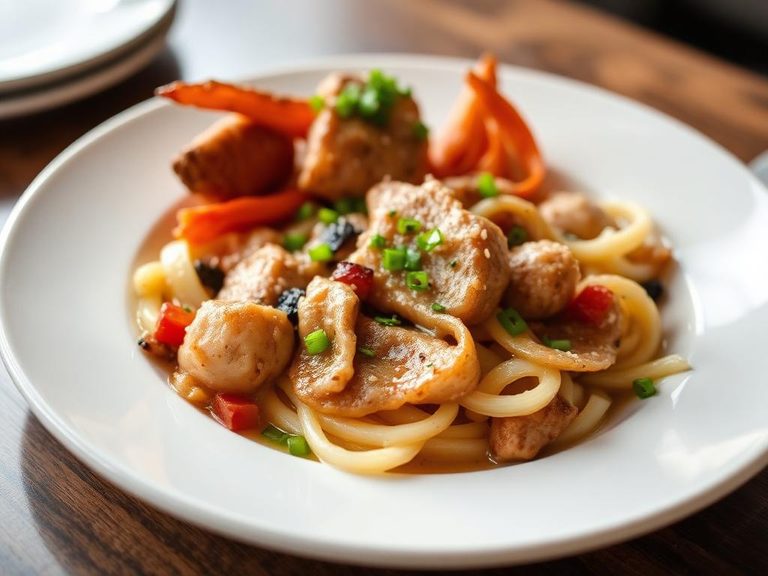
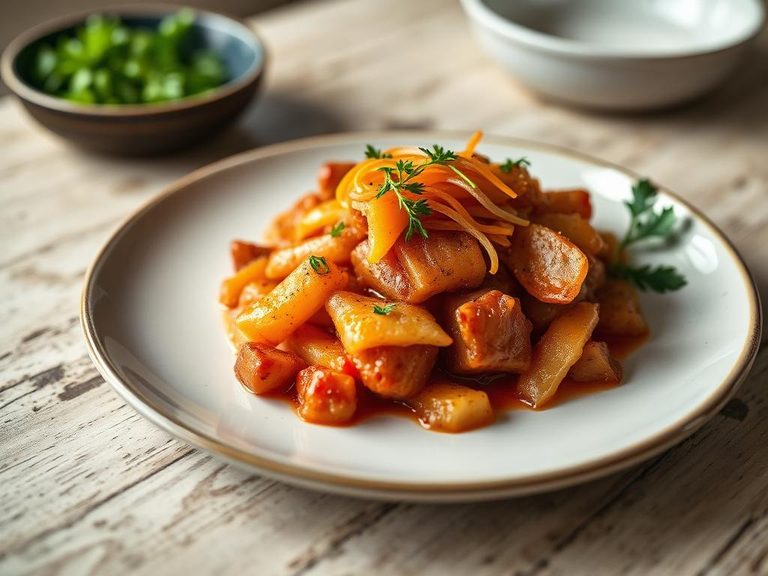
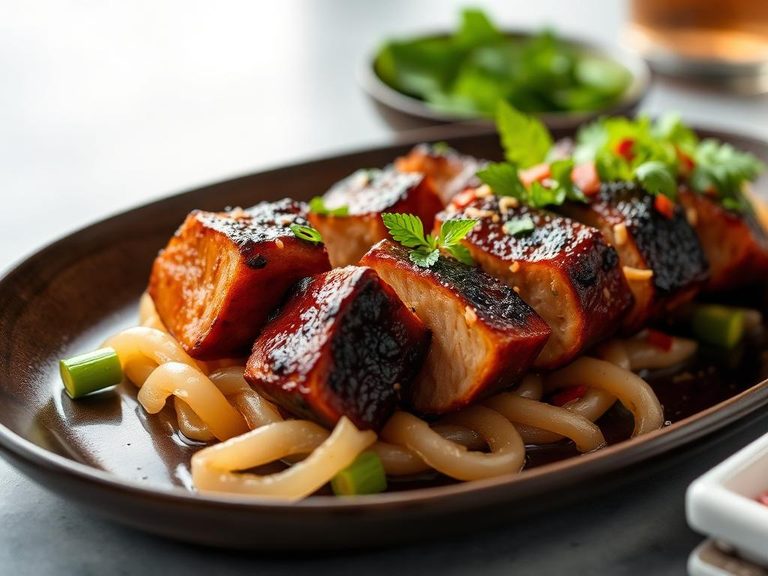
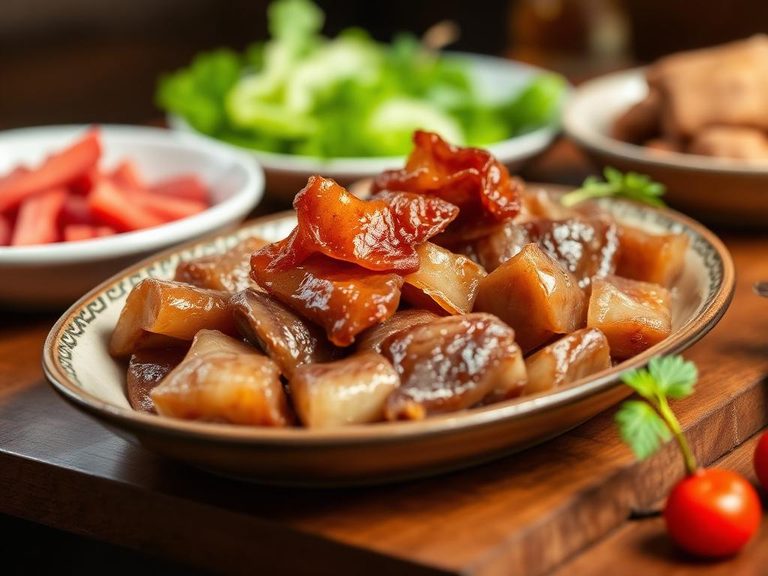
🍽️ Popular dishes
🌍 Where it's eaten
💡 Did you know?
Bowhead whale blubber can be over 50 cm (20 inches) thick, making it the thickest of any animal, an adaptation for frigid Arctic waters.
Full nutrition (USDA data · scales with serving)
| Water | 2.9 g |
| Energy | 870 kcal |
| Energy | 3640 kj |
| Protein | 0.40 g |
| Total lipid (fat) | 96.5 g |
| Ash | 0.20 g |
| Carbohydrate, by difference | 0.00 g |
| Iron, Fe | 0.50 mg |
| Phosphorus, P | 5.0 mg |
Fat & fatty acid profile (per 100g)
| Cholesterol | 150 mg |
Amino acid profile (per 100g)
Estimated from Whale, beluga, meat, dried (Alaska Native) — USDA does not publish this profile for Whale.
| Tryptophan | 0.80 g |
| Threonine | 2.7 g |
| Isoleucine | 2.7 g |
| Leucine | 5.8 g |
| Lysine | 6.3 g |
| Methionine | 1.4 g |
| Cystine | 0.42 g |
| Phenylalanine | 2.9 g |
| Tyrosine | 1.9 g |
| Valine | 2.8 g |
| Arginine | 3.8 g |
| Histidine | 3.0 g |
| Alanine | 4.3 g |
| Aspartic acid | 5.8 g |
| Glutamic acid | 9.6 g |
| Glycine | 4.1 g |
| Proline | 3.5 g |
| Serine | 2.4 g |
FAQ
Is bowhead whale blubber safe to eat raw?
Yes, when harvested and handled properly according to traditional practices, it is commonly eaten raw or fermented. It is a staple food in Alaska Native diets.
What does bowhead whale blubber taste like?
It has a rich, oily, and slightly sweet flavor with a smooth, waxy texture that softens as it warms in the mouth. The taste is often described as cleaner and less fishy than seal oil.
Why is it so high in fat?
The blubber serves as a vital energy reserve, insulation, and buoyancy aid for the whale in the extreme cold of the Arctic Ocean. For humans, it provided a crucial, non-perishable source of calories and fat-soluble vitamins.
Weight-loss friendliness (composite index)
Energy density 8.70 kcal/g · 0% calories from protein · 0.0 g fiber · 0.0 g sugar per 100 g.
Composite of energy density (Rolls et al., 1999), protein & fiber satiety, minus sugar. A calculated heuristic — ranks satiety-per-calorie, not a clinical measure.