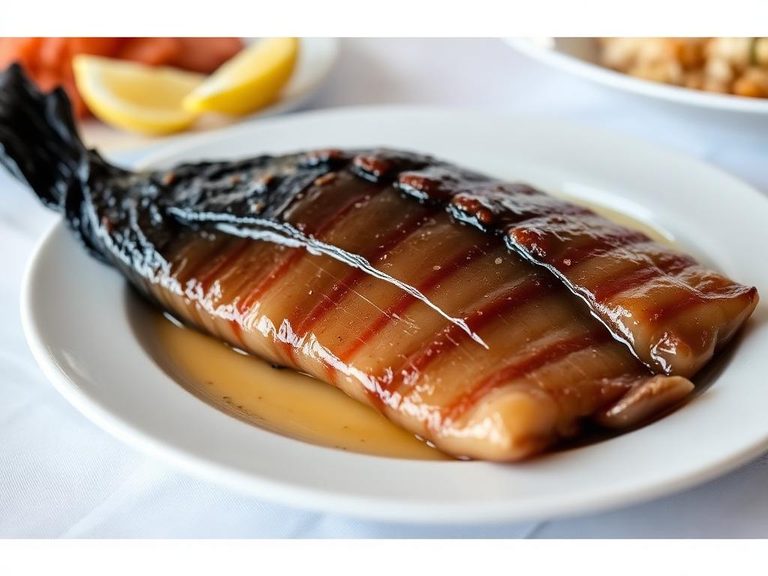
Rendered whale oil

Rendered whale oil is a traditional, clarified fat obtained by simmering whale blubber to remove water and impurities. Historically a staple in Arctic coastal communities, it was used both as a cooking fat and a condiment, often served with dried fish or meat. It originates from the indigenous cultures of the Arctic, including Inuit, Yupik, and other circumpolar peoples.
🍽️ Nutrition at a glance
Rendered whale oil is almost pure fat, containing negligible carbohydrates and protein. It is a dense source of calories and provides fat-soluble vitamins like vitamin D and omega-3 fatty acids, with a single tablespoon containing roughly 120 calories.
Nutrition breakdown
| Calories | 120 kcal |
| Protein | 0 g |
| Carbs | 0 g |
| Fat | 14 g |
| Fiber | 0 g |
| Sugar | 0 g |
| Sodium | 0 mg |
| Vitamin D | 2.5 µg |
| Vitamin A | 15 µg RAE |
| Vitamin E | 1.2 mg |
| Omega-3 (EPA+DHA) | 1.5 g |
| Saturated Fat | 3.5 g |
| Monounsaturated Fat | 6.8 g |
| Polyunsaturated Fat | 3.2 g |
Per 1 tablespoon (14 g) · estimated, varies by recipe
💡 What's interesting
Culturally, it was a vital source of energy and essential nutrients in environments with limited plant-based foods. Nutritionally, it is exceptionally high in long-chain omega-3 fatty acids like EPA and DHA, which are linked to heart and brain health.