

Cereals ready-to-eat, QUAKER, MOTHER'S Cinnamon Oat Crunch
Whole food · Breakfast Cereals

Photo: Wikipedia
MOTHER'S Cinnamon Oat Crunch is a ready-to-eat cereal that delivers a satisfying, crunchy texture with a warm, sweet cinnamon flavor profile. It's a high-carbohydrate, energy-dense option, providing nearly 80g of carbs per 100g, making it a quick source of fuel. The cereal's distinct oat-based crunch offers a more substantial mouthfeel than many flaked or puffed alternatives.
Calorie split: 11% protein · 79% carbs · 10% fat
↓ Full nutrition💚 Why it's loved
People love it for the comforting, sweet-spiced cinnamon flavor that pairs perfectly with cold milk, evoking a sense of nostalgic, simple breakfasts. Its hearty crunch and versatility make it a popular choice for snacking straight from the box or as a topping for yogurt and smoothie bowls.
⚠️ Watch-outs & how to enjoy it better
The high sugar content (25.37g per 100g) and high carbohydrate load can lead to a rapid blood-sugar spike, which may not be ideal for those managing diabetes or seeking sustained energy. To counteract this, pair it with a source of protein or healthy fat (like Greek yogurt, nuts, or milk) and practice portion control by sticking to a single serving size.
Key benefits
- Provides a quick source of energy from carbohydrates
- Offers a notable amount of dietary fiber (8.1g per 100g)
- Contains a moderate protein content (10.6g per 100g)
- Convenient, no-cook breakfast or snack option
- Delivers a satisfying, crunchy texture
🍽️ Popular dishes
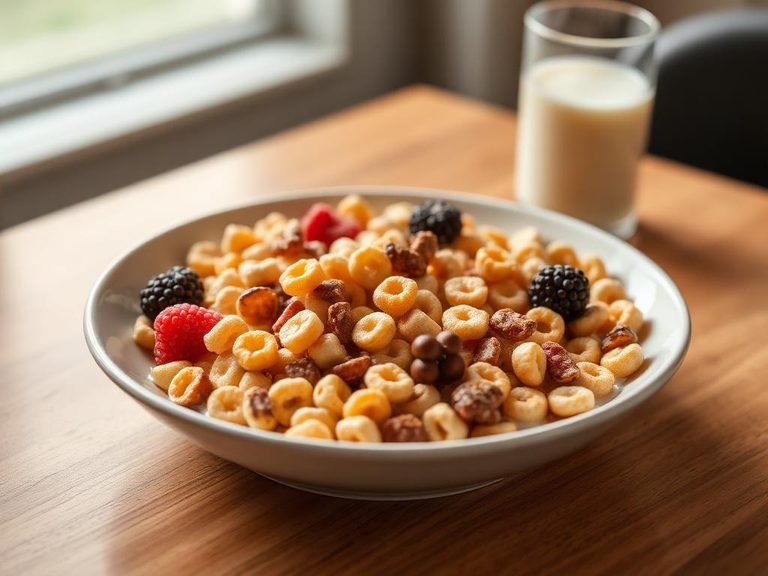

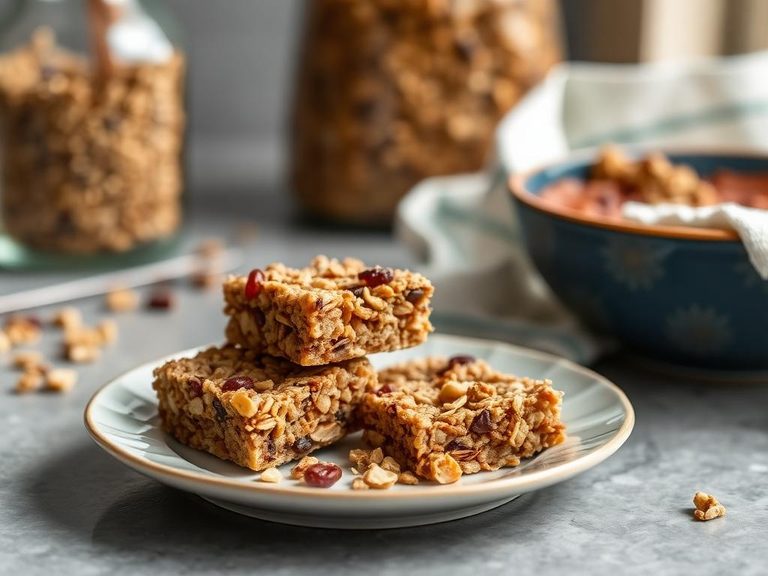


🌍 Where it's eaten
💡 Did you know?
The 'Mother's' brand name is a nostalgic nod to a classic American cereal line, originally produced by the Quaker Oats Company, and its 'Cinnamon Oat Crunch' is specifically designed to mimic the texture and flavor of a cinnamon-spiced oatmeal cookie in cereal form.
Full nutrition (USDA data · scales with serving)
| Water | 2.8 g |
| Energy | 382 kcal |
| Energy | 1597 kj |
| Protein | 10.6 g |
| Total lipid (fat) | 4.6 g |
| Ash | 2.3 g |
| Carbohydrate, by difference | 79.8 g |
| Fiber, total dietary | 8.1 g |
| Total Sugars | 25.4 g |
| Calcium, Ca | 50.0 mg |
| Iron, Fe | 3.2 mg |
| Magnesium, Mg | 106 mg |
| Phosphorus, P | 347 mg |
| Potassium, K | 325 mg |
| Sodium, Na | 275 mg |
| Zinc, Zn | 2.6 mg |
| Vitamin C, total ascorbic acid | 0.80 mg |
| Thiamin | 0.42 mg |
| Riboflavin | 0.11 mg |
| Niacin | 1.9 mg |
| Vitamin B-6 | 0.13 mg |
| Folate, total | 37.0 ug |
| Folic acid | 0.00 ug |
| Folate, food | 37.0 ug |
| Folate, DFE | 37.0 ug |
| Vitamin B-12 | 0.00 ug |
| Vitamin A, RAE | 1.0 ug |
| Retinol | 0.00 ug |
| Vitamin A, IU | 17.0 iu |
| Vitamin E (alpha-tocopherol) | 4.5 mg |
| Vitamin D (D2 + D3), International Units | 0.00 iu |
| Vitamin D (D2 + D3) | 0.00 ug |
Fat & fatty acid profile (per 100g)
| Fatty acids, total saturated | 0.82 g |
| Fatty acids, total monounsaturated | 1.5 g |
| Fatty acids, total polyunsaturated | 1.5 g |
| Fatty acids, total trans | 0.00 g |
| Cholesterol | 0.00 mg |
FAQ
Is this cereal gluten-free?
No, it is not gluten-free. It contains oats, which are often processed in facilities that handle wheat, and the product itself may contain wheat-based ingredients.
How much sugar is in a typical serving?
A typical 118g serving contains approximately 30g of sugar, which is a significant portion of the daily recommended limit.
Can I eat this cereal if I'm watching my carbohydrate intake?
This cereal is very high in carbohydrates (79.79g per 100g), so it's not recommended for low-carb diets. Consider a smaller portion or pairing it with protein to slow digestion.
Nutrient density (calculated · NRF9.3)
Nutrient Rich Foods index: beneficial nutrients (protein, fiber, vitamins, minerals) minus saturated fat, added sugar & sodium, per 100 kcal.
NRF9.3 index — Fulgoni, Keast & Drewnowski, 2009. Computed from USDA nutrients.
Weight-loss friendliness (composite index)
Energy density 3.82 kcal/g · 11% calories from protein · 8.1 g fiber · 25.4 g sugar per 100 g.
Composite of energy density (Rolls et al., 1999), protein & fiber satiety, minus sugar. A calculated heuristic — ranks satiety-per-calorie, not a clinical measure.
Dietary load (calculated from USDA values)
Potential renal acid load. Positive = acid-forming, negative = alkaline-forming.
Sodium-to-potassium ratio: 0.85 (lower is better — aim for ≤ 1)
Sodium:potassium per WHO potassium guidance. Computed from USDA nutrients.