

CAMPBELL'S CHUNKY, Classic Chicken Noodle Soup
Whole food · Soups, Sauces, and Gravies
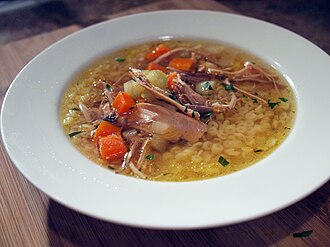
Photo: Wikipedia
Campbell's Chunky Classic Chicken Noodle Soup is a hearty, ready-to-eat soup featuring tender white-meat chicken, egg noodles, and sliced carrots in a savory, seasoned chicken broth. It delivers a comforting, familiar flavor with a satisfying, chunky texture that feels more like a meal than a simple broth. Per 100g, it's a low-calorie option (47 kcal) that provides a modest protein boost (3.41g) with minimal fat.
Calorie split: 29% protein · 46% carbs · 25% fat
↓ Full nutrition💚 Why it's loved
People love it for its nostalgic, savory comfort-food flavor and the satisfying heft of its chunky ingredients, which make it feel substantial. It's a versatile go-to for quick lunches, sick-day meals, or a simple, warming dinner.
⚠️ Watch-outs & how to enjoy it better
The primary caution is its typically high sodium content, which can be a concern for those monitoring blood pressure or fluid retention. To counteract this, pair it with a low-sodium side like steamed vegetables or a piece of fruit, and be mindful of your overall daily salt intake from other meals.
Key benefits
- Low in calories per serving
- Provides a source of lean protein from chicken
- Contains a small amount of dietary fiber
- Convenient, shelf-stable meal option
- Hydrating due to its high broth content
🍽️ Popular dishes
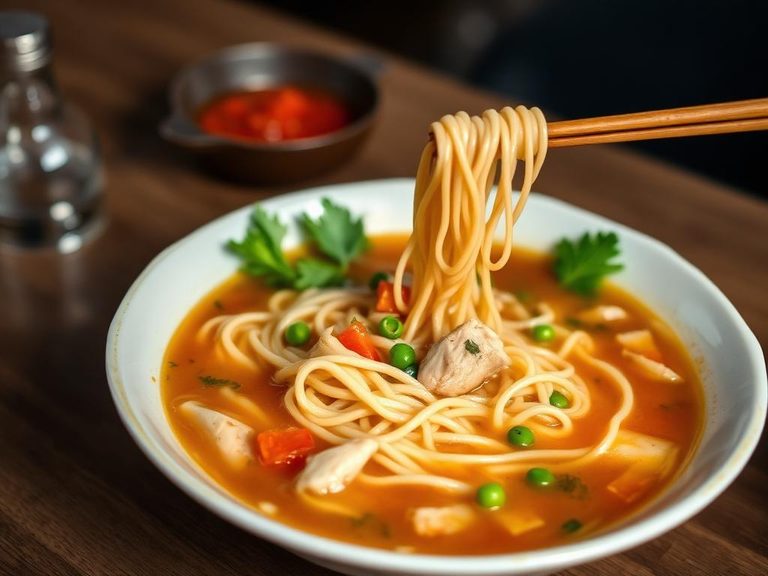

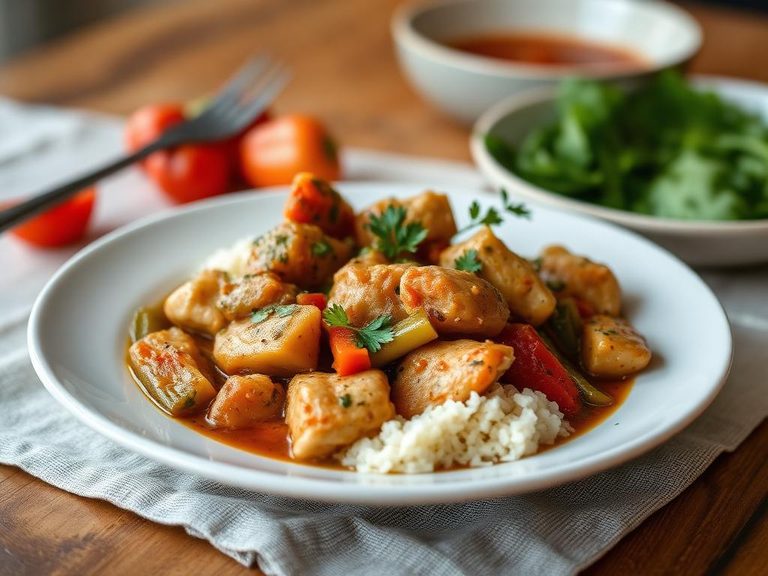
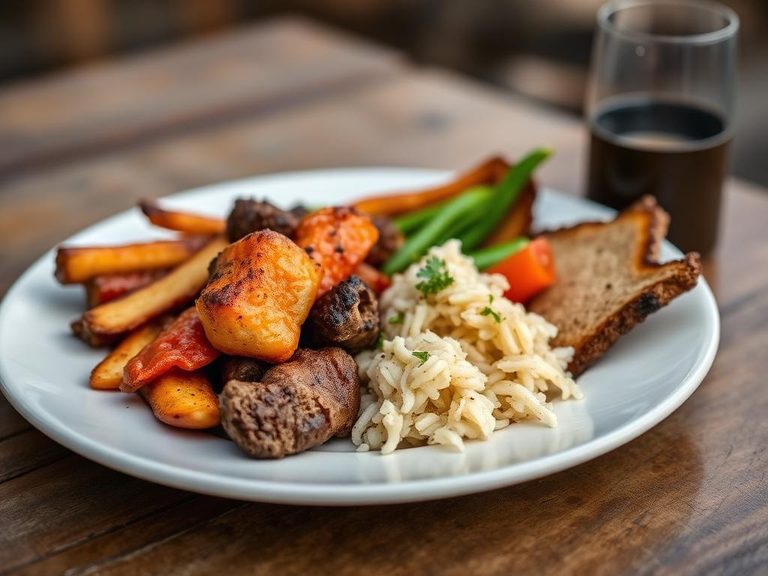

🌍 Where it's eaten
💡 Did you know?
Campbell's first introduced its condensed soup in 1897, revolutionizing home cooking by creating a product that was shelf-stable, affordable, and could be prepared quickly with the addition of water.
Full nutrition (USDA data · scales with serving)
| Water | 88.9 g |
| Energy | 47.0 kcal |
| Energy | 196 kj |
| Protein | 3.4 g |
| Total lipid (fat) | 1.3 g |
| Ash | 0.98 g |
| Carbohydrate, by difference | 5.4 g |
| Fiber, total dietary | 1.0 g |
| Total Sugars | 0.41 g |
| Sucrose | 0.41 g |
| Glucose | 0.00 g |
| Fructose | 0.00 g |
| Lactose | 0.00 g |
| Maltose | 0.00 g |
| Galactose | 0.00 g |
| Starch | 4.0 g |
| Calcium, Ca | 11.0 mg |
| Iron, Fe | 0.34 mg |
| Magnesium, Mg | 7.0 mg |
| Phosphorus, P | 35.0 mg |
| Potassium, K | 90.0 mg |
| Sodium, Na | 325 mg |
| Zinc, Zn | 0.18 mg |
| Copper, Cu | 0.03 mg |
| Manganese, Mn | 0.06 mg |
| Selenium, Se | 5.7 ug |
| Vitamin C, total ascorbic acid | 0.00 mg |
| Thiamin | 0.02 mg |
| Riboflavin | 0.02 mg |
| Niacin | 1.4 mg |
| Carotene, beta | 198 ug |
| Carotene, alpha | 20.0 ug |
Fat & fatty acid profile (per 100g)
| Fatty acids, total saturated | 0.41 g |
| Fatty acids, total trans | 0.00 g |
| Cholesterol | 8.0 mg |
FAQ
Is this soup considered a complete meal?
While it provides protein and carbs, it's low in calories and fat. For a more balanced and filling meal, consider adding a side salad, whole-grain bread, or extra vegetables.
How does the nutrition compare to homemade chicken noodle soup?
Homemade versions often have less sodium and more control over ingredients like vegetable quantity and noodle type, but this canned option offers comparable protein with greater convenience.
Is it suitable for a low-carb diet?
At 5.41g of carbs per 100g, it's relatively moderate. A full can contains about 16.5g of carbs, which may fit into some lower-carb plans, but it's not a zero-carb food.
Nutrient density (calculated · NRF9.3)
Nutrient Rich Foods index: beneficial nutrients (protein, fiber, vitamins, minerals) minus saturated fat, added sugar & sodium, per 100 kcal.
NRF9.3 index — Fulgoni, Keast & Drewnowski, 2009. Computed from USDA nutrients.
Weight-loss friendliness (composite index)
Energy density 0.47 kcal/g · 29% calories from protein · 1.0 g fiber · 0.4 g sugar per 100 g.
Composite of energy density (Rolls et al., 1999), protein & fiber satiety, minus sugar. A calculated heuristic — ranks satiety-per-calorie, not a clinical measure.
Dietary load (calculated from USDA values)
Potential renal acid load. Positive = acid-forming, negative = alkaline-forming.
Sodium-to-potassium ratio: 3.61 (lower is better — aim for ≤ 1)
Sodium:potassium per WHO potassium guidance. Computed from USDA nutrients.