

Cherry juice, tart
Whole food · Fruits and Fruit Juices

Photo: Wikipedia
Tart cherry juice is a deep ruby-red, unsweetened liquid with a sharp, tangy flavor and a slightly viscous mouthfeel. It's a concentrated source of natural sugars and carbohydrates, providing quick energy without any fat or fiber. Its most notable nutritional highlight is its rich concentration of antioxidants, particularly anthocyanins, which give it its vibrant color.
Calorie split: 2% protein · 90% carbs · 8% fat
↓ Full nutrition💚 Why it's loved
People love tart cherry juice for its intense, complex flavor that balances sharp acidity with a subtle fruity sweetness. It's prized as a versatile ingredient in cocktails, mocktails, and glazes, and holds cultural significance in regions like the American Midwest and parts of Europe for its association with local harvests and traditional remedies.
⚠️ Watch-outs & how to enjoy it better
Its high natural sugar content (12.21g per 100g) can cause blood-sugar spikes, making it a concern for diabetics or those monitoring glycemic load. To counteract this, pair it with a source of protein or fat (like a handful of nuts) to slow sugar absorption, or dilute it with water or sparkling water to reduce the sugar per serving.
Key benefits
- Rich in anthocyanin antioxidants
- May support exercise recovery and reduce muscle soreness
- A natural source of melatonin precursors
- Provides quick energy from natural carbohydrates
- Contains anti-inflammatory compounds
🍽️ Popular dishes

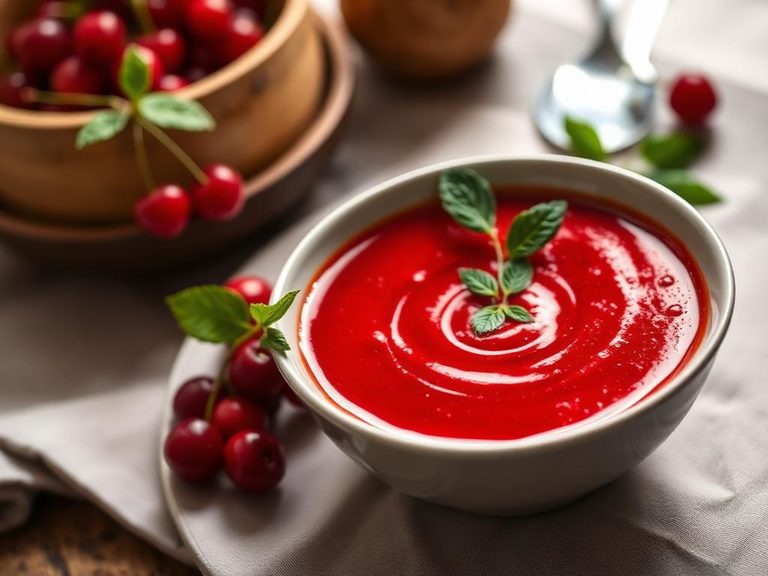
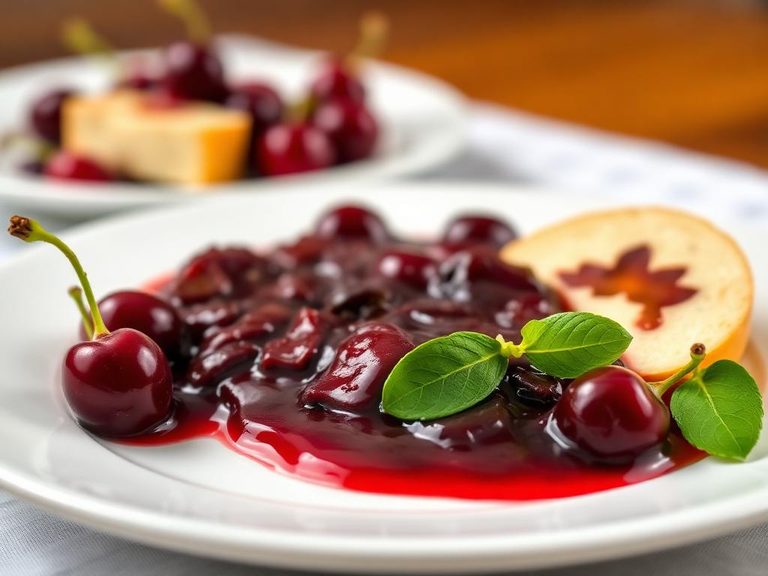
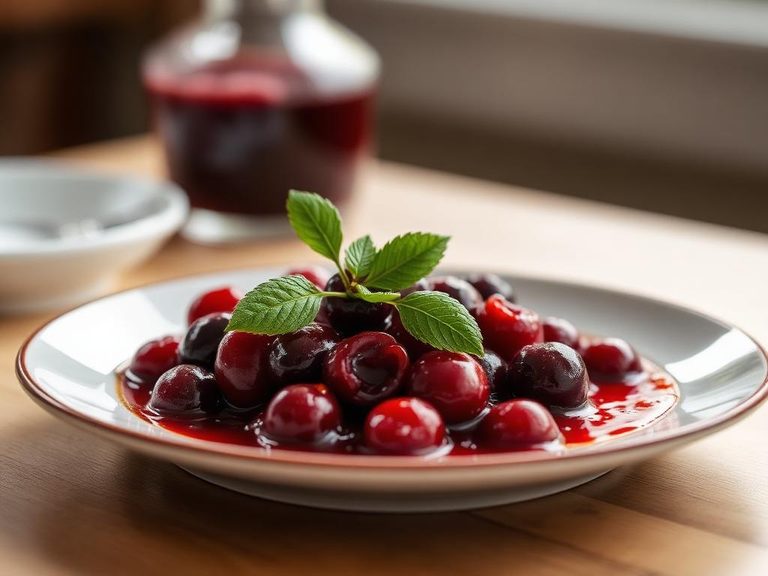
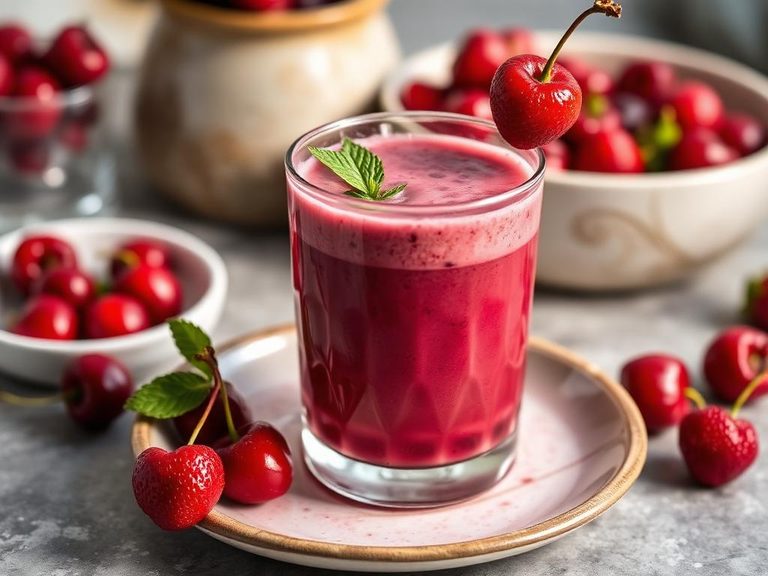
🌍 Where it's eaten
💡 Did you know?
The Montmorency cherry, the primary variety used for tart cherry juice, is named after a French valley and has been cultivated for over 1,000 years, making it one of the oldest cherry varieties still in widespread commercial use.
Full nutrition (USDA data · scales with serving)
| Water | 85.2 g |
| Energy | 59.0 kcal |
| Energy | 248 kj |
| Protein | 0.31 g |
| Total lipid (fat) | 0.54 g |
| Ash | 0.28 g |
| Carbohydrate, by difference | 13.7 g |
| Total Sugars | 12.2 g |
| Sucrose | 0.00 g |
| Glucose | 7.3 g |
| Fructose | 5.0 g |
| Lactose | 0.00 g |
| Maltose | 0.00 g |
| Galactose | 0.00 g |
| Calcium, Ca | 13.0 mg |
| Iron, Fe | 0.42 mg |
| Magnesium, Mg | 11.0 mg |
| Phosphorus, P | 17.0 mg |
| Potassium, K | 161 mg |
| Sodium, Na | 4.0 mg |
| Zinc, Zn | 0.03 mg |
| Copper, Cu | 0.04 mg |
| Manganese, Mn | 0.06 mg |
| Vitamin C, total ascorbic acid | 0.00 mg |
| Thiamin | 0.06 mg |
| Vitamin B-6 | 0.04 mg |
| Vitamin B-12 | 0.00 ug |
| Retinol | 0.00 ug |
| Vitamin D (D2 + D3), International Units | 0.00 iu |
| Vitamin D (D2 + D3) | 0.00 ug |
| Alcohol, ethyl | 0.00 g |
| Caffeine | 0.00 mg |
| Theobromine | 0.00 mg |
Fat & fatty acid profile (per 100g)
| Cholesterol | 0.00 mg |
FAQ
Is tart cherry juice the same as regular cherry juice?
No. Tart cherry juice is made from sour cherry varieties (like Montmorency) and is typically unsweetened, resulting in a sharp, acidic flavor. Regular cherry juice often uses sweet cherries and may contain added sugars.
Can I drink tart cherry juice every day?
Most adults can safely consume 1-2 ounces (30-60ml) diluted daily. However, due to its sugar content, it's best to incorporate it into a balanced diet and monitor portion sizes, especially if managing blood sugar.
What's the best way to store opened tart cherry juice?
Always refrigerate after opening and consume within 7-10 days. For longer storage, you can freeze it in ice cube trays for convenient use in recipes or drinks.
Nutrient density (calculated · NRF9.3)
Nutrient Rich Foods index: beneficial nutrients (protein, fiber, vitamins, minerals) minus saturated fat, added sugar & sodium, per 100 kcal.
NRF9.3 index — Fulgoni, Keast & Drewnowski, 2009. Computed from USDA nutrients.
Weight-loss friendliness (composite index)
Energy density 0.59 kcal/g · 2% calories from protein · 0.0 g fiber · 12.2 g sugar per 100 g.
Composite of energy density (Rolls et al., 1999), protein & fiber satiety, minus sugar. A calculated heuristic — ranks satiety-per-calorie, not a clinical measure.
Dietary load (calculated from USDA values)
Potential renal acid load. Positive = acid-forming, negative = alkaline-forming.
Sodium-to-potassium ratio: 0.02 (lower is better — aim for ≤ 1)
Sodium:potassium per WHO potassium guidance. Computed from USDA nutrients.