

Candies, MARS SNACKFOOD US, POP'ABLES SNICKERS Brand Bite Size Candies
Whole food · Sweets

Photo: Wikipedia
These are bite-sized, puffed rice-based morsels coated in milk chocolate, delivering the classic Snickers experience of caramel, nougat, and peanuts in a crunchy, poppable format. The texture is a satisfying mix of airy crispness from the puffed rice and chewy sweetness from the caramel and nougat. Nutritionally, they are a high-energy treat, with over 50g of sugar per 100g, making them a significant source of quick carbohydrates.
Calorie split: 6% protein · 50% carbs · 45% fat
↓ Full nutrition💚 Why it's loved
People love Pop'ables for the iconic, perfectly balanced Snickers flavor—salty peanuts, sweet caramel, and creamy chocolate—in a fun, shareable, bite-sized form that's less messy than a full bar. It's a nostalgic, go-to treat for movie nights, parties, or a quick pick-me-up that delivers instant satisfaction.
⚠️ Watch-outs & how to enjoy it better
The high sugar and fat content can lead to blood-sugar spikes and energy crashes, and they are a common source of empty calories. To mitigate this, enjoy them in strict portion control (e.g., a single 30g serving), pair with a source of protein or fiber like a handful of almonds or a piece of fruit to slow sugar absorption, and be mindful of allergens like peanuts, milk, and soy.
Key benefits
- Provides a quick energy boost from simple carbohydrates
- Contains a moderate amount of protein from peanuts
- Offers a satisfying, multi-texture snack experience
- Convenient, pre-portioned format for on-the-go consumption
- Serves as a familiar, comforting indulgence
🍽️ Popular dishes
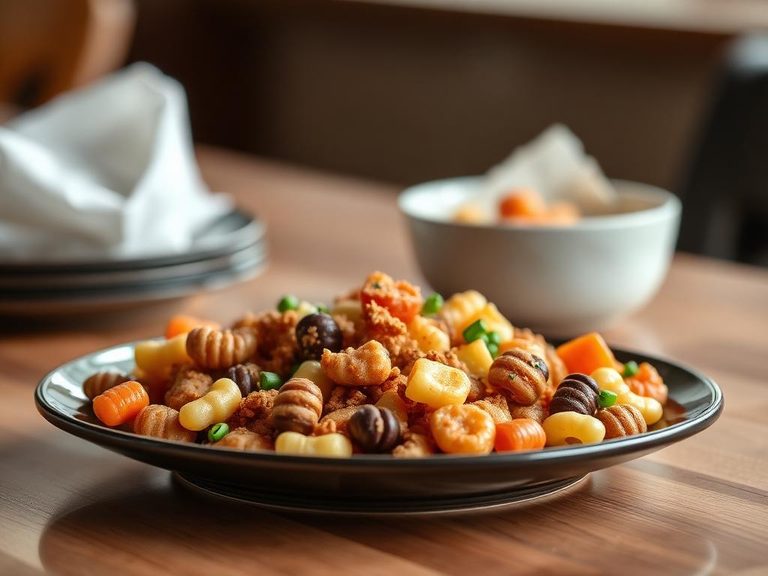
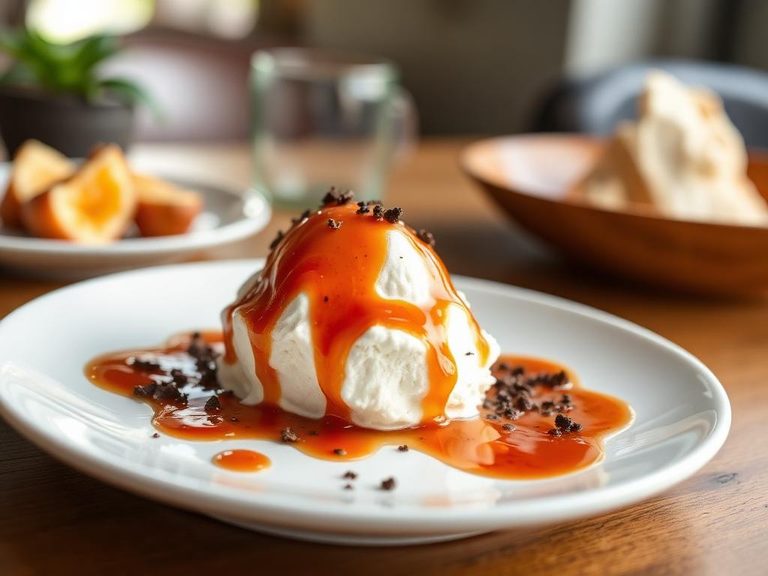
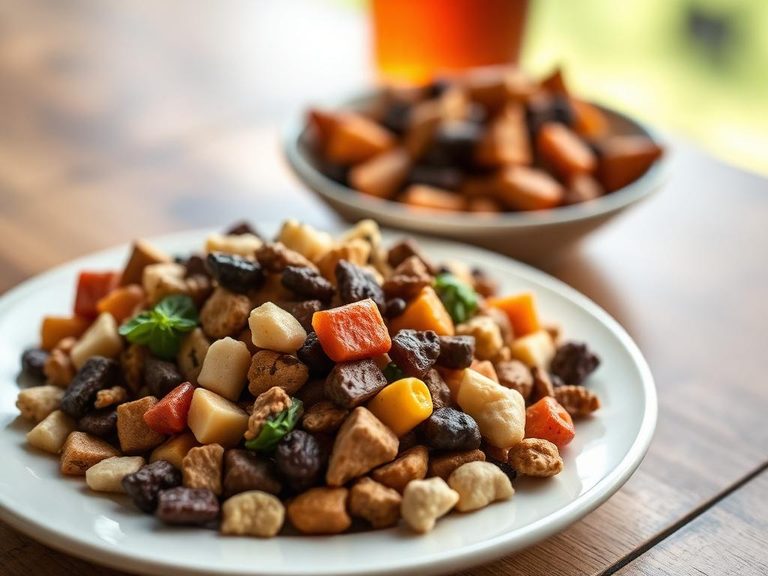
🌍 Where it's eaten
💡 Did you know?
The original Snickers bar was named after a family horse, and the 'Pop'ables' format was introduced to make the candy more snackable and less messy, reflecting a trend toward 'bite-sized' indulgence in the early 2000s.
Full nutrition (USDA data · scales with serving)
| Water | 5.8 g |
| Energy | 480 kcal |
| Energy | 2007 kj |
| Protein | 7.2 g |
| Total lipid (fat) | 24.3 g |
| Ash | 1.6 g |
| Carbohydrate, by difference | 61.1 g |
| Fiber, total dietary | 2.3 g |
| Total Sugars | 51.7 g |
| Calcium, Ca | 96.0 mg |
| Iron, Fe | 0.72 mg |
| Sodium, Na | 224 mg |
| Vitamin C, total ascorbic acid | 0.50 mg |
| Vitamin A, IU | 174 iu |
Fat & fatty acid profile (per 100g)
| Fatty acids, total saturated | 9.9 g |
| Fatty acids, total trans | 0.41 g |
| Cholesterol | 13.0 mg |
Amino acid profile (per 100g)
Estimated from Candies, honey-combed, with peanut butter — USDA does not publish this profile for Candies.
| Tryptophan | 0.09 g |
| Threonine | 0.21 g |
| Isoleucine | 0.24 g |
| Leucine | 0.61 g |
| Lysine | 0.27 g |
| Methionine | 0.10 g |
| Cystine | 0.09 g |
| Phenylalanine | 0.47 g |
| Tyrosine | 0.33 g |
| Valine | 0.31 g |
| Arginine | 1.1 g |
| Histidine | 0.22 g |
| Alanine | 0.36 g |
| Aspartic acid | 1.2 g |
| Glutamic acid | 2.0 g |
| Glycine | 0.56 g |
| Proline | 0.55 g |
| Serine | 0.58 g |
FAQ
Are Pop'ables Snickers the same as regular Snickers bars?
They contain the same core ingredients (milk chocolate, caramel, nougat, peanuts) but use puffed rice for a lighter, crunchier texture instead of the dense, chewy bar format.
How many calories are in a typical serving?
A 42g serving contains approximately 202 calories, with about 22g of sugar and 10g of fat, based on the 100g nutritional profile.
Are these suitable for people with nut allergies?
No, they contain peanuts and are manufactured in facilities that may process other nuts, making them unsafe for those with peanut or tree nut allergies.
Nutrient density (calculated · NRF9.3)
Nutrient Rich Foods index: beneficial nutrients (protein, fiber, vitamins, minerals) minus saturated fat, added sugar & sodium, per 100 kcal.
NRF9.3 index — Fulgoni, Keast & Drewnowski, 2009. Computed from USDA nutrients.
Weight-loss friendliness (composite index)
Energy density 4.80 kcal/g · 6% calories from protein · 2.3 g fiber · 51.7 g sugar per 100 g.
Composite of energy density (Rolls et al., 1999), protein & fiber satiety, minus sugar. A calculated heuristic — ranks satiety-per-calorie, not a clinical measure.