

Stew/soup, caribou (Alaska Native)
Whole food · American Indian/Alaska Native Foods

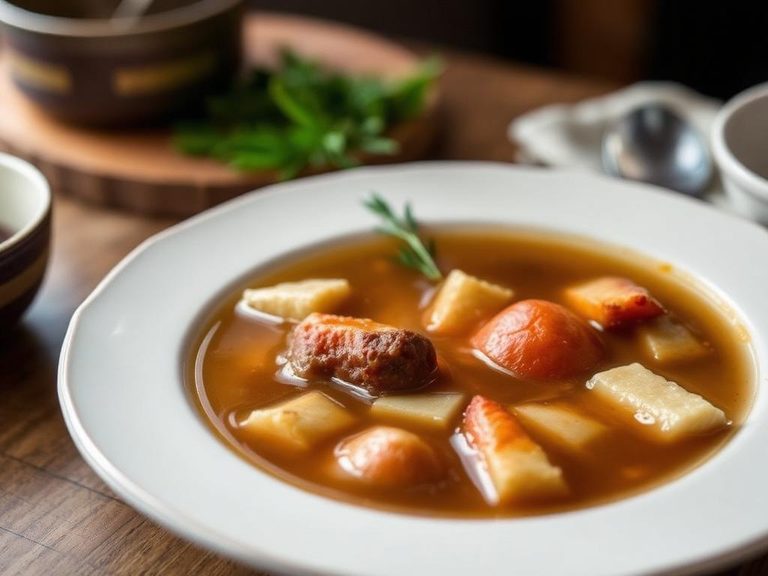
Photo: Wikipedia
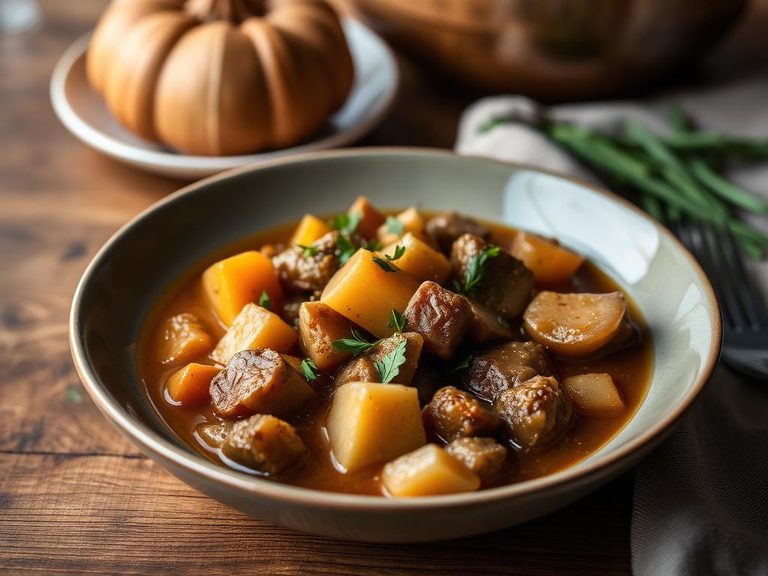
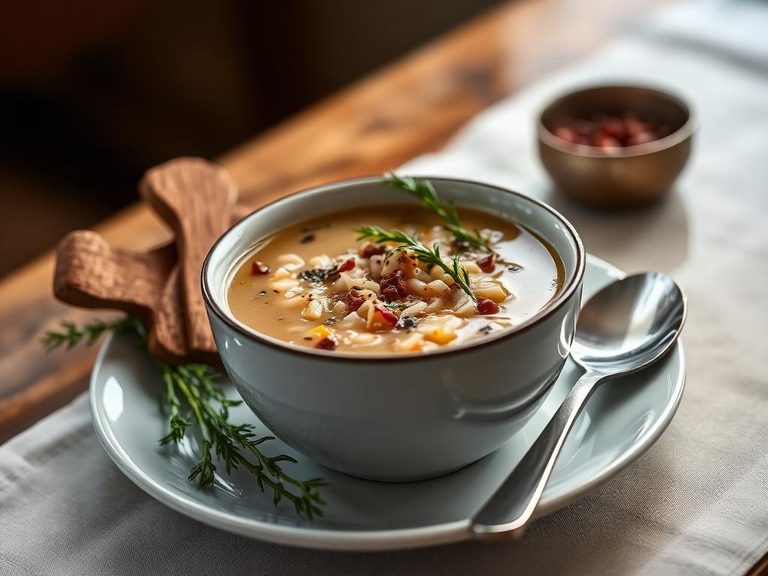
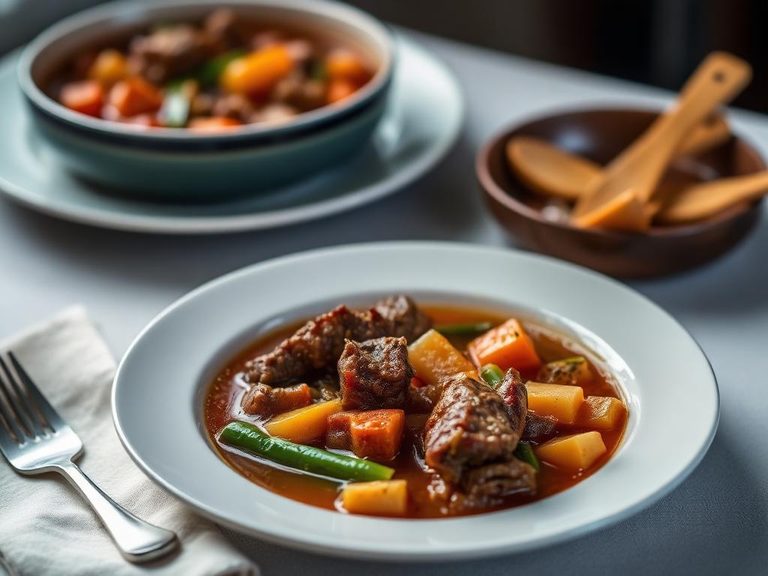
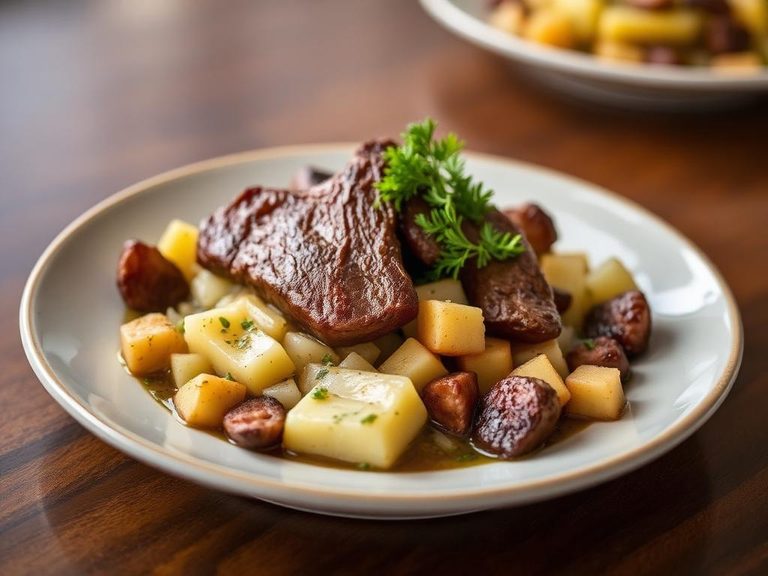
Caribou stew is a hearty, traditional Alaskan Native dish featuring tender, lean meat simmered in a savory broth. Its flavor is distinctly gamey yet clean, with a texture that is tender but not as fatty as beef. Nutritionally, it is a remarkably lean protein source, providing substantial protein with minimal fat and calories.
Calorie split: 37% protein · 47% carbs · 15% fat
↓ Full nutrition💚 Why it's loved
People love it for its deep, savory, and uniquely wild flavor that connects them to the land and Alaskan heritage. It's also valued as a warming, nourishing meal that is both simple and profoundly satisfying.
⚠️ Watch-outs & how to enjoy it better
The strong, gamey taste can be unfamiliar or off-putting to those accustomed to milder meats. To balance the lean meat, it is often cooked with added fats or served with starchy sides; pairing with root vegetables or a small amount of healthy fat can enhance satiety and nutrient absorption.
Key benefits
- Excellent source of lean, high-quality protein
- Very low in fat and calories, suitable for weight management
- Naturally rich in iron and B vitamins
- A traditional, sustainable food source from the Arctic
🍽️ Popular dishes
🌍 Where it's eaten
💡 Did you know?
Caribou and reindeer are the same species (*Rangifer tarandus*), but in North America, the wild herds are called caribou.
Full nutrition (USDA data · scales with serving)
| Water | 90.0 g |
| Energy | 41.0 kcal |
| Energy | 170 kj |
| Protein | 3.8 g |
| Total lipid (fat) | 0.70 g |
| Ash | 0.70 g |
| Carbohydrate, by difference | 4.8 g |
| Fiber, total dietary | 0.10 g |
| Calcium, Ca | 7.0 mg |
| Iron, Fe | 0.20 mg |
| Magnesium, Mg | 5.0 mg |
| Phosphorus, P | 12.0 mg |
| Potassium, K | 84.0 mg |
| Sodium, Na | 72.0 mg |
| Zinc, Zn | 0.10 mg |
| Copper, Cu | 0.03 mg |
| Manganese, Mn | 0.08 mg |
| Vitamin C, total ascorbic acid | 1.5 mg |
| Thiamin | 0.02 mg |
| Riboflavin | 0.01 mg |
| Niacin | 0.27 mg |
| Pantothenic acid | 0.10 mg |
| Vitamin B-6 | 0.06 mg |
| Folate, total | 3.0 ug |
| Folate, food | 3.0 ug |
| Vitamin A, IU | 1607 iu |
Fat & fatty acid profile (per 100g)
| Fatty acids, total saturated | 0.01 g |
| Fatty acids, total polyunsaturated | 0.02 g |
| PUFA 18:3 | 0.02 g |
FAQ
What does caribou meat taste like?
It has a distinct, lean, and slightly gamey flavor, often described as richer than beef but cleaner and less fatty. The taste can vary based on the animal's diet and the season.
Is caribou stew healthy?
Yes, it is very healthy. It's a low-calorie, low-fat, high-protein food that provides essential nutrients like iron, zinc, and B vitamins, making it excellent for muscle maintenance and overall nutrition.
How is caribou traditionally prepared by Alaska Natives?
Traditionally, it is often simmered slowly in water or broth, sometimes with foraged plants like fireweed or Labrador tea. Smoking and drying are also common preservation methods, and the meat may be used in soups or stews.
Nutrient density (calculated · NRF9.3)
Nutrient Rich Foods index: beneficial nutrients (protein, fiber, vitamins, minerals) minus saturated fat, added sugar & sodium, per 100 kcal.
NRF9.3 index — Fulgoni, Keast & Drewnowski, 2009. Computed from USDA nutrients.
Weight-loss friendliness (composite index)
Energy density 0.41 kcal/g · 37% calories from protein · 0.1 g fiber · 0.0 g sugar per 100 g.
Composite of energy density (Rolls et al., 1999), protein & fiber satiety, minus sugar. A calculated heuristic — ranks satiety-per-calorie, not a clinical measure.
Dietary load (calculated from USDA values)
Potential renal acid load. Positive = acid-forming, negative = alkaline-forming.
Sodium-to-potassium ratio: 0.86 (lower is better — aim for ≤ 1)
Sodium:potassium per WHO potassium guidance. Computed from USDA nutrients.