

Nance, canned, syrup, drained
Whole food · Fruits and Fruit Juices

Photo: Wikipedia
Nance is a small, golden-yellow tropical fruit with a uniquely pungent, sweet-tart flavor often compared to a blend of lychee and apricot. When canned in syrup and drained, it offers a tender, slightly fibrous texture with a burst of concentrated tropical sweetness. Its notable fiber content (7g per 100g) stands out for a canned fruit, aiding digestion.
Calorie split: 2% protein · 87% carbs · 11% fat
↓ Full nutrition💚 Why it's loved
People love nance for its intensely aromatic, perfume-like flavor that is a staple in Latin American desserts and beverages. Its unique taste evokes a strong sense of nostalgia and is prized for its ability to add a distinctive tropical twist to recipes.
⚠️ Watch-outs & how to enjoy it better
The canned version in syrup is high in added sugars (15.66g per 100g), which can cause blood-sugar spikes if consumed in large quantities. To counteract this, practice portion control and pair it with a source of protein or healthy fat, like Greek yogurt or nuts, to slow sugar absorption. The fruit's strong flavor may also be an acquired taste for some.
Key benefits
- Good source of dietary fiber for digestive health.
- Contains antioxidants like vitamin C and carotenoids.
- Provides quick energy from natural carbohydrates.
- Low in fat and a source of essential minerals.
- Versatile ingredient for both sweet and savory dishes.
🍽️ Popular dishes



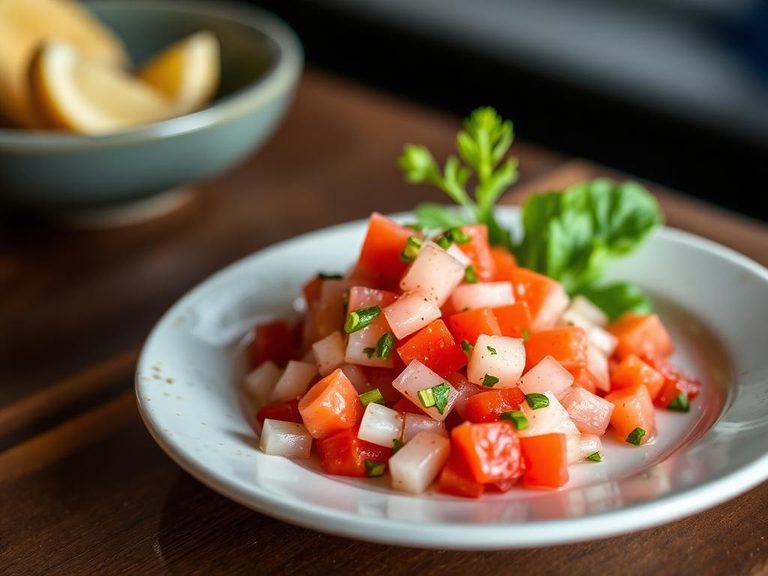


🌍 Where it's eaten
💡 Did you know?
The nance fruit's strong, distinctive aroma is due to a compound called ethyl hexanoate, which is also responsible for the smell of pineapple and some cheeses.
Full nutrition (USDA data · scales with serving)
| Water | 74.8 g |
| Energy | 95.0 kcal |
| Energy | 396 kj |
| Protein | 0.56 g |
| Total lipid (fat) | 1.3 g |
| Ash | 0.52 g |
| Carbohydrate, by difference | 22.8 g |
| Fiber, total dietary | 7.0 g |
| Total Sugars | 15.7 g |
| Sucrose | 0.07 g |
| Glucose | 7.4 g |
| Fructose | 8.2 g |
| Lactose | 0.00 g |
| Maltose | 0.00 g |
| Galactose | 0.00 g |
| Calcium, Ca | 42.0 mg |
| Iron, Fe | 0.37 mg |
| Magnesium, Mg | 16.0 mg |
| Phosphorus, P | 7.0 mg |
| Potassium, K | 194 mg |
| Sodium, Na | 8.0 mg |
| Zinc, Zn | 0.06 mg |
| Copper, Cu | 0.05 mg |
| Manganese, Mn | 0.17 mg |
| Vitamin C, total ascorbic acid | 10.8 mg |
| Thiamin | 0.01 mg |
| Riboflavin | 0.02 mg |
| Niacin | 0.30 mg |
| Vitamin B-6 | 0.01 mg |
Fat & fatty acid profile (per 100g)
| Fatty acids, total trans | 0.00 g |
FAQ
What does nance taste like?
Nance has a unique, pungent flavor often described as a mix between a lychee, apricot, and a hint of cheese. It is sweet-tart and highly aromatic.
How is canned nance different from fresh?
Canned nance is softer in texture and preserved in a sweet syrup, which adds significant sugar. Fresh nance is firmer, more aromatic, and has a more complex flavor profile.
Can I use the syrup from canned nance?
Yes, the syrup is flavorful and can be used to sweeten drinks, desserts, or sauces. However, be mindful of its high sugar content.
Nutrient density (calculated · NRF9.3)
Nutrient Rich Foods index: beneficial nutrients (protein, fiber, vitamins, minerals) minus saturated fat, added sugar & sodium, per 100 kcal.
NRF9.3 index — Fulgoni, Keast & Drewnowski, 2009. Computed from USDA nutrients.
Weight-loss friendliness (composite index)
Energy density 0.95 kcal/g · 2% calories from protein · 7.0 g fiber · 15.7 g sugar per 100 g.
Composite of energy density (Rolls et al., 1999), protein & fiber satiety, minus sugar. A calculated heuristic — ranks satiety-per-calorie, not a clinical measure.
Dietary load (calculated from USDA values)
Potential renal acid load. Positive = acid-forming, negative = alkaline-forming.
Sodium-to-potassium ratio: 0.04 (lower is better — aim for ≤ 1)
Sodium:potassium per WHO potassium guidance. Computed from USDA nutrients.