

McDONALD'S, Cheeseburger
Whole food · Fast Foods
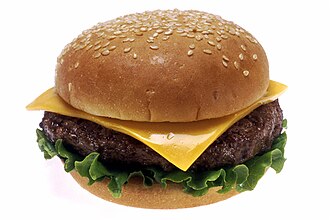
Photo: Wikipedia
The McDonald's Cheeseburger is a classic fast-food staple: a small, toasted bun holding a thin, seared beef patty, a slice of processed American cheese, tangy pickles, onions, ketchup, and mustard. Its taste is a familiar, salty-savory umami punch with a slight sweetness from the ketchup and a crisp, acidic bite from the pickles. Nutritionally, it's a dense source of calories and fat relative to its size, with a notable protein content.
Calorie split: 19% protein · 41% carbs · 39% fat
↓ Full nutrition💚 Why it's loved
People love it for its iconic, no-surprises flavor profile—the perfect combination of salty, savory, and tangy that delivers immediate satisfaction. It's a cultural touchstone of fast food, representing affordability, speed, and a specific kind of nostalgic comfort.
⚠️ Watch-outs & how to enjoy it better
The high sodium and saturated fat content can contribute to blood pressure concerns and may not align with heart-healthy diets. The refined carbohydrates in the bun can cause a rapid blood-sugar spike. To counteract this, pair it with a side salad or apple slices instead of fries, drink water, and consider eating only half to control portion size. Those with gluten or dairy sensitivities should avoid it.
Key benefits
- Provides a quick, portable source of protein (approx. 13g per burger).
- Offers a convenient and consistent calorie source for energy.
- Contains calcium from the cheese slice.
- A familiar comfort food that is widely accessible.
🍽️ Popular dishes


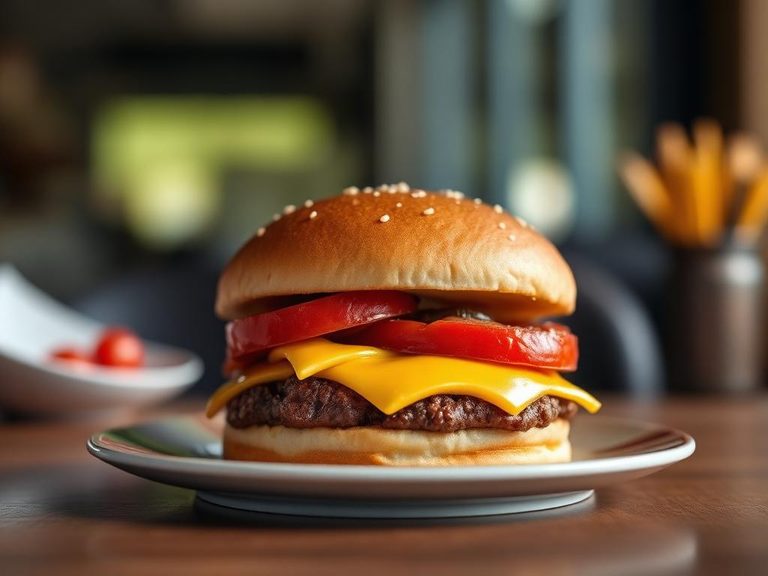
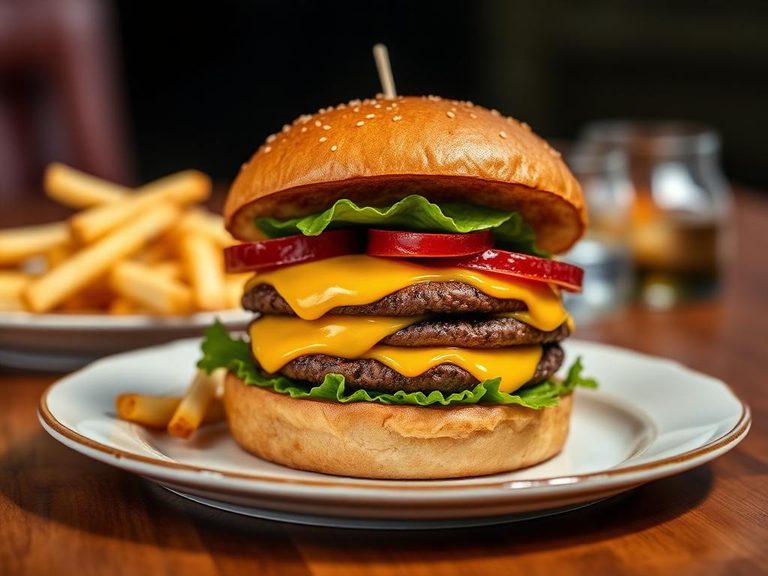
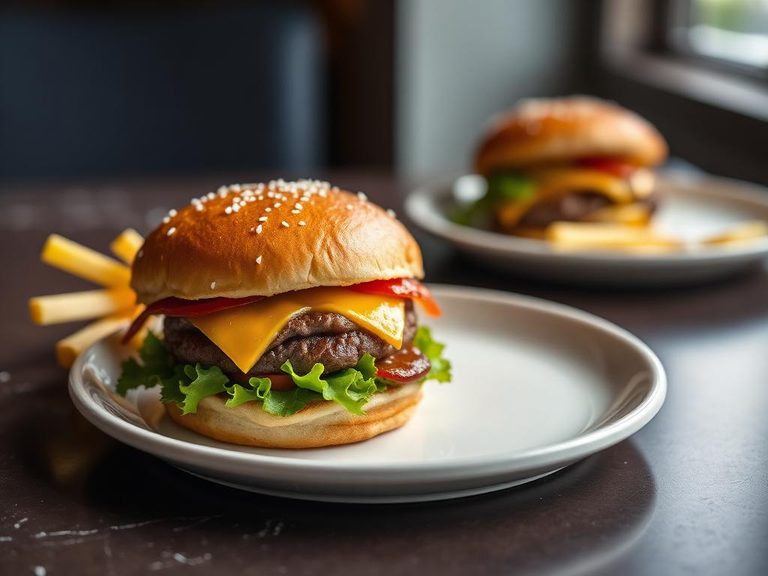
🌍 Where it's eaten
💡 Did you know?
The McDonald's Cheeseburger was introduced in 1940, and its iconic sesame seed bun was not added until 1963.
Full nutrition (USDA data · scales with serving)
| Water | 45.0 g |
| Energy | 263 kcal |
| Energy | 1100 kj |
| Protein | 13.0 g |
| Total lipid (fat) | 11.8 g |
| Ash | 2.5 g |
| Carbohydrate, by difference | 27.8 g |
| Fiber, total dietary | 1.1 g |
| Total Sugars | 6.2 g |
| Sucrose | 0.24 g |
| Glucose | 2.0 g |
| Fructose | 2.6 g |
| Lactose | 0.54 g |
| Maltose | 0.84 g |
| Galactose | 0.00 g |
| Calcium, Ca | 167 mg |
| Iron, Fe | 2.4 mg |
| Magnesium, Mg | 20.0 mg |
| Phosphorus, P | 140 mg |
| Potassium, K | 200 mg |
| Sodium, Na | 626 mg |
| Zinc, Zn | 1.9 mg |
| Copper, Cu | 0.10 mg |
| Manganese, Mn | 0.23 mg |
| Vitamin C, total ascorbic acid | 0.60 mg |
| Thiamin | 0.22 mg |
| Riboflavin | 0.26 mg |
| Niacin | 4.0 mg |
| Folate, total | 59.0 ug |
| Vitamin B-12 | 0.86 ug |
| Vitamin A, IU | 243 iu |
Fat & fatty acid profile (per 100g)
| Fatty acids, total saturated | 4.4 g |
| Fatty acids, total monounsaturated | 3.6 g |
| Fatty acids, total polyunsaturated | 0.35 g |
| Cholesterol | 35.0 mg |
FAQ
Is the McDonald's Cheeseburger a good source of protein?
Yes, it provides about 13 grams of protein, which is a significant amount for a small, single-serving item, making it a quick protein source.
Why is the McDonald's Cheeseburger so high in sodium?
The high sodium comes from the processed cheese, seasoned beef patty, pickles, and condiments like ketchup and mustard, which are all used for flavor preservation and taste.
Can I make a healthier version at home?
Absolutely. Use lean ground beef or a plant-based patty, a whole-grain bun, reduced-fat cheese, and load it with fresh lettuce, tomato, and onion while going light on the salt and sugary sauces.
Nutrient density (calculated · NRF9.3)
Nutrient Rich Foods index: beneficial nutrients (protein, fiber, vitamins, minerals) minus saturated fat, added sugar & sodium, per 100 kcal.
NRF9.3 index — Fulgoni, Keast & Drewnowski, 2009. Computed from USDA nutrients.
Weight-loss friendliness (composite index)
Energy density 2.63 kcal/g · 20% calories from protein · 1.1 g fiber · 6.2 g sugar per 100 g.
Composite of energy density (Rolls et al., 1999), protein & fiber satiety, minus sugar. A calculated heuristic — ranks satiety-per-calorie, not a clinical measure.
Dietary load (calculated from USDA values)
Potential renal acid load. Positive = acid-forming, negative = alkaline-forming.
Sodium-to-potassium ratio: 3.13 (lower is better — aim for ≤ 1)
Sodium:potassium per WHO potassium guidance. Computed from USDA nutrients.