

McDONALD'S, BIG MAC
Whole food · Fast Foods
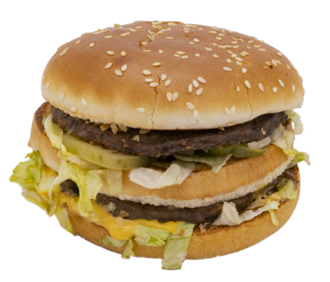
Photo: Wikipedia
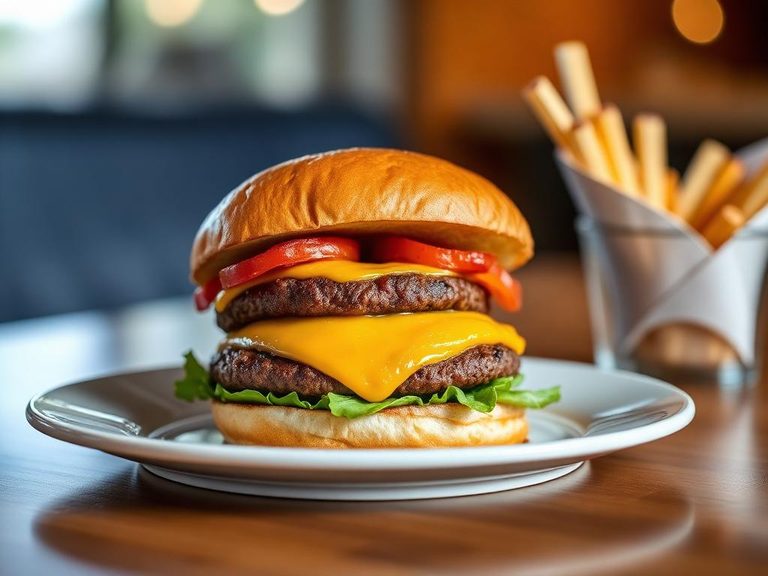
The Big Mac is a double-decker hamburger featuring two beef patties, special sauce, lettuce, cheese, pickles, and onions on a sesame seed bun. Its iconic taste is a savory, tangy, and slightly sweet symphony, with a satisfying contrast between the juicy patties, creamy sauce, and crisp vegetables. Nutritionally, a 100g serving provides a substantial 11.82g of protein, primarily from the beef, but also carries 14.96g of fat.
Calorie split: 18% protein · 31% carbs · 51% fat
↓ Full nutrition💚 Why it's loved
People love the Big Mac for its uniquely layered construction and the signature tang of its 'special sauce,' which creates a craveable, umami-rich flavor. It's a cultural icon, representing a reliable, indulgent comfort food that tastes the same whether you're in Tokyo, Toronto, or Texas.
⚠️ Watch-outs & how to enjoy it better
The meal can be high in sodium and saturated fat, which may concern those monitoring heart health or blood pressure. To counteract, consider sharing the burger, skipping the fries for a side salad, and drinking water instead of a sugary soda to balance the meal. Those with gluten or dairy allergies must avoid it entirely.
Key benefits
- High in protein for muscle maintenance
- Quick and convenient source of energy
- Contains some dietary fiber from lettuce and pickles
- Provides calcium from the cheese slice
- Consistent and familiar flavor profile worldwide
🍽️ Popular dishes

🌍 Where it's eaten
💡 Did you know?
The Big Mac was invented in 1967 by a Pennsylvania franchisee named Jim Delligatti, and it was originally called the 'Big McGee.'
Full nutrition (USDA data · scales with serving)
| Water | 51.3 g |
| Energy | 257 kcal |
| Energy | 1076 kj |
| Protein | 11.8 g |
| Total lipid (fat) | 15.0 g |
| Ash | 1.9 g |
| Carbohydrate, by difference | 20.1 g |
| Fiber, total dietary | 1.6 g |
| Total Sugars | 4.0 g |
| Sucrose | 0.46 g |
| Glucose | 1.0 g |
| Fructose | 1.7 g |
| Lactose | 0.32 g |
| Maltose | 0.49 g |
| Galactose | 0.00 g |
| Calcium, Ca | 116 mg |
| Iron, Fe | 2.0 mg |
| Magnesium, Mg | 20.0 mg |
| Phosphorus, P | 122 mg |
| Potassium, K | 181 mg |
| Sodium, Na | 460 mg |
| Zinc, Zn | 1.9 mg |
| Copper, Cu | 0.10 mg |
| Manganese, Mn | 0.21 mg |
| Vitamin C, total ascorbic acid | 0.40 mg |
| Thiamin | 0.18 mg |
| Riboflavin | 0.21 mg |
| Niacin | 3.4 mg |
| Folate, total | 46.0 ug |
| Vitamin B-12 | 0.88 ug |
| Vitamin A, IU | 188 iu |
Fat & fatty acid profile (per 100g)
| Fatty acids, total saturated | 3.8 g |
| Fatty acids, total monounsaturated | 3.5 g |
| Fatty acids, total polyunsaturated | 0.31 g |
| Cholesterol | 36.0 mg |
FAQ
How many calories are in a full Big Mac meal?
A standard Big Mac meal (burger, medium fries, medium Coke) contains approximately 1,100 calories, which is over half the daily recommended intake for many adults.
Is the Big Mac sauce the same as Thousand Island dressing?
While similar, the official Big Mac sauce is a proprietary recipe. It's generally considered to be a sweeter, tangier version of Thousand Island, with ingredients like sweet pickle relish and a specific spice blend.
What is the 'special sauce' made of?
The exact recipe is a trade secret, but it's believed to be a mayonnaise-based sauce containing sweet pickle relish, yellow mustard, white wine vinegar, garlic powder, onion powder, and paprika.
Nutrient density (calculated · NRF9.3)
Nutrient Rich Foods index: beneficial nutrients (protein, fiber, vitamins, minerals) minus saturated fat, added sugar & sodium, per 100 kcal.
NRF9.3 index — Fulgoni, Keast & Drewnowski, 2009. Computed from USDA nutrients.
Weight-loss friendliness (composite index)
Energy density 2.57 kcal/g · 18% calories from protein · 1.6 g fiber · 4.0 g sugar per 100 g.
Composite of energy density (Rolls et al., 1999), protein & fiber satiety, minus sugar. A calculated heuristic — ranks satiety-per-calorie, not a clinical measure.
Dietary load (calculated from USDA values)
Potential renal acid load. Positive = acid-forming, negative = alkaline-forming.
Sodium-to-potassium ratio: 2.54 (lower is better — aim for ≤ 1)
Sodium:potassium per WHO potassium guidance. Computed from USDA nutrients.