

Agutuk, fish/berry with seal oil (Alaskan ice cream) (Alaska Native)
Whole food · American Indian/Alaska Native Foods
Agutuk, often called Alaskan ice cream, is a traditional Alaska Native food made by vigorously whipping seal oil with berries, fish, or snow to create a rich, emulsified, creamy dish. It has a dense, mousse-like texture and a complex flavor profile that is simultaneously savory, fatty, and sweet depending on the specific ingredients used. Nutritionally, it is exceptionally calorie-dense, providing a massive boost of energy primarily from healthy fats, making it a vital survival food in harsh Arctic climates.
Calorie split: 4% protein · 15% carbs · 81% fat
↓ Full nutrition💚 Why it's loved
People love Agutuk for its deeply satisfying, rich flavor that combines the savory depth of marine oils with the bright tartness of wild berries. It is cherished as a cultural staple, connecting generations through traditional preparation methods and the celebration of local ingredients.
⚠️ Watch-outs & how to enjoy it better
The high fat content, particularly from seal oil, can be intense for those unaccustomed to it, and the texture may be unfamiliar. It is not suitable for individuals with fish or seafood allergies, and its high calorie density requires portion control for those managing weight.
Key benefits
- Provides extremely high caloric density for energy in cold climates
- Rich in Omega-3 fatty acids from seal oil and fish
- Contains essential vitamins and antioxidants from wild berries
- Serves as a critical, traditional source of sustenance for Alaska Native communities
- Offers a unique combination of protein and healthy fats
🍽️ Popular dishes
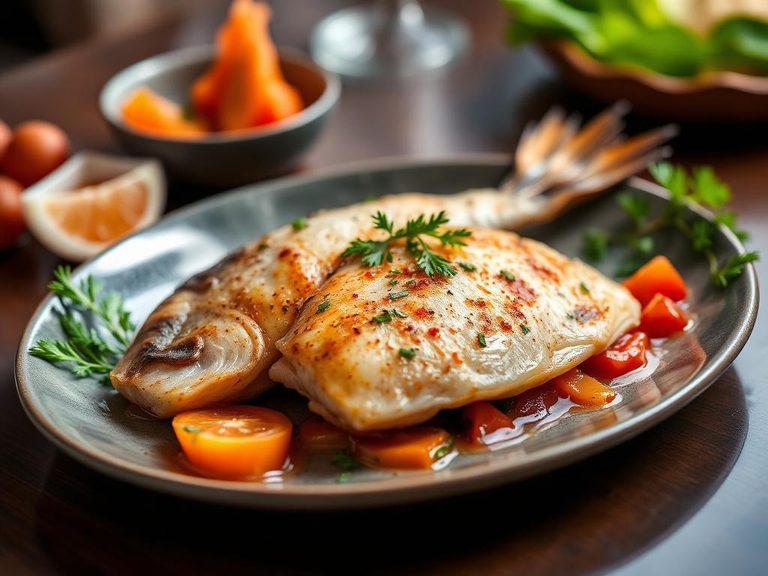
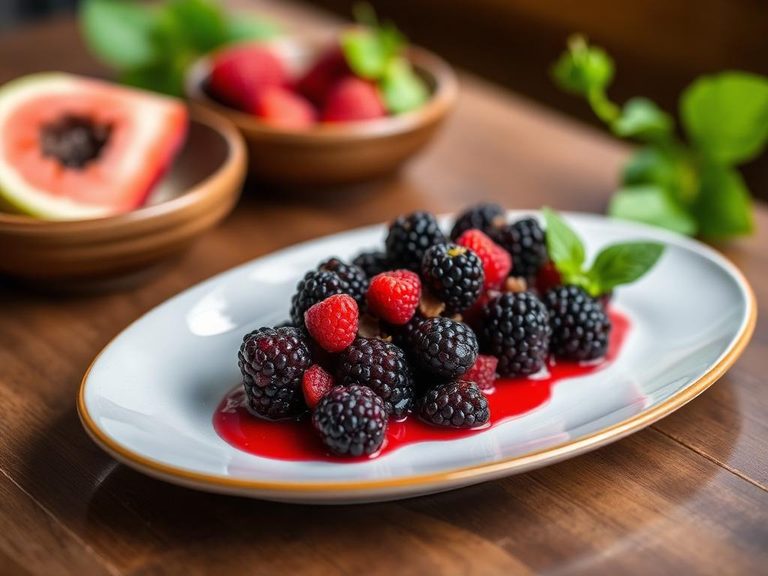
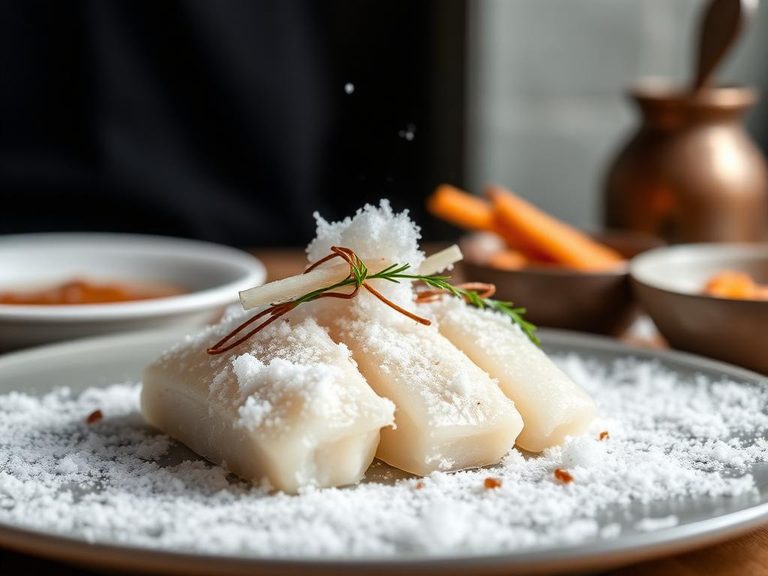
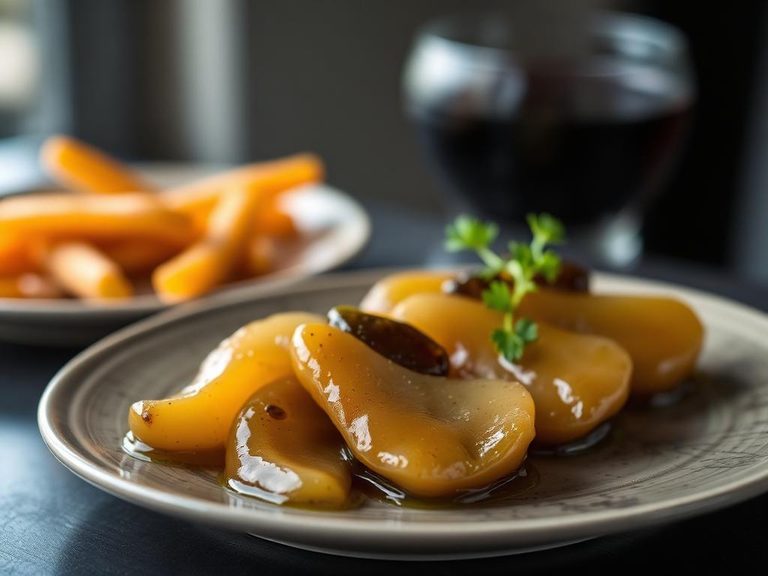
🌍 Where it's eaten
💡 Did you know?
The preparation of Agutuk is a communal activity, often involving vigorous whipping by hand or with a wooden paddle to emulsify the oil and other ingredients, a process that can take up to an hour.
Full nutrition (USDA data · scales with serving)
| Water | 47.3 g |
| Energy | 353 kcal |
| Energy | 1479 kj |
| Protein | 3.4 g |
| Total lipid (fat) | 31.8 g |
| Ash | 4.1 g |
| Carbohydrate, by difference | 13.4 g |
| Fiber, total dietary | 0.50 g |
| Calcium, Ca | 8.0 mg |
| Iron, Fe | 0.30 mg |
| Magnesium, Mg | 7.0 mg |
| Phosphorus, P | 46.0 mg |
| Potassium, K | 70.0 mg |
| Sodium, Na | 21.0 mg |
| Zinc, Zn | 0.18 mg |
| Copper, Cu | 0.03 mg |
| Manganese, Mn | 0.13 mg |
| Vitamin C, total ascorbic acid | 2.9 mg |
| Thiamin | 0.04 mg |
| Riboflavin | 0.05 mg |
| Niacin | 0.55 mg |
| Pantothenic acid | 0.02 mg |
| Vitamin B-6 | 0.01 mg |
| Folate, total | 3.0 ug |
| Folate, food | 3.0 ug |
| Vitamin A, IU | 696 iu |
| Vitamin E (alpha-tocopherol) | 2.4 mg |
Fat & fatty acid profile (per 100g)
| Fatty acids, total saturated | 7.7 g |
| Fatty acids, total monounsaturated | 14.4 g |
| Fatty acids, total polyunsaturated | 8.4 g |
| PUFA 18:2 | 7.1 g |
| PUFA 18:3 | 0.53 g |
| Cholesterol | 10.0 mg |
FAQ
What does Agutuk taste like?
Agutuk has a rich, savory, and slightly sweet flavor, with the taste of seal oil being prominent, complemented by the tartness of berries or the mildness of fish.
Is Agutuk healthy?
Agutuk is highly nutritious, providing a dense source of calories, healthy fats (especially Omega-3s), and vitamins, but its high fat content means it should be consumed in moderation.
How is Agutuk traditionally made?
Traditional Agutuk is made by whipping seal oil with berries, fish, or snow until it forms a thick, creamy consistency, often using a wooden paddle or by hand.
Nutrient density (calculated · NRF9.3)
Nutrient Rich Foods index: beneficial nutrients (protein, fiber, vitamins, minerals) minus saturated fat, added sugar & sodium, per 100 kcal.
NRF9.3 index — Fulgoni, Keast & Drewnowski, 2009. Computed from USDA nutrients.
Weight-loss friendliness (composite index)
Energy density 3.53 kcal/g · 4% calories from protein · 0.5 g fiber · 0.0 g sugar per 100 g.
Composite of energy density (Rolls et al., 1999), protein & fiber satiety, minus sugar. A calculated heuristic — ranks satiety-per-calorie, not a clinical measure.
Dietary load (calculated from USDA values)
Potential renal acid load. Positive = acid-forming, negative = alkaline-forming.
Sodium-to-potassium ratio: 0.30 (lower is better — aim for ≤ 1)
Sodium:potassium per WHO potassium guidance. Computed from USDA nutrients.