

Cereals ready-to-eat, MALT-O-MEAL, Honey BUZZERS
Whole food · Breakfast Cereals

Photo: Wikipedia
Honey BUZZERS is a sweetened, honey-flavored ready-to-eat cereal that delivers a satisfying crunch and a light, airy texture. Its primary nutritional profile is dominated by carbohydrates, providing a quick energy source, though it is relatively low in protein and fat. The cereal is designed for a fast, sweet breakfast or snack experience.
Calorie split: 4% protein · 92% carbs · 4% fat
↓ Full nutrition💚 Why it's loved
People love Honey BUZZERS for its nostalgic, sweet honey flavor and the satisfying, light crunch it provides in every bite. It's a simple, comforting choice for a quick breakfast or a sweet snack that evokes a sense of childhood familiarity.
⚠️ Watch-outs & how to enjoy it better
The high sugar content (nearly 38g per 100g) can lead to rapid blood-sugar spikes and a subsequent energy crash, making it unsuitable for those managing diabetes or seeking sustained energy. To counteract this, pair it with a source of protein and healthy fat, such as Greek yogurt or a handful of nuts, and practice portion control by sticking to a single serving.
Key benefits
- Provides a quick source of energy from carbohydrates
- Low in fat content
- Contains some dietary fiber
- Convenient and ready-to-eat format
- Offers a sweet, honey-flavored taste profile
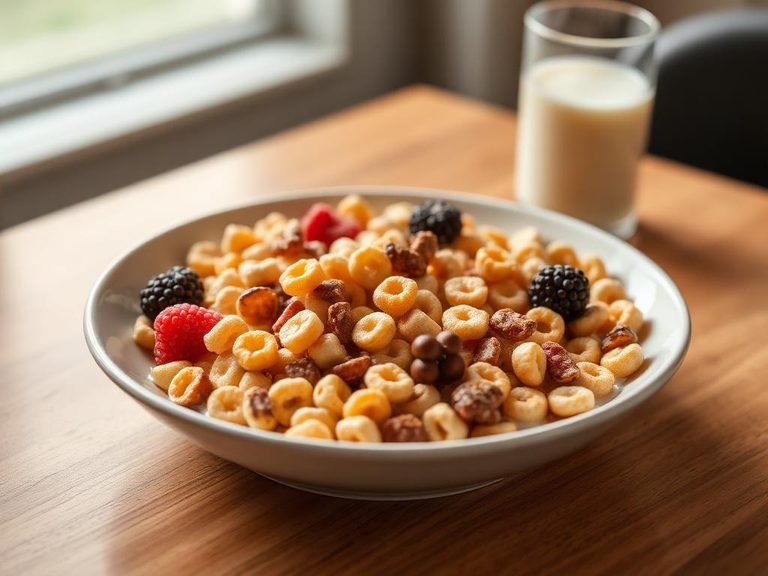
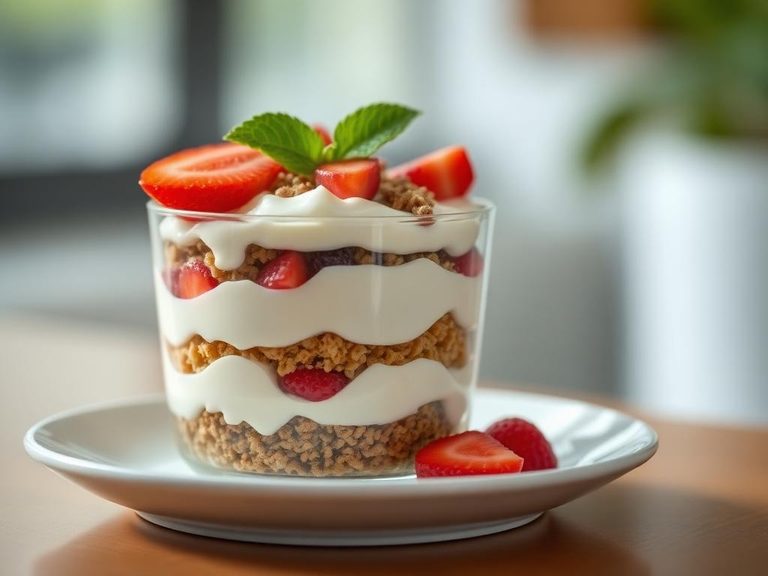
🍽️ Popular dishes

🌍 Where it's eaten
💡 Did you know?
The name 'Honey BUZZERS' likely references the buzzing sound of bees, which are the source of the honey flavoring, creating a playful, insect-themed brand identity.
Full nutrition (USDA data · scales with serving)
| Water | 1.9 g |
| Energy | 379 kcal |
| Energy | 1587 kj |
| Protein | 3.5 g |
| Total lipid (fat) | 1.7 g |
| Ash | 3.3 g |
| Carbohydrate, by difference | 89.7 g |
| Fiber, total dietary | 3.4 g |
| Total Sugars | 37.9 g |
| Calcium, Ca | 14.0 mg |
| Iron, Fe | 31.0 mg |
| Magnesium, Mg | 28.0 mg |
| Phosphorus, P | 69.0 mg |
| Potassium, K | 121 mg |
| Sodium, Na | 759 mg |
| Zinc, Zn | 12.9 mg |
| Vitamin C, total ascorbic acid | 20.7 mg |
| Thiamin | 1.3 mg |
| Riboflavin | 1.5 mg |
| Niacin | 17.2 mg |
| Vitamin B-6 | 1.7 mg |
| Folate, total | 690 ug |
| Vitamin B-12 | 5.2 ug |
| Vitamin A, IU | 1724 iu |
| Vitamin D (D2 + D3), International Units | 138 iu |
| Vitamin D (D2 + D3) | 3.4 ug |
Fat & fatty acid profile (per 100g)
| Fatty acids, total saturated | 0.58 g |
| Fatty acids, total monounsaturated | 0.49 g |
| Fatty acids, total polyunsaturated | 0.58 g |
| Fatty acids, total trans | 0.00 g |
| Cholesterol | 0.00 mg |
FAQ
Is Honey BUZZERS a good source of protein?
No, with only about 3.45g of protein per 100g, it is a low-protein food. It is primarily a carbohydrate-based cereal.
Can I eat this cereal if I'm trying to reduce sugar intake?
This cereal is high in sugar (37.93g per 100g), so it's not ideal for a low-sugar diet. Consider it an occasional treat rather than a daily staple.
How does the fiber content compare to other cereals?
With 3.4g of fiber per 100g, it provides some dietary fiber but is not exceptionally high-fiber. Many whole-grain cereals offer more fiber per serving.
Nutrient density (calculated · NRF9.3)
Nutrient Rich Foods index: beneficial nutrients (protein, fiber, vitamins, minerals) minus saturated fat, added sugar & sodium, per 100 kcal.
NRF9.3 index — Fulgoni, Keast & Drewnowski, 2009. Computed from USDA nutrients.
Weight-loss friendliness (composite index)
Energy density 3.79 kcal/g · 4% calories from protein · 3.4 g fiber · 37.9 g sugar per 100 g.
Composite of energy density (Rolls et al., 1999), protein & fiber satiety, minus sugar. A calculated heuristic — ranks satiety-per-calorie, not a clinical measure.
Dietary load (calculated from USDA values)
Potential renal acid load. Positive = acid-forming, negative = alkaline-forming.
Sodium-to-potassium ratio: 6.27 (lower is better — aim for ≤ 1)
Sodium:potassium per WHO potassium guidance. Computed from USDA nutrients.