

Soymilk (All flavors), lowfat, with added calcium, vitamins A and D
Whole food · Legumes and Legume Products

Photo: Wikipedia
This is a light, smooth, and slightly sweetened plant-based beverage made from soybeans, fortified with key nutrients. Its texture is creamy yet fluid, with a mild, beany undertone that's easily masked by added flavors. It's a nutritionally dense, low-calorie option, providing a solid protein punch and essential vitamins for bone and immune health.
Calorie split: 16% protein · 70% carbs · 14% fat
↓ Full nutrition💚 Why it's loved
People love its creamy, comforting texture and its incredible versatility as a dairy milk alternative in everything from coffee to cereal. It's a staple in many cuisines, offering a familiar, nourishing base for both sweet and savory preparations.
⚠️ Watch-outs & how to enjoy it better
As a common allergen, soy is unsuitable for those with soy allergies. The added sugars can contribute to blood sugar spikes if consumed in large quantities. To counteract, pair it with a source of fiber or protein (like oatmeal or nuts), or choose unsweetened varieties. For those with sensitive digestion, starting with smaller portions can help.
Key benefits
- Excellent source of high-quality plant protein.
- Naturally low in saturated fat and cholesterol-free.
- Fortified with calcium and Vitamin D for bone health.
- Contains isoflavones, beneficial plant compounds.
- Lactose-free and suitable for vegan diets.
🍽️ Popular dishes
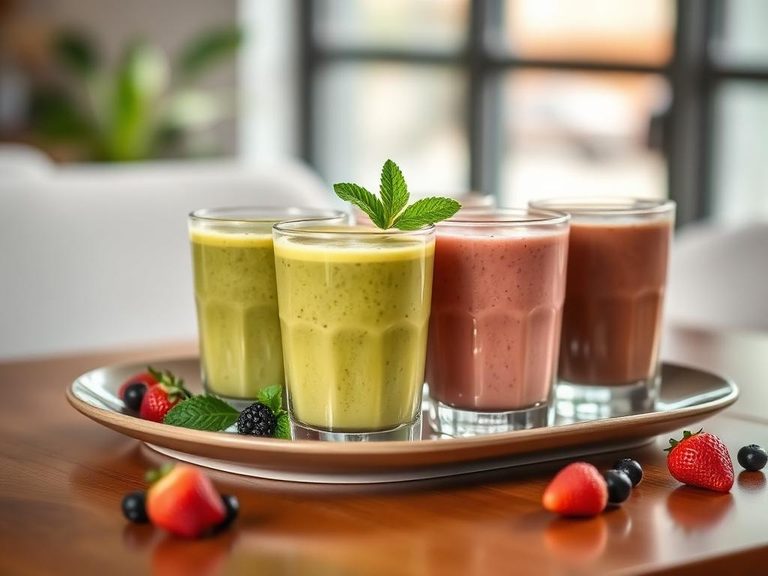

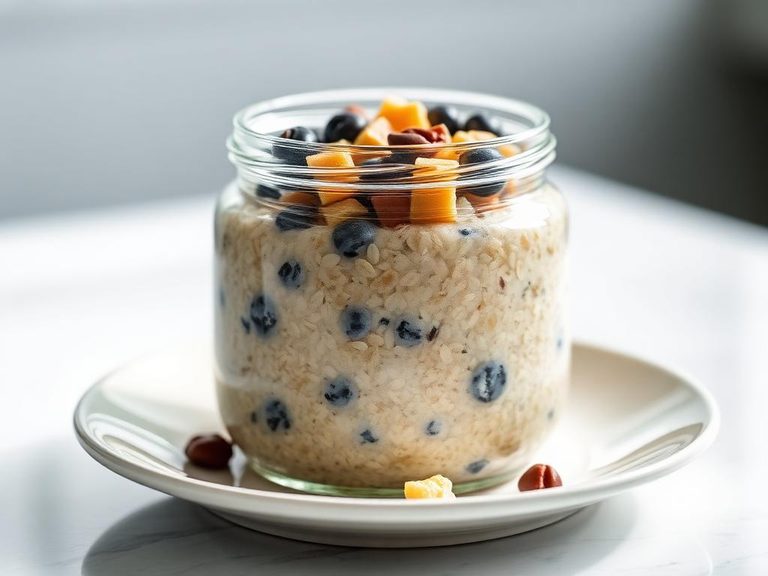

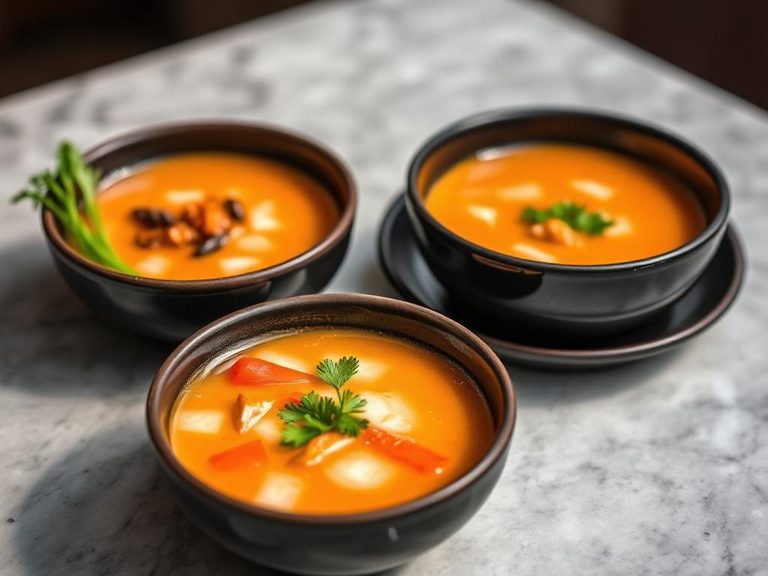
🌍 Where it's eaten
💡 Did you know?
Fortified soymilk is one of the few plant-based beverages that can legally be labeled 'milk' in the United States, provided it meets specific nutrient equivalence standards set by the USDA.
Full nutrition (USDA data · scales with serving)
| Water | 89.9 g |
| Energy | 43.0 kcal |
| Energy | 180 kj |
| Protein | 1.6 g |
| Total lipid (fat) | 0.62 g |
| Ash | 0.64 g |
| Carbohydrate, by difference | 7.2 g |
| Fiber, total dietary | 0.80 g |
| Total Sugars | 3.5 g |
| Calcium, Ca | 82.0 mg |
| Iron, Fe | 0.44 mg |
| Phosphorus, P | 62.0 mg |
| Potassium, K | 64.0 mg |
| Sodium, Na | 37.0 mg |
| Vitamin C, total ascorbic acid | 0.00 mg |
| Vitamin B-12 | 0.00 ug |
| Vitamin A, RAE | 62.0 ug |
| Vitamin A, IU | 206 iu |
| Vitamin D (D2 + D3), International Units | 41.0 iu |
| Vitamin D (D2 + D3) | 1.0 ug |
| Vitamin D2 (ergocalciferol) | 1.0 ug |
Fat & fatty acid profile (per 100g)
| Fatty acids, total saturated | 0.00 g |
| Fatty acids, total monounsaturated | 0.21 g |
| Fatty acids, total polyunsaturated | 0.41 g |
| Fatty acids, total trans | 0.00 g |
| Cholesterol | 0.00 mg |
FAQ
Is the protein in soymilk complete?
Yes, soy protein is a complete protein, meaning it contains all nine essential amino acids necessary for human health, making it comparable to animal-based proteins.
Why is it fortified with Vitamins A and D?
Vitamin D is often added to match the nutritional profile of cow's milk, as it's crucial for calcium absorption and bone health. Vitamin A is added for its role in vision and immune function, and it's a standard fortification in many plant-based milks.
How does low-fat affect the taste and texture?
Low-fat soymilk has a lighter, less creamy mouthfeel compared to full-fat versions. The flavor can be slightly thinner, but the added vitamins and minerals ensure its nutritional value remains high.
Nutrient density (calculated · NRF9.3)
Nutrient Rich Foods index: beneficial nutrients (protein, fiber, vitamins, minerals) minus saturated fat, added sugar & sodium, per 100 kcal.
NRF9.3 index — Fulgoni, Keast & Drewnowski, 2009. Computed from USDA nutrients.
Weight-loss friendliness (composite index)
Energy density 0.43 kcal/g · 15% calories from protein · 0.8 g fiber · 3.5 g sugar per 100 g.
Composite of energy density (Rolls et al., 1999), protein & fiber satiety, minus sugar. A calculated heuristic — ranks satiety-per-calorie, not a clinical measure.
Dietary load (calculated from USDA values)
Potential renal acid load. Positive = acid-forming, negative = alkaline-forming.
Sodium-to-potassium ratio: 0.58 (lower is better — aim for ≤ 1)
Sodium:potassium per WHO potassium guidance. Computed from USDA nutrients.