

SILK Nog, soymilk
Whole food · Legumes and Legume Products

Photo: Wikipedia
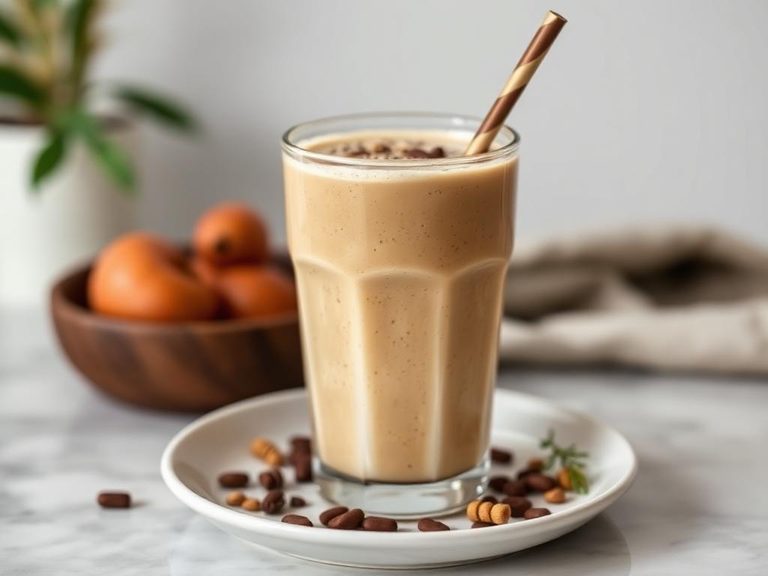
SILK Nog is a rich, creamy, plant-based holiday beverage made from soy milk, designed to replicate the luxurious texture and spiced flavor of traditional eggnog. It offers a smooth, velvety mouthfeel with a sweet, nutmeg-forward profile, providing a festive treat that is significantly lower in calories and fat than its dairy counterpart. Its standout nutritional feature is a solid protein content for a non-dairy nog, derived from its soy base.
Calorie split: 13% protein · 67% carbs · 20% fat
↓ Full nutrition💚 Why it's loved
People love SILK Nog for delivering the nostalgic, indulgent spiced flavor of the holidays without the heavy dairy richness. Its versatility makes it a favorite for sipping warm, blending into coffee, or using as a creamy base in holiday cocktails and desserts.
⚠️ Watch-outs & how to enjoy it better
Its primary downside is the high sugar content (nearly 10g per 100g), which can cause blood-sugar spikes, making it less suitable for those managing diabetes. As a soy product, it is a common allergen. To counteract sugar spikes, enjoy it in a smaller portion (e.g., 1/2 cup) and pair it with a source of protein or healthy fat, like a handful of nuts or a sprinkle of chia seeds.
Key benefits
- Excellent plant-based source of complete protein
- Significantly lower in calories and saturated fat than traditional eggnog
- Naturally cholesterol-free
- Fortified with calcium and vitamin D in many formulations
- Provides a festive, allergen-friendly alternative for vegans and lactose-intolerant individuals
🍽️ Popular dishes




🌍 Where it's eaten
💡 Did you know?
Traditional eggnog's thick, custard-like texture comes from raw eggs, but SILK Nog achieves a similar viscosity using a blend of soy protein and thickeners like gellan gum, making it completely egg-free.
Full nutrition (USDA data · scales with serving)
| Water | 83.0 g |
| Energy | 74.0 kcal |
| Energy | 310 kj |
| Protein | 2.5 g |
| Total lipid (fat) | 1.6 g |
| Ash | 0.65 g |
| Carbohydrate, by difference | 12.3 g |
| Fiber, total dietary | 0.00 g |
| Total Sugars | 9.8 g |
| Calcium, Ca | 16.0 mg |
| Iron, Fe | 0.30 mg |
| Magnesium, Mg | 0.00 mg |
| Potassium, K | 123 mg |
| Sodium, Na | 61.0 mg |
| Zinc, Zn | 0.00 mg |
| Selenium, Se | 0.00 ug |
| Vitamin C, total ascorbic acid | 0.00 mg |
| Riboflavin | 0.00 mg |
| Folate, total | 0.00 ug |
| Folate, food | 0.00 ug |
| Vitamin B-12 | 0.00 ug |
| Vitamin A, IU | 0.00 iu |
| Vitamin D (D2 + D3), International Units | 0.00 iu |
| Vitamin D (D2 + D3) | 0.00 ug |
Fat & fatty acid profile (per 100g)
| Fatty acids, total saturated | 0.00 g |
| Fatty acids, total trans | 0.00 g |
| Cholesterol | 0.00 mg |
FAQ
Is SILK Nog suitable for people with egg allergies?
Yes, SILK Nog is completely egg-free and is a safe alternative for those with egg allergies.
Can I heat SILK Nog without it curdling?
Yes, it is formulated to be heat-stable. Gently warm it on the stove or in the microwave, stirring occasionally, to avoid scorching.
How does its nutrition compare to dairy eggnog?
Per serving, SILK Nog typically has about half the calories, a fraction of the saturated fat, and no cholesterol, while offering a similar amount of protein from soy.
Nutrient density (calculated · NRF9.3)
Nutrient Rich Foods index: beneficial nutrients (protein, fiber, vitamins, minerals) minus saturated fat, added sugar & sodium, per 100 kcal.
NRF9.3 index — Fulgoni, Keast & Drewnowski, 2009. Computed from USDA nutrients.
Weight-loss friendliness (composite index)
Energy density 0.74 kcal/g · 13% calories from protein · 0.0 g fiber · 9.8 g sugar per 100 g.
Composite of energy density (Rolls et al., 1999), protein & fiber satiety, minus sugar. A calculated heuristic — ranks satiety-per-calorie, not a clinical measure.
Dietary load (calculated from USDA values)
Sodium-to-potassium ratio: 0.50 (lower is better — aim for ≤ 1)
Sodium:potassium per WHO potassium guidance. Computed from USDA nutrients.