

Nabisco, Nabisco Grahams Crackers
Whole food · Baked Products

Photo: Wikipedia
Nabisco Graham Crackers are crisp, rectangular sheets of whole-wheat flour with a distinct, subtly sweet honey flavor and a sandy, crumbly texture. Each bite delivers a comforting, toasty grain taste balanced by a mild sweetness, making them a nostalgic staple for both snacking and baking. Nutritionally, they are a carbohydrate-focused food, providing quick energy with a moderate amount of fiber.
Calorie split: 7% protein · 72% carbs · 21% fat
↓ Full nutrition💚 Why it's loved
People love them for their simple, wholesome flavor and satisfying crunch that evokes childhood memories. Their versatility is key—they are equally enjoyed straight from the box, as a base for s'mores, or crushed into pie crusts.
⚠️ Watch-outs & how to enjoy it better
The high carbohydrate and sugar content can lead to blood-sugar spikes, especially without pairing. They are also a common wheat-based allergen. To counteract, always pair a serving with a source of protein or fat (like nut butter or cheese) to slow digestion, and practice strict portion control.
Key benefits
- Provides quick energy from complex carbohydrates
- Contains some dietary fiber from whole wheat
- Versatile base for both sweet and savory recipes
- A convenient, shelf-stable snack option
- Source of some iron and B vitamins from enriched flour
🍽️ Popular dishes
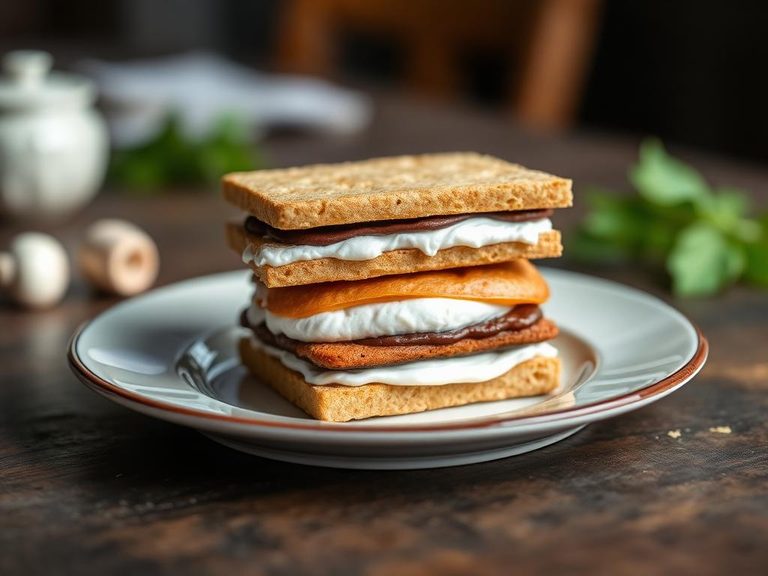
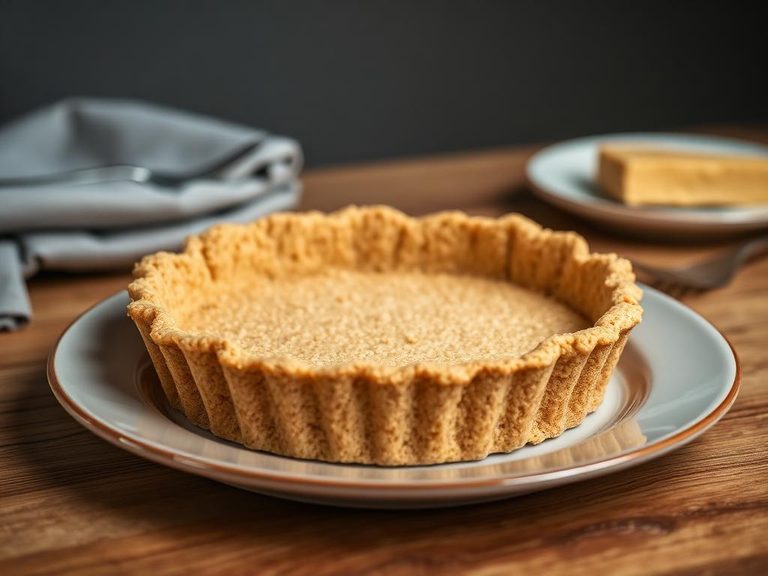



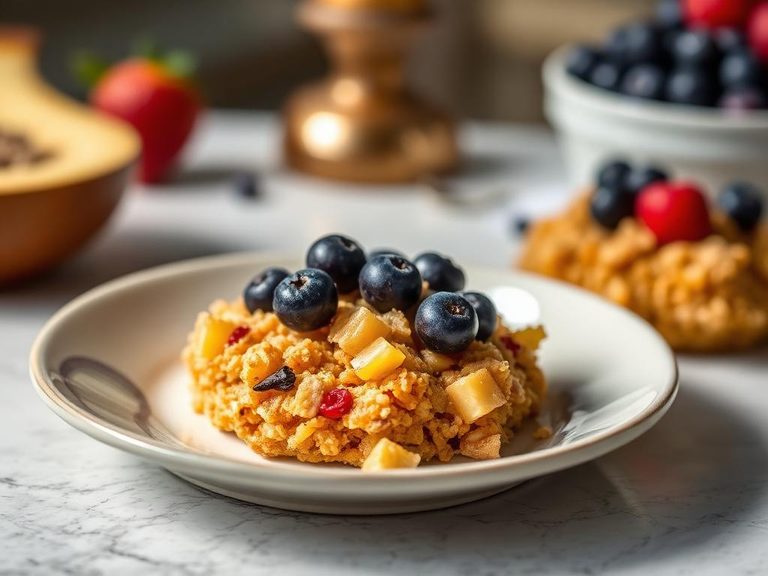
🌍 Where it's eaten
💡 Did you know?
The cracker was originally developed in the 1800s by Presbyterian minister Sylvester Graham as part of a diet he believed would curb 'unhealthy' desires, making it one of the first health food fads in America.
Full nutrition (USDA data · scales with serving)
| Water | 3.6 g |
| Energy | 424 kcal |
| Energy | 1776 kj |
| Protein | 7.0 g |
| Total lipid (fat) | 10.0 g |
| Ash | 2.8 g |
| Carbohydrate, by difference | 76.2 g |
| Fiber, total dietary | 3.4 g |
| Total Sugars | 23.0 g |
| Calcium, Ca | 79.0 mg |
| Iron, Fe | 4.1 mg |
| Magnesium, Mg | 59.0 mg |
| Phosphorus, P | 202 mg |
| Potassium, K | 177 mg |
| Sodium, Na | 659 mg |
| Zinc, Zn | 1.9 mg |
| Copper, Cu | 0.03 mg |
| Vitamin C, total ascorbic acid | 0.00 mg |
| Thiamin | 0.23 mg |
| Riboflavin | 0.24 mg |
| Niacin | 3.8 mg |
| Vitamin B-6 | 0.10 mg |
| Folate, total | 46.0 ug |
| Folate, food | 46.0 ug |
| Vitamin A, IU | 0.00 iu |
Fat & fatty acid profile (per 100g)
| Fatty acids, total saturated | 1.6 g |
| Fatty acids, total monounsaturated | 3.6 g |
| Fatty acids, total polyunsaturated | 0.46 g |
| Cholesterol | 0.00 mg |
FAQ
Are graham crackers the same as digestive biscuits?
No, though they are similar. Graham crackers are typically sweeter, made with graham flour, and have a more pronounced honey flavor. Digestive biscuits are often less sweet, may use a mix of flours, and sometimes contain leavening agents for a lighter texture.
Can I use them in a savory recipe?
Absolutely. Their mild, toasty wheat flavor works well in savory applications. Crush them to use as a coating for baked chicken or fish, or mix into meatloaf as a binder instead of breadcrumbs.
Why are they called 'Graham' crackers?
They are named after Sylvester Graham, a 19th-century American dietary reformer who advocated for a vegetarian diet and the use of coarsely ground, unbleached wheat flour, which he called 'Graham flour.'
Nutrient density (calculated · NRF9.3)
Nutrient Rich Foods index: beneficial nutrients (protein, fiber, vitamins, minerals) minus saturated fat, added sugar & sodium, per 100 kcal.
NRF9.3 index — Fulgoni, Keast & Drewnowski, 2009. Computed from USDA nutrients.
Weight-loss friendliness (composite index)
Energy density 4.24 kcal/g · 7% calories from protein · 3.4 g fiber · 23.0 g sugar per 100 g.
Composite of energy density (Rolls et al., 1999), protein & fiber satiety, minus sugar. A calculated heuristic — ranks satiety-per-calorie, not a clinical measure.
Dietary load (calculated from USDA values)
Potential renal acid load. Positive = acid-forming, negative = alkaline-forming.
Sodium-to-potassium ratio: 3.72 (lower is better — aim for ≤ 1)
Sodium:potassium per WHO potassium guidance. Computed from USDA nutrients.