

Cereals ready-to-eat, QUAKER, QUAKER Honey Graham LIFE Cereal
Whole food · Breakfast Cereals

Photo: Wikipedia
Quaker Honey Graham Life Cereal is a sweet, crunchy, whole-grain breakfast cereal with a distinct honey-kissed, graham cracker flavor. The texture is a satisfying mix of crisp flakes and lighter, airy pieces. Nutritionally, it's a high-carbohydrate option with a notable 6.3g of fiber per 100g.
Calorie split: 10% protein · 81% carbs · 10% fat
↓ Full nutrition💚 Why it's loved
People love it for the nostalgic, comforting taste of honey and graham that feels like a treat, not just a plain cereal. Its versatility makes it a popular snack straight from the box or a crunchy topping for yogurt and desserts.
⚠️ Watch-outs & how to enjoy it better
The high sugar content (23.12g per 100g) can lead to a rapid blood-sugar spike, especially if eaten alone. To counteract this, pair it with a source of protein and fat, like Greek yogurt or milk, and be mindful of portion size to manage sugar intake.
Key benefits
- Good source of dietary fiber from whole grains.
- Provides quick energy from its carbohydrate content.
- Contains some plant-based protein.
- Fortified with essential vitamins and minerals.
- Convenient, no-cook breakfast option.
🍽️ Popular dishes
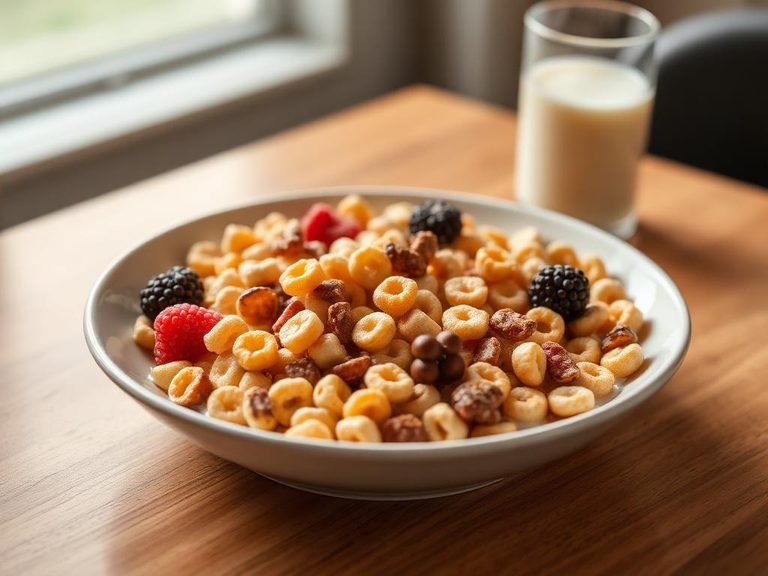
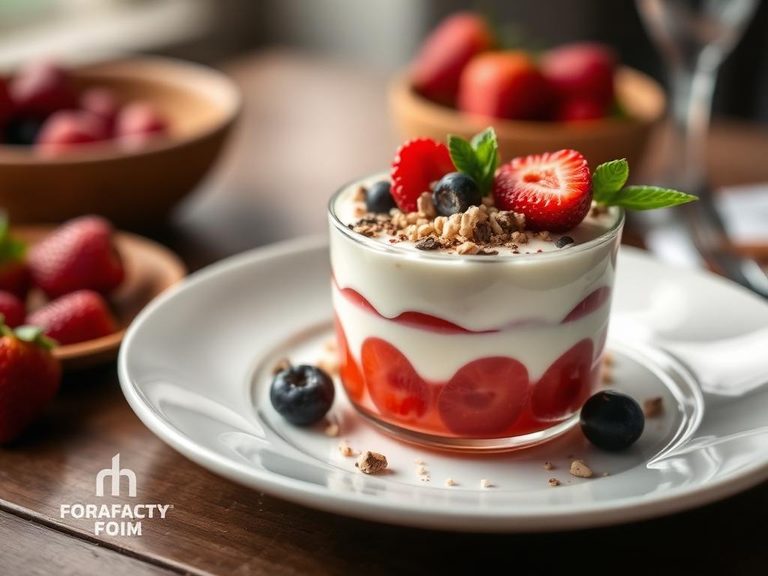

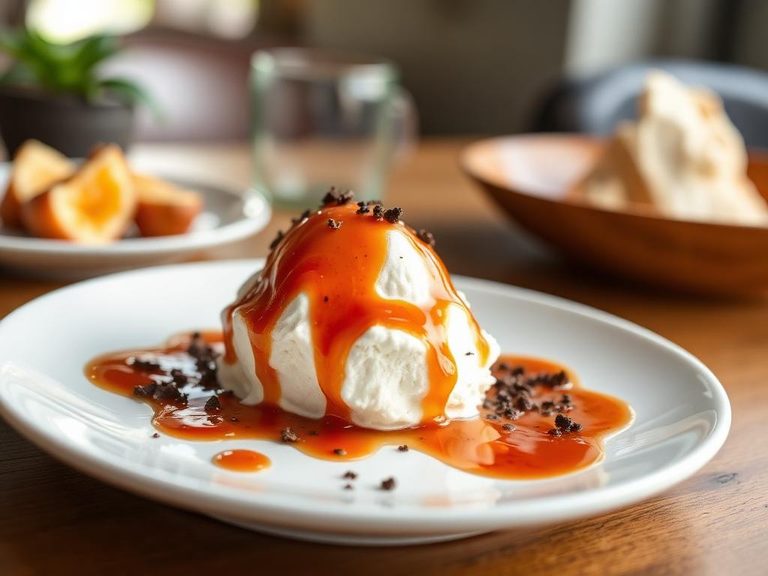
🌍 Where it's eaten
💡 Did you know?
The 'Life' cereal brand was originally introduced by Quaker in 1961, and its famous 'Mikey likes it!' advertising campaign, which debuted in 1986, became one of the most recognized and longest-running slogans in TV history.
Full nutrition (USDA data · scales with serving)
| Water | 4.3 g |
| Energy | 373 kcal |
| Energy | 1561 kj |
| Protein | 9.3 g |
| Total lipid (fat) | 4.1 g |
| Ash | 3.7 g |
| Carbohydrate, by difference | 78.6 g |
| Fiber, total dietary | 6.3 g |
| Total Sugars | 23.1 g |
| Calcium, Ca | 366 mg |
| Iron, Fe | 29.7 mg |
| Magnesium, Mg | 90.0 mg |
| Phosphorus, P | 391 mg |
| Potassium, K | 269 mg |
| Sodium, Na | 488 mg |
| Zinc, Zn | 13.8 mg |
| Vitamin C, total ascorbic acid | 0.00 mg |
| Thiamin | 1.4 mg |
| Riboflavin | 1.6 mg |
| Niacin | 18.4 mg |
| Vitamin B-6 | 1.8 mg |
| Folate, total | 1311 ug |
| Vitamin B-12 | 0.00 ug |
| Vitamin A, IU | 38.0 iu |
| Vitamin E (alpha-tocopherol) | 0.57 mg |
Fat & fatty acid profile (per 100g)
| Fatty acids, total saturated | 0.77 g |
| Fatty acids, total monounsaturated | 1.4 g |
| Fatty acids, total polyunsaturated | 1.3 g |
| Fatty acids, total trans | 0.00 g |
| Cholesterol | 0.00 mg |
FAQ
Is this cereal gluten-free?
No, Quaker Honey Graham Life Cereal is made with whole grain oats and wheat flour, so it contains gluten and is not suitable for those with celiac disease or gluten sensitivity.
How does it compare nutritionally to other sweetened cereals?
While it offers more fiber than many sugary cereals, its sugar content is still relatively high. It's best viewed as an occasional treat rather than an everyday health food.
Can I eat this on a low-carb diet?
This cereal is very high in carbohydrates (78.56g per 100g) and sugar, making it incompatible with standard low-carb or ketogenic diets.
Nutrient density (calculated · NRF9.3)
Nutrient Rich Foods index: beneficial nutrients (protein, fiber, vitamins, minerals) minus saturated fat, added sugar & sodium, per 100 kcal.
NRF9.3 index — Fulgoni, Keast & Drewnowski, 2009. Computed from USDA nutrients.
Weight-loss friendliness (composite index)
Energy density 3.73 kcal/g · 10% calories from protein · 6.3 g fiber · 23.1 g sugar per 100 g.
Composite of energy density (Rolls et al., 1999), protein & fiber satiety, minus sugar. A calculated heuristic — ranks satiety-per-calorie, not a clinical measure.
Dietary load (calculated from USDA values)
Potential renal acid load. Positive = acid-forming, negative = alkaline-forming.
Sodium-to-potassium ratio: 1.81 (lower is better — aim for ≤ 1)
Sodium:potassium per WHO potassium guidance. Computed from USDA nutrients.