

Scallops, bay, Patagonian, frozen, wild caught
Whole food · Finfish and Shellfish Products
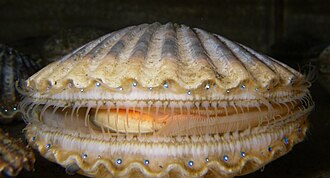
Photo: Wikipedia
Patagonian bay scallops are small, sweet, and tender bivalves harvested from the cold, pristine waters of the South Atlantic. Their flavor is subtly briny with a delicate, buttery texture that melts in the mouth when cooked properly. Nutritionally, they are an exceptional source of lean protein, providing over 16g per 100g with virtually no fat or carbohydrates.
Calorie split: 84% protein · 12% carbs · 5% fat
↓ Full nutrition💚 Why it's loved
People love them for their pure, sweet oceanic flavor and incredibly tender texture that requires minimal cooking. Their versatility makes them perfect for quick sears, elegant appetizers, or simple pasta dishes, embodying a touch of luxury in home cooking.
⚠️ Watch-outs & how to enjoy it better
As a shellfish, they are a common allergen and should be avoided by those with shellfish sensitivities. Their delicate nature means they can become rubbery and tough if overcooked; a quick, high-heat sear is essential to preserve their texture. For those monitoring sodium, note that seafood naturally contains some sodium, though it's moderate in scallops.
Key benefits
- Extremely high in lean protein (16.4g per 100g)
- Very low in fat (0.4g) and calories (78 kcal)
- Naturally carbohydrate-free and sugar-free
- Rich in essential minerals like selenium and zinc
- Source of omega-3 fatty acids (though low in total fat)
🍽️ Popular dishes
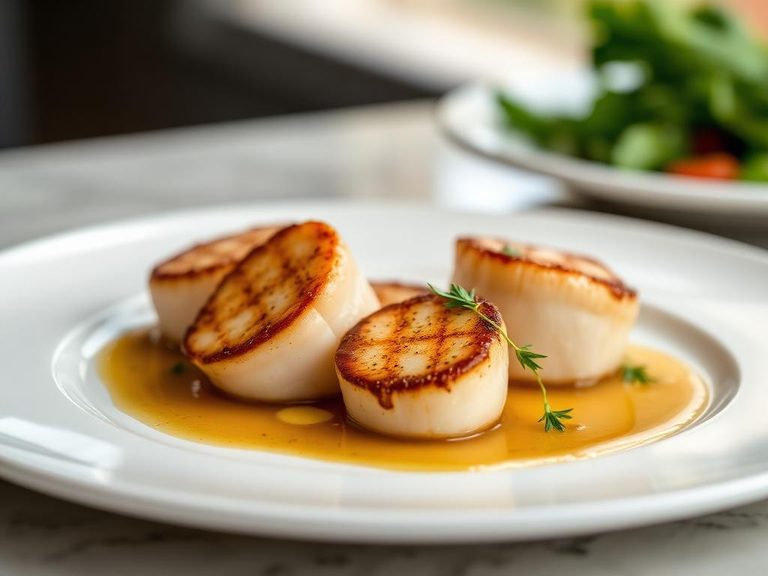
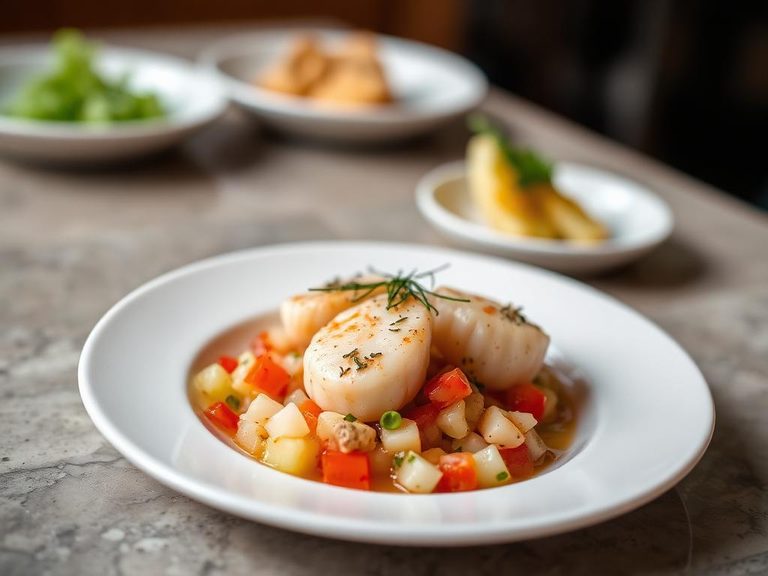
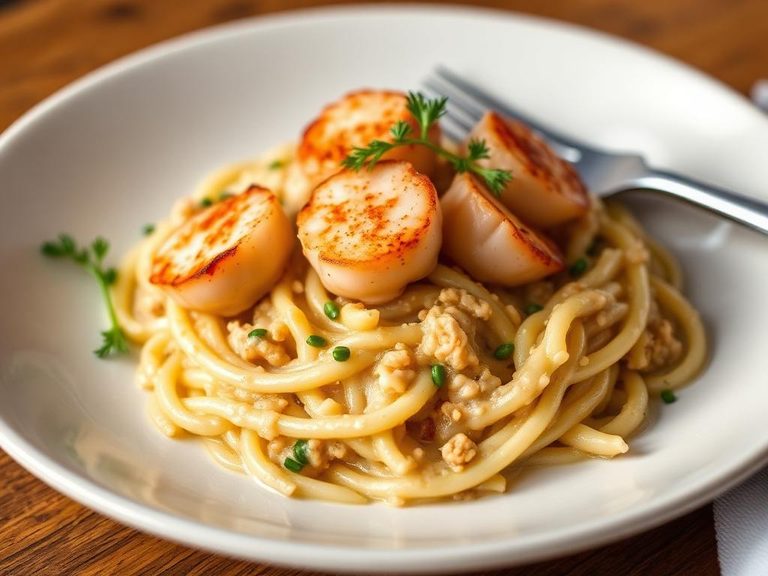
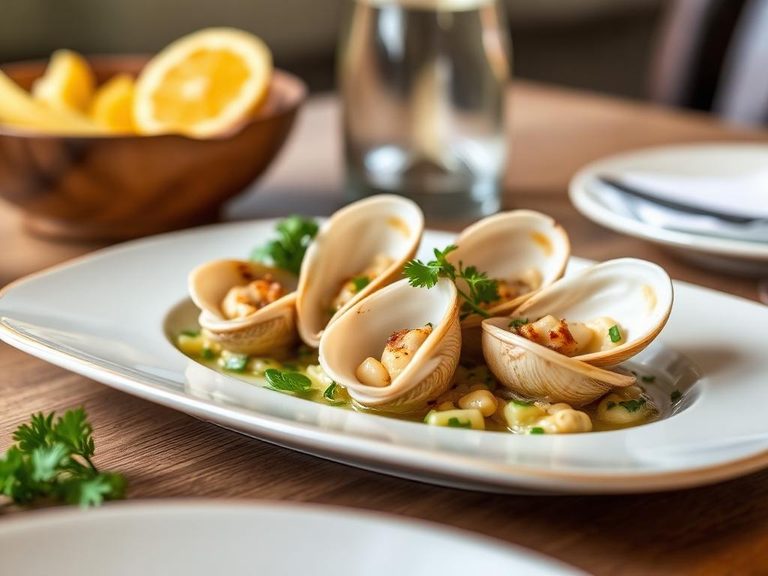
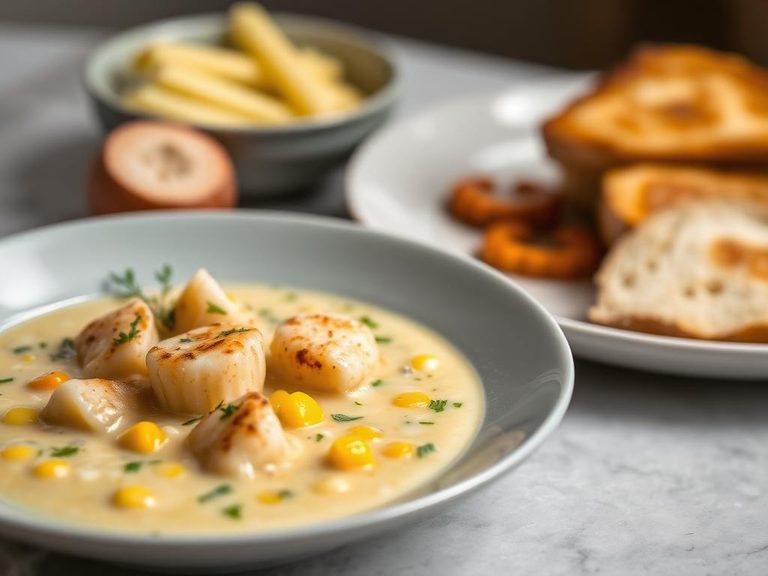
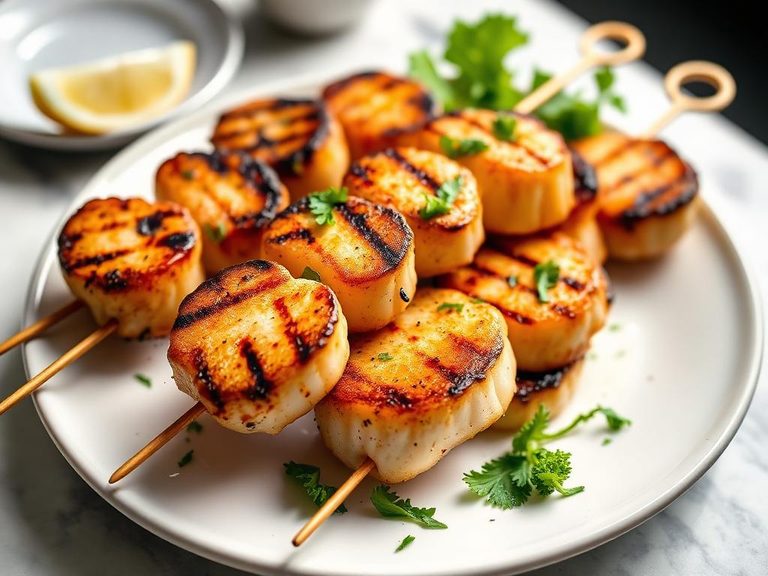
🌍 Where it's eaten
💡 Did you know?
The 'bay' in bay scallop refers to their habitat in bays and estuaries, not a specific species; Patagonian bay scallops (Zidona dufresnei) are a distinct species prized for their size and flavor, often larger than typical bay scallops.
Full nutrition (USDA data · scales with serving)
| Water | 79.4 g |
| Energy (Atwater General Factors) | 78.5 kcal |
| Nitrogen | 2.6 g |
| Protein | 16.4 g |
| Total lipid (fat) | 0.42 g |
| Ash | 1.5 g |
| Carbohydrate, by difference | 2.3 g |
| Calcium, Ca | 14.0 mg |
| Iron, Fe | 0.17 mg |
| Magnesium, Mg | 46.4 mg |
| Phosphorus, P | 229 mg |
| Potassium, K | 292 mg |
| Sodium, Na | 252 mg |
| Zinc, Zn | 1.0 mg |
| Copper, Cu | 0.00 mg |
| Manganese, Mn | 0.00 mg |
| Selenium, Se | 28.4 ug |
| Vitamin B-12 | 0.67 ug |
FAQ
How do I prevent scallops from becoming rubbery?
Pat them completely dry with paper towels, ensure your pan is very hot before adding them, and cook for only 1-2 minutes per side until a golden crust forms. Do not overcrowd the pan.
Are frozen scallops as good as fresh?
High-quality frozen scallops, like wild-caught Patagonian ones, are often flash-frozen at sea and can be superior to 'fresh' scallops that have been stored for days. Thaw them slowly in the refrigerator for best texture.
What is the 'foot' or tough muscle on a scallop?
It's the adductor muscle that attaches the scallop to its shell. It's edible but tougher; it's often removed for a more uniform, tender texture in fine cooking.
Nutrient density (calculated · NRF9.3)
Nutrient Rich Foods index: beneficial nutrients (protein, fiber, vitamins, minerals) minus saturated fat, added sugar & sodium, per 100 kcal.
NRF9.3 index — Fulgoni, Keast & Drewnowski, 2009. Computed from USDA nutrients.
Weight-loss friendliness (composite index)
Energy density 0.78 kcal/g · 84% calories from protein · 0.0 g fiber · 0.0 g sugar per 100 g.
Composite of energy density (Rolls et al., 1999), protein & fiber satiety, minus sugar. A calculated heuristic — ranks satiety-per-calorie, not a clinical measure.
Dietary load (calculated from USDA values)
Potential renal acid load. Positive = acid-forming, negative = alkaline-forming.
Sodium-to-potassium ratio: 0.86 (lower is better — aim for ≤ 1)
Sodium:potassium per WHO potassium guidance. Computed from USDA nutrients.