

KRAFT FREE Singles American Nonfat Pasteurized Process Cheese Product
Whole food · Dairy and Egg Products

Photo: Wikipedia
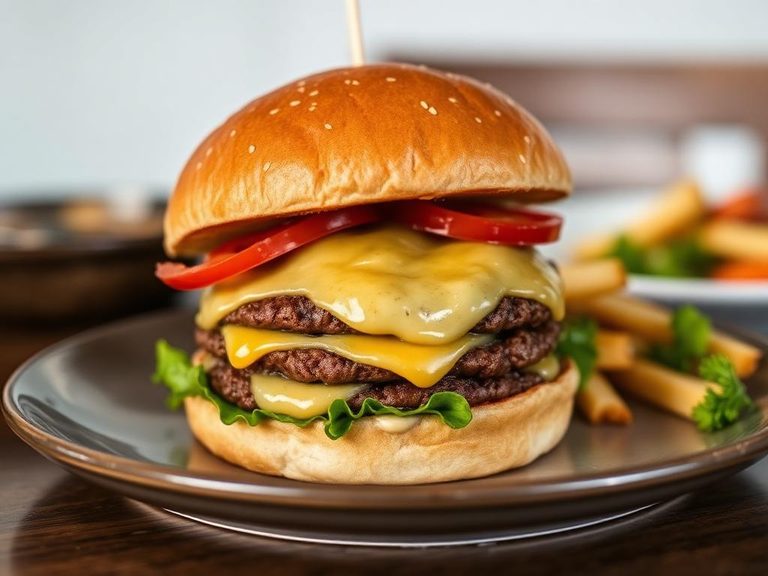
Kraft Free Singles are individually wrapped, nonfat American cheese product slices, engineered for a creamy melt and mild, salty flavor without the fat. With an exceptionally high protein-to-calorie ratio, they are a go-to for high-protein, low-fat diets. The texture is soft and pliable, designed to melt smoothly over hot foods like burgers and sandwiches.
Calorie split: 62% protein · 32% carbs · 6% fat
↓ Full nutrition💚 Why it's loved
People love the classic, mild American cheese flavor and the nostalgic convenience of the individually wrapped slices, which make for a quick, mess-free snack. It’s a staple for its reliable meltability and ability to add a creamy, savory element to simple dishes without adding fat.
⚠️ Watch-outs & how to enjoy it better
The high sodium content can be a concern for those monitoring blood pressure, and the processed nature means it contains additives like sodium citrate and phosphates. To counteract this, pair it with potassium-rich foods like leafy greens or tomatoes, and practice portion control by using one slice at a time. Additionally, some individuals may be sensitive to the lactose or dairy proteins, so pairing with fiber-rich whole grains can help slow digestion.
Key benefits
- High protein content (22.7g per 100g)
- Very low fat (1g per 100g)
- Low calorie density (148 kcal per 100g)
- Convenient individual portioning
- Melts easily for sandwiches and snacks
🍽️ Popular dishes

🌍 Where it's eaten
💡 Did you know?
Kraft Singles were introduced in 1949, and the term 'American cheese' is a legally protected designation in the U.S. only for products that meet specific standards of identity, though 'cheese product' indicates it doesn't meet the full cheese criteria.
Full nutrition (USDA data · scales with serving)
| Water | 58.0 g |
| Energy | 148 kcal |
| Energy | 619 kj |
| Protein | 22.7 g |
| Total lipid (fat) | 1.0 g |
| Ash | 6.1 g |
| Carbohydrate, by difference | 11.7 g |
| Fiber, total dietary | 0.20 g |
| Total Sugars | 6.7 g |
| Calcium, Ca | 712 mg |
| Iron, Fe | 0.05 mg |
| Phosphorus, P | 923 mg |
| Potassium, K | 236 mg |
| Sodium, Na | 1298 mg |
| Zinc, Zn | 2.5 mg |
| Vitamin C, total ascorbic acid | 0.20 mg |
| Riboflavin | 0.28 mg |
| Vitamin A, IU | 2166 iu |
Fat & fatty acid profile (per 100g)
| Fatty acids, total saturated | 0.70 g |
| Cholesterol | 16.0 mg |
FAQ
Is Kraft Free Singles American cheese considered real cheese?
No, it is classified as a 'pasteurized process cheese product,' meaning it contains cheese but also includes other ingredients like whey, milk protein concentrate, and emulsifiers, and does not meet the legal definition of 'cheese' in the U.S.
How does the nutrition compare to regular American cheese?
Kraft Free Singles are significantly lower in fat and calories (1g fat, 148 kcal per 100g) compared to regular American cheese, which typically has around 25-30g fat and 350+ kcal per 100g, while offering a similar protein level.
Can I use this for a grilled cheese sandwich?
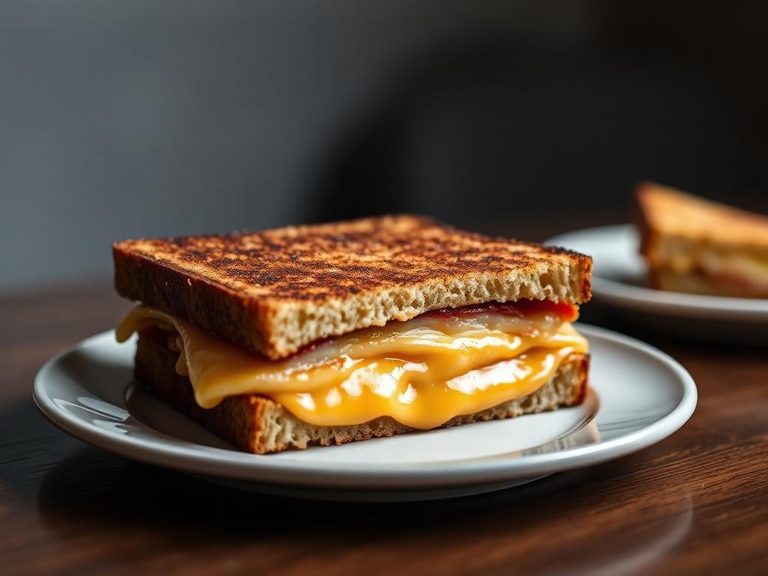
Yes, it melts very well due to its emulsifying salts, making it ideal for grilled cheese, though it may have a slightly different texture and flavor compared to full-fat cheese.
Nutrient density (calculated · NRF9.3)
Nutrient Rich Foods index: beneficial nutrients (protein, fiber, vitamins, minerals) minus saturated fat, added sugar & sodium, per 100 kcal.
NRF9.3 index — Fulgoni, Keast & Drewnowski, 2009. Computed from USDA nutrients.
Weight-loss friendliness (composite index)
Energy density 1.48 kcal/g · 61% calories from protein · 0.2 g fiber · 6.7 g sugar per 100 g.
Composite of energy density (Rolls et al., 1999), protein & fiber satiety, minus sugar. A calculated heuristic — ranks satiety-per-calorie, not a clinical measure.
Dietary load (calculated from USDA values)
Potential renal acid load. Positive = acid-forming, negative = alkaline-forming.
Sodium-to-potassium ratio: 5.50 (lower is better — aim for ≤ 1)
Sodium:potassium per WHO potassium guidance. Computed from USDA nutrients.