

Blackeye pea, dry
Whole food · Legumes and Legume Products

Photo: Wikipedia
The blackeye pea, a variety of cowpea, is a legume with a distinctive "eye" mark on its creamy, tan-colored skin. When cooked from its dry state, it offers a firm yet tender texture and a subtly earthy, nutty flavor that readily absorbs seasonings. It is a nutritional powerhouse, providing a substantial 21.2 grams of protein per 100g serving alongside complex carbohydrates for sustained energy.
Calorie split: 24% protein · 70% carbs · 6% fat
↓ Full nutrition💚 Why it's loved
People love blackeye peas for their ability to soak up the flavors of smoky meats, spices, and aromatic vegetables, making them the soulful foundation of dishes like Hoppin' John. Their cultural significance, especially in the Southern United States for New Year's luck, adds a layer of tradition and comfort to every meal.
⚠️ Watch-outs & how to enjoy it better
The high carbohydrate content can cause blood-sugar spikes if eaten in large, unbalanced portions, and they may cause digestive gas due to their oligosaccharide content. To counteract this, pair them with a source of protein or healthy fat (like sausage or avocado), practice portion control, and ensure they are thoroughly soaked and cooked to reduce gas-producing compounds.
Key benefits
- Excellent source of plant-based protein for muscle maintenance.
- Rich in complex carbohydrates for steady energy release.
- Contains essential minerals like iron, folate, and manganese.
- Low in fat, making it a heart-healthy food choice.
- High in resistant starch, which can support gut health.
🍽️ Popular dishes

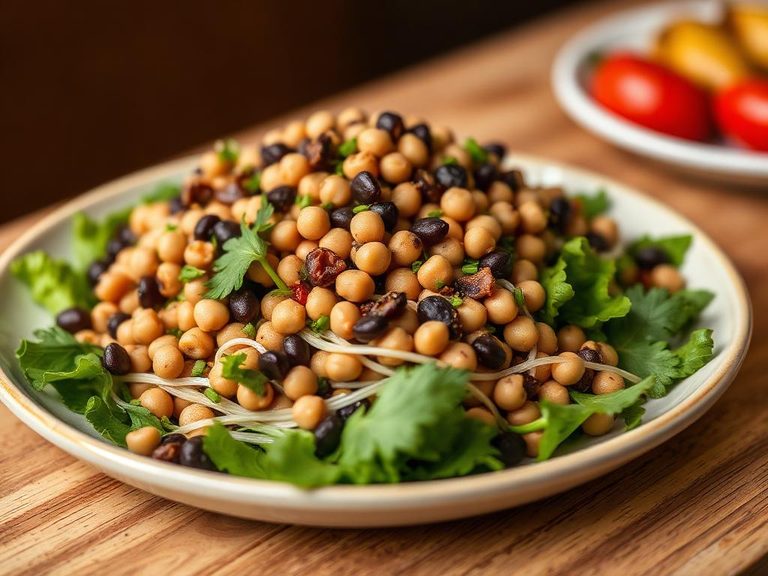

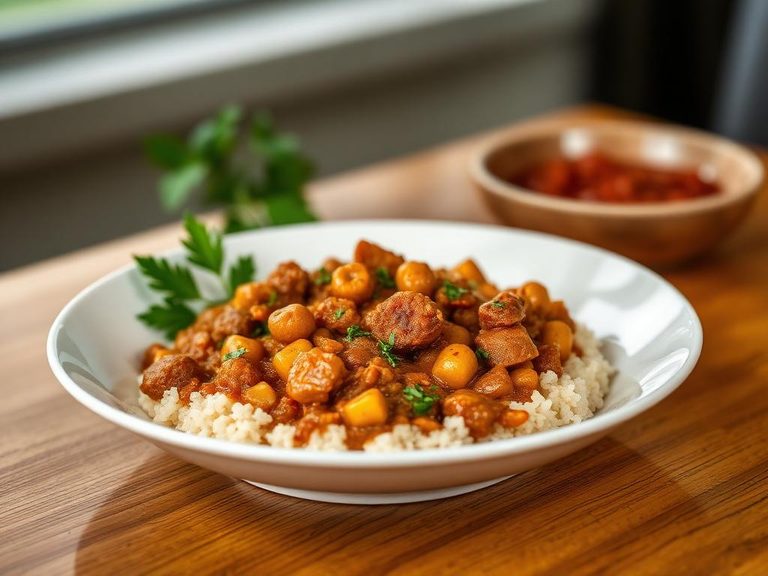

🌍 Where it's eaten
💡 Did you know?
The blackeye pea is not technically a pea but a legume, and its distinctive "eye" is actually the hilum, the scar where the seed was attached to the pod.
Full nutrition (USDA data · scales with serving)
| Water | 11.0 g |
| Energy (Atwater General Factors) | 354 kcal |
| Energy (Atwater Specific Factors) | 346 kcal |
| Nitrogen | 3.4 g |
| Protein | 21.2 g |
| Total lipid (fat) | 2.4 g |
| Ash | 3.5 g |
| Carbohydrate, by difference | 61.8 g |
| Starch | 37.4 g |
| Resistant starch | 6.0 g |
| Calcium, Ca | 71.4 mg |
| Iron, Fe | 5.9 mg |
| Magnesium, Mg | 184 mg |
| Phosphorus, P | 428 mg |
| Potassium, K | 1243 mg |
| Sodium, Na | 3.5 mg |
| Zinc, Zn | 3.7 mg |
| Copper, Cu | 0.94 mg |
| Manganese, Mn | 1.3 mg |
FAQ
What is the difference between blackeye peas and black-eyed peas?
They are the same thing; 'blackeye' and 'black-eyed' are simply different spellings for the same legume.
Do I need to soak dry blackeye peas before cooking?
Yes, soaking for 4-8 hours or overnight reduces cooking time and helps break down compounds that cause gas. A quick soak method involves boiling them for 2 minutes and then letting them sit covered for an hour.
Are blackeye peas gluten-free?
Yes, in their natural dry or cooked form, blackeye peas are gluten-free. However, always check packaged or canned versions for added ingredients that may contain gluten.
Nutrient density (calculated · NRF9.3)
Nutrient Rich Foods index: beneficial nutrients (protein, fiber, vitamins, minerals) minus saturated fat, added sugar & sodium, per 100 kcal.
NRF9.3 index — Fulgoni, Keast & Drewnowski, 2009. Computed from USDA nutrients.
Weight-loss friendliness (composite index)
Energy density 3.54 kcal/g · 24% calories from protein · 0.0 g fiber · 0.0 g sugar per 100 g.
Composite of energy density (Rolls et al., 1999), protein & fiber satiety, minus sugar. A calculated heuristic — ranks satiety-per-calorie, not a clinical measure.
Dietary load (calculated from USDA values)
Potential renal acid load. Positive = acid-forming, negative = alkaline-forming.
Sodium-to-potassium ratio: 0.00 (lower is better — aim for ≤ 1)
Sodium:potassium per WHO potassium guidance. Computed from USDA nutrients.