

Blackeye pea, canned, sodium added, drained and rinsed
Whole food · Legumes and Legume Products

Photo: Wikipedia
Canned black-eyed peas are a pantry staple, offering a soft, slightly starchy texture and a mild, earthy flavor with a hint of nuttiness. They are a quick-cook legume that provides a solid plant-based protein boost for a low-calorie, low-fat food. Their convenience makes them ideal for salads, soups, and stews without the long soaking and cooking time of dried beans.
Calorie split: 24% protein · 66% carbs · 10% fat
↓ Full nutrition💚 Why it's loved
People love black-eyed peas for their ability to soak up flavors in hearty stews and for their traditional role in celebratory dishes like Hoppin' John, symbolizing good luck.
⚠️ Watch-outs & how to enjoy it better
The added sodium from canning can be a concern for those monitoring salt intake; look for low-sodium versions or rinse thoroughly. As a legume, they contain oligosaccharides that can cause gas in some people; starting with smaller portions and gradually increasing intake can help. They have a moderate glycemic index, so pairing with non-starchy vegetables, protein, or healthy fats can help manage blood sugar response.
Key benefits
- Good source of plant-based protein
- Low in fat and calories
- Provides iron and folate
- Quick and convenient pantry staple
- Adds texture and substance to dishes
🍽️ Popular dishes


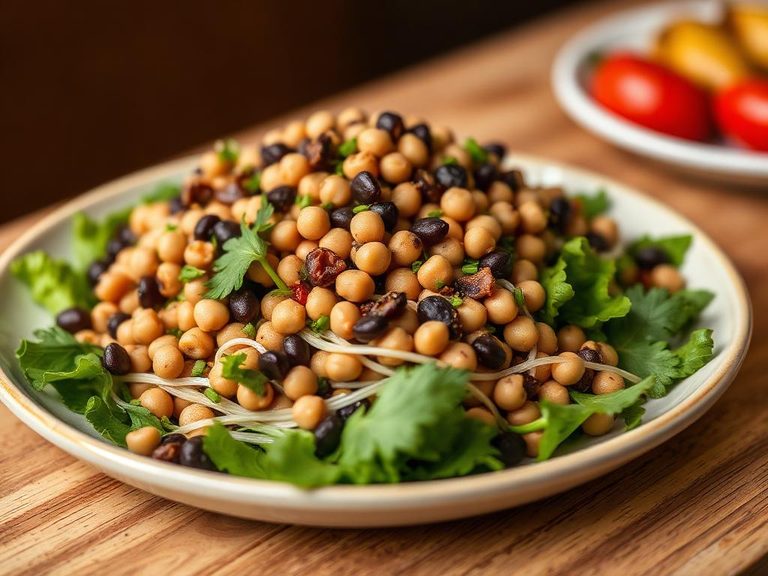

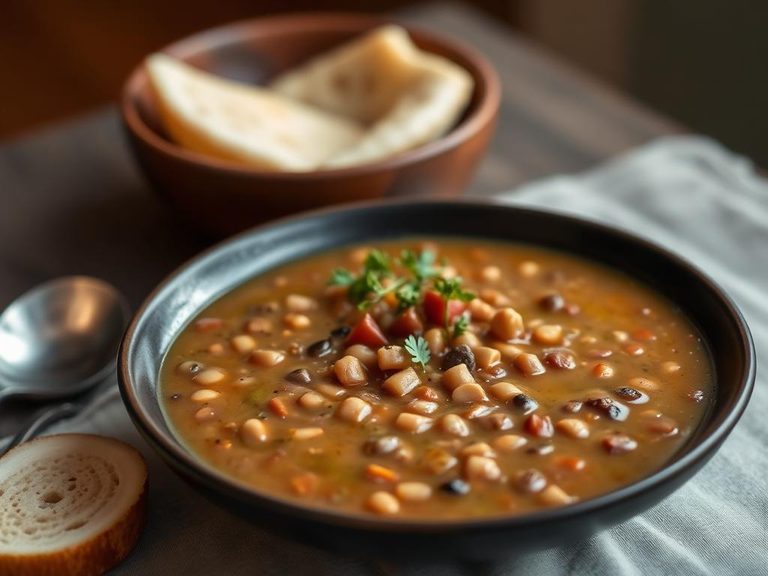

🌍 Where it's eaten
💡 Did you know?
In the Southern United States, eating black-eyed peas on New Year's Day is a tradition believed to bring prosperity and good luck for the coming year.
Full nutrition (USDA data · scales with serving)
| Water | 71.6 g |
| Energy (Atwater General Factors) | 116 kcal |
| Energy (Atwater Specific Factors) | 113 kcal |
| Nitrogen | 1.1 g |
| Protein | 6.9 g |
| Total lipid (fat) | 1.3 g |
| Ash | 0.99 g |
| Carbohydrate, by difference | 19.2 g |
| Total dietary fiber (AOAC 2011.25) | 4.3 g |
| Starch | 13.6 g |
| Resistant starch | 1.0 g |
| Calcium, Ca | 27.8 mg |
| Iron, Fe | 1.1 mg |
| Magnesium, Mg | 27.3 mg |
| Phosphorus, P | 83.0 mg |
| Potassium, K | 138 mg |
| Sodium, Na | 227 mg |
| Zinc, Zn | 0.66 mg |
| Copper, Cu | 0.28 mg |
| Manganese, Mn | 0.22 mg |
FAQ
Do I need to rinse canned black-eyed peas?
Yes, rinsing under cold water is recommended to remove excess sodium from the canning liquid and any starchy residue, improving both flavor and texture.
What is the difference between black-eyed peas and black-eyed beans?
They are the same thing. 'Black-eyed peas' is the common name in the United States, while 'black-eyed beans' is more common in other English-speaking regions.
Can I substitute canned for dried black-eyed peas in recipes?
Yes, but adjust cooking time. Canned peas are already cooked and only need to be heated through, while dried peas require soaking and simmering for 1-2 hours until tender.
Nutrient density (calculated · NRF9.3)
Nutrient Rich Foods index: beneficial nutrients (protein, fiber, vitamins, minerals) minus saturated fat, added sugar & sodium, per 100 kcal.
NRF9.3 index — Fulgoni, Keast & Drewnowski, 2009. Computed from USDA nutrients.
Weight-loss friendliness (composite index)
Energy density 1.16 kcal/g · 24% calories from protein · 0.0 g fiber · 0.0 g sugar per 100 g.
Composite of energy density (Rolls et al., 1999), protein & fiber satiety, minus sugar. A calculated heuristic — ranks satiety-per-calorie, not a clinical measure.
Dietary load (calculated from USDA values)
Potential renal acid load. Positive = acid-forming, negative = alkaline-forming.
Sodium-to-potassium ratio: 1.64 (lower is better — aim for ≤ 1)
Sodium:potassium per WHO potassium guidance. Computed from USDA nutrients.