

SILK Original Creamer
Whole food · Legumes and Legume Products

Photo: Wikipedia
SILK Original Creamer is a smooth, plant-based liquid designed to lighten and sweeten coffee or tea. It offers a rich, creamy texture without the dairy, derived from soy. Nutritionally, it provides a modest calorie boost primarily from fats and carbohydrates, with no protein or sugar.
Calorie split: 0% protein · 31% carbs · 69% fat
↓ Full nutrition💚 Why it's loved
People love it for its ability to deliver a classic, sweet creamer taste and velvety mouthfeel to hot or cold beverages without using dairy. Its versatility makes it a staple for vegan diets or lactose intolerance.
⚠️ Watch-outs & how to enjoy it better
It is low in nutrients, offering empty calories from added fats and carbs, which can contribute to blood sugar spikes if consumed in large quantities. Those monitoring fat or calorie intake should use it sparingly. Tip: Pair it with a high-protein breakfast or use just a splash to enhance flavor without excessive calories.
Key benefits
- Dairy-free and lactose-free alternative
- Cholesterol-free
- Vegan-friendly
- Provides a creamy texture without animal products
- Shelf-stable before opening
🍽️ Popular dishes


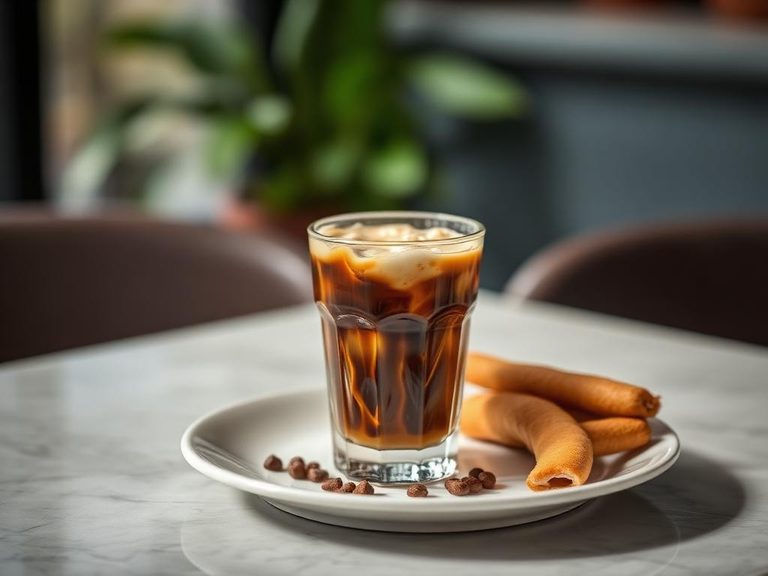
🌍 Where it's eaten
💡 Did you know?
SILK, originally a soy milk brand, expanded into creamers to meet the demand for a non-dairy coffee additive that mimics the function of half-and-half.
Full nutrition (USDA data · scales with serving)
| Water | 86.3 g |
| Energy | 100 kcal |
| Energy | 418 kj |
| Protein | 0.00 g |
| Total lipid (fat) | 6.7 g |
| Ash | 0.38 g |
| Carbohydrate, by difference | 6.7 g |
| Fiber, total dietary | 0.00 g |
| Total Sugars | 0.00 g |
| Calcium, Ca | 0.00 mg |
| Iron, Fe | 0.00 mg |
| Sodium, Na | 67.0 mg |
| Vitamin C, total ascorbic acid | 0.00 mg |
| Vitamin A, IU | 0.00 iu |
Fat & fatty acid profile (per 100g)
| Fatty acids, total saturated | 0.00 g |
| Fatty acids, total trans | 0.00 g |
| Cholesterol | 0.00 mg |
FAQ
Is SILK Original Creamer vegan?
Yes, it is made from soy and does not contain any dairy, eggs, or other animal-derived ingredients.
Does it need to be refrigerated?
It is shelf-stable until opened. Once opened, it should be refrigerated and used within a couple of weeks.
What is the main source of fat in this creamer?
The fat primarily comes from added vegetable oils (like canola or sunflower oil) to create its creamy texture.
Nutrient density (calculated · NRF9.3)
Nutrient Rich Foods index: beneficial nutrients (protein, fiber, vitamins, minerals) minus saturated fat, added sugar & sodium, per 100 kcal.
NRF9.3 index — Fulgoni, Keast & Drewnowski, 2009. Computed from USDA nutrients.
Weight-loss friendliness (composite index)
Energy density 1.00 kcal/g · 0% calories from protein · 0.0 g fiber · 0.0 g sugar per 100 g.
Composite of energy density (Rolls et al., 1999), protein & fiber satiety, minus sugar. A calculated heuristic — ranks satiety-per-calorie, not a clinical measure.