Plums, dried (prunes), uncooked
Whole food · Fruits and Fruit Juices
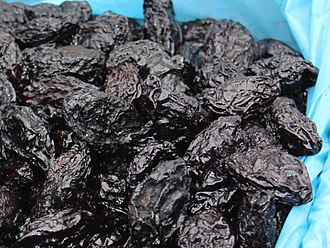
Photo: Wikipedia
Dried plums, universally known as prunes, are wrinkled, deep purple jewels with a concentrated, sweet-tart flavor and a uniquely chewy, sticky texture. They are a nutritional powerhouse, most famous for their exceptional fiber content (over 6 grams per 100g), which supports digestive health. Despite their sweetness, their nutritional profile is rich in vitamins and minerals, making them a potent, portable snack.
💚 Why it's loved
People love prunes for their intense, caramel-like sweetness and satisfying chew, making them a perfect stand-alone snack or a versatile baking ingredient. Their cultural legacy as a health food and a staple in traditional cuisines, from French compotes to Middle Eastern stews, adds to their enduring appeal.
⚠️ Watch-outs & how to enjoy it better
The high fiber and sorbitol content can cause digestive discomfort, including bloating or gas, for some individuals, especially when consumed in large quantities. To mitigate this, start with a small portion (2-3 prunes) and gradually increase intake, and ensure adequate water consumption. Their concentrated natural sugars can also impact blood sugar, so pairing them with a protein or fat (like nuts or cheese) can help moderate the glycemic response.
Key benefits
- Exceptionally high in dietary fiber, promoting regularity.
- Rich source of potassium, supporting heart and muscle function.
- Contains antioxidants like phenolic compounds and vitamin K.
- A concentrated source of natural energy and minerals.
- Traditionally used as a natural remedy for digestive health.
🍽️ Popular dishes





🌍 Where it's eaten
💡 Did you know?
The name 'prune' comes from the Latin 'prunum' for plum, but in the 19th century, California growers rebranded them as 'dried plums' to improve their image, a marketing move so successful it led to a 2001 FDA ruling that required the use of the word 'prune' on labels.
Full nutrition (scales with serving)
| Water | 31.4 g |
| Ash | 1.8 g |
| Fiber, total dietary | 6.3 g |
| Sugars, Total | 31.4 g |
| Sucrose | 0.00 g |
| Glucose | 19.1 g |
| Fructose | 12.3 g |
| Lactose | 0.00 g |
| Maltose | 0.00 g |
| Calcium, Ca | 44.0 mg |
| Iron, Fe | 0.75 mg |
| Magnesium, Mg | 43.5 mg |
| Phosphorus, P | 72.3 mg |
| Potassium, K | 788 mg |
| Sodium, Na | 0.85 mg |
| Zinc, Zn | 0.42 mg |
| Copper, Cu | 0.27 mg |
| Manganese, Mn | 0.28 mg |
| Vitamin C, total ascorbic acid | 0.00 mg |
| Thiamin | 0.04 mg |
| Riboflavin | 0.15 mg |
| Niacin | 2.0 mg |
| Vitamin B-6 | 0.29 mg |
FAQ
Are prunes and dried plums the same thing?
Yes, they are the same fruit. 'Prune' is the specific term for a dried plum, typically from certain cultivars like the French d'Agen plum. The FDA ruled in 2001 that 'prune' must be used on labels, though 'dried plums' is also used.
How many prunes should I eat a day for digestive health?
While individual tolerance varies, a common recommendation is 3-5 prunes per day to support regularity. It's best to start with a smaller amount and increase gradually, drinking plenty of water.
What is sorbitol in prunes?
Sorbitol is a naturally occurring sugar alcohol found in prunes. It has a mild laxative effect because it draws water into the intestines, which helps stimulate bowel movements. This is a key reason prunes are effective for digestive health.