

Ravioli
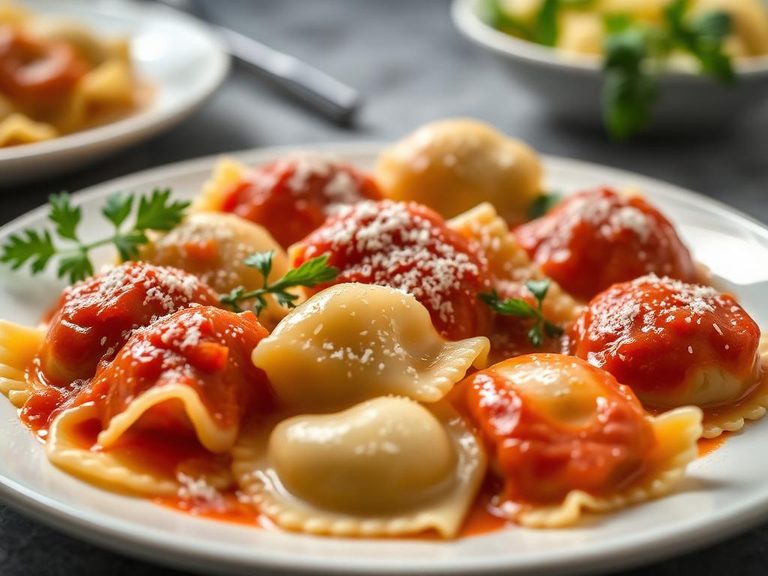
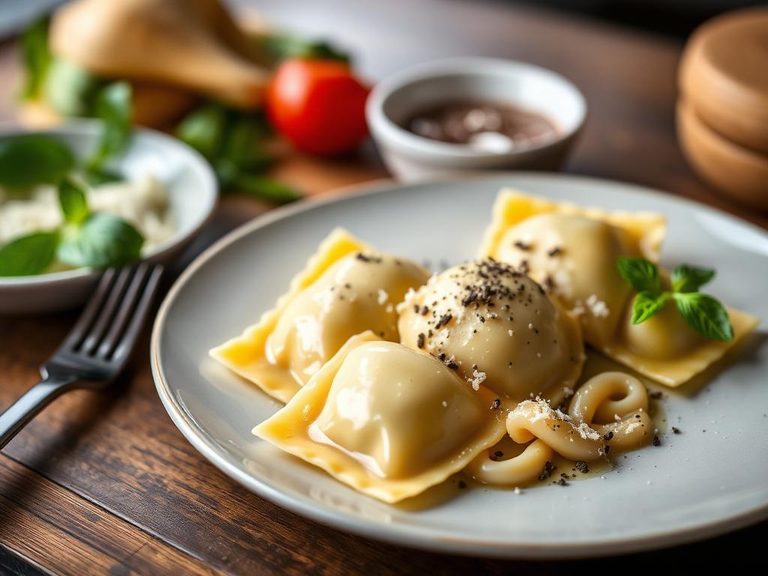
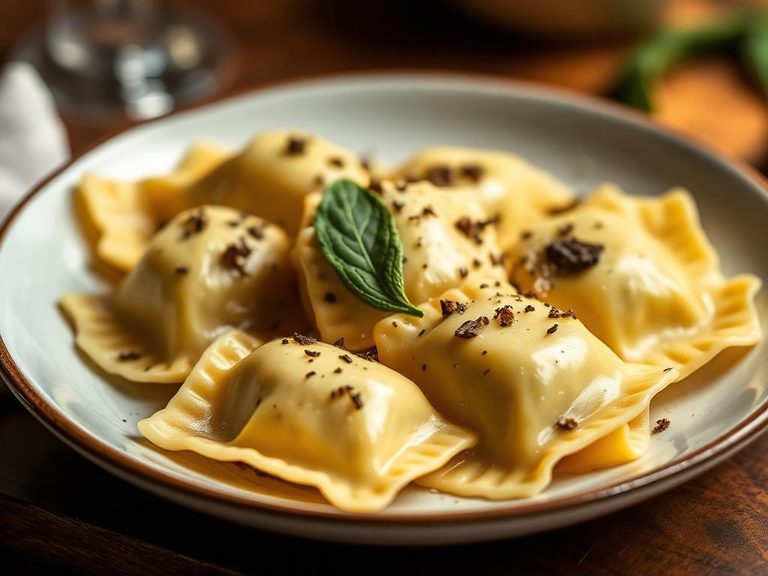
Ravioli are a type of Italian pasta consisting of small, filled pockets of dough, typically made from flour and egg. The most classic filling is a blend of ricotta cheese and spinach, but variations across Italy feature everything from meat and seafood to pumpkin and amaretti cookies. This beloved dish is a staple of Italian cuisine, with regional specialties like Sardinian culurgiones and Lombardian casoncelli.
🍳 View the full Ravioli recipe →
🍽️ Nutrition at a glance
A typical serving of cheese ravioli is a balanced source of carbohydrates from the pasta, protein from the cheese filling, and fat from both the dough and filling. It provides key nutrients like calcium, iron, and B vitamins, with a rough ballpark of 300-450 calories per serving, depending on size and sauce.
Nutrition breakdown
| Calories | 350 kcal |
| Protein | 14 g |
| Carbs | 42 g |
| Fat | 14 g |
| Fiber | 3 g |
| Sugar | 3 g |
| Sodium | 680 mg |
| Iron | 3.5 mg |
| Calcium | 100 mg |
| Potassium | 250 mg |
| Vitamin A | 150 IU |
| Vitamin C | 2 mg |
| Thiamin (B1) | 0.4 mg |
| Niacin (B3) | 3.0 mg |
| Folate | 80 mcg |
Per 1 cup (240 g) · estimated, varies by recipe
💡 What's interesting
The act of making ravioli by hand is a cherished tradition in many Italian families, often passed down through generations. Nutritionally, the filled pasta format allows for a balanced bite that combines energy-rich carbs with protein and fat, making it a satisfying and complete meal in a single package.
🍽️ Related dishes

AI estimate may be inaccurate · Terms