

Marinade for fish or chicken
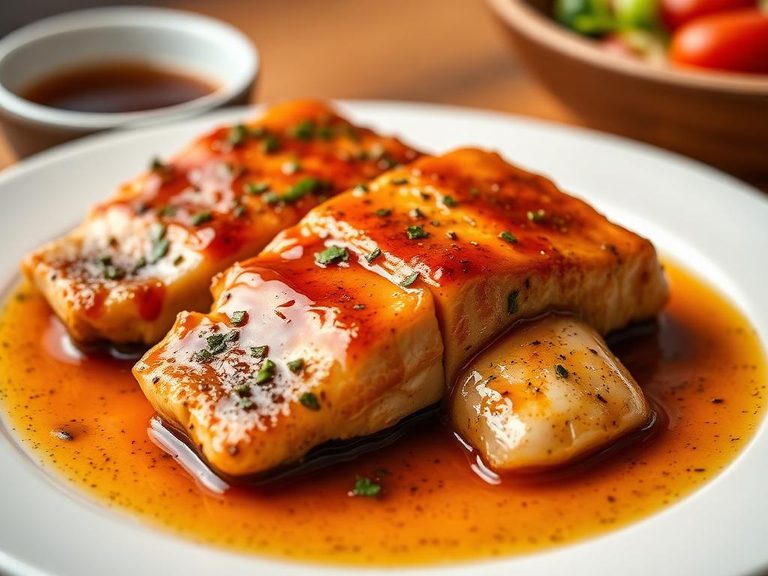
A versatile marinade designed to tenderize and flavor fish or chicken, this preparation typically features a base of acidic elements like lemon juice or vinegar, combined with herbs such as dill, parsley, or oregano, along with garlic, olive oil, and seasonings. It is a foundational technique in many global cuisines, from Mediterranean to Southeast Asian, adapted to local tastes and available ingredients.
🍳 View the full Marinade for fish or chicken recipe →
🍽️ Nutrition at a glance
This marinade is generally low in carbohydrates and calories, with its nutritional profile primarily coming from healthy fats in the oil and minimal protein from the main ingredient. It provides key nutrients like vitamin C from citrus, antioxidants from herbs, and healthy monounsaturated fats if using olive oil.
Nutrition breakdown
| Calories | 40 kcal |
| Protein | 1.5 g |
| Carbs | 5 g |
| Fat | 1.5 g |
| Fiber | 0.5 g |
| Sugar | 3 g |
| Sodium | 800 mg |
| Sodium | 800 mg |
| Potassium | 90 mg |
| Iron | 0.4 mg |
| Vitamin C | 2 mg |
| Calcium | 15 mg |
| Vitamin A | 10 mcg |
| Magnesium | 8 mg |
| Phosphorus | 20 mg |
Per 2 tablespoons (30 g) · estimated, varies by recipe
💡 What's interesting
Culturally, marinating is a universal culinary practice that not only enhances flavor but also historically served as a method of food preservation before refrigeration. Nutritionally, the acidic components can help break down proteins, potentially making the cooked meat more tender and easier to digest.
🍽️ Related dishes








AI estimate may be inaccurate · Terms