

Layered in a casserole or hotdish
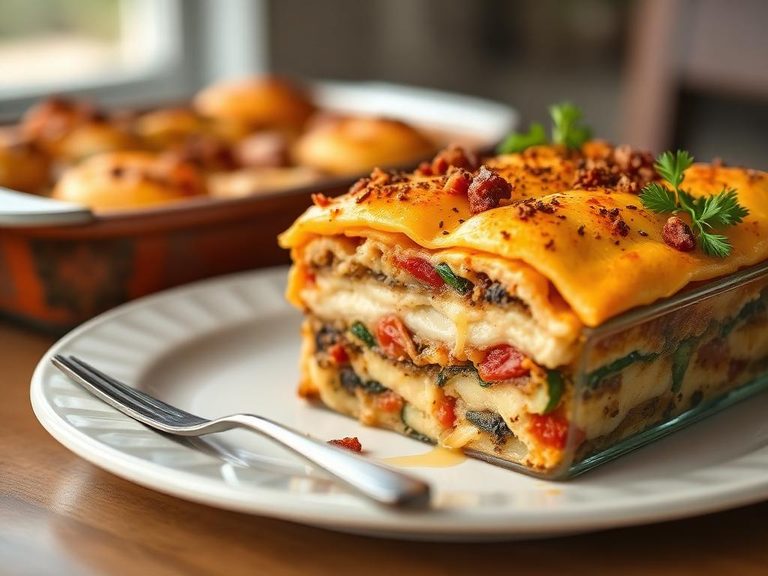
A layered casserole or hotdish is a hearty, baked dish typically consisting of a base (like potatoes or pasta), a protein layer (such as ground beef or tuna), and a creamy or cheesy topping, all baked together in a single dish. It is a staple of American Midwestern and home-style cooking, often using convenient, shelf-stable ingredients. The dish is celebrated for its simplicity, ability to feed a crowd, and comforting, familiar flavors.
🍽️ Nutrition at a glance
This dish is generally high in calories, fat, and sodium, with a moderate amount of protein and carbohydrates. It provides a good source of energy and some essential nutrients like iron and B vitamins from the meat, and calcium if cheese is used, but is often low in fiber and fresh vegetables.
Nutrition breakdown
| Calories | 350 kcal |
| Protein | 18 g |
| Carbs | 25 g |
| Fat | 20 g |
| Fiber | 2 g |
| Sugar | 4 g |
| Sodium | 780 mg |
| Iron | 2.5 mg |
| Calcium | 150 mg |
| Vitamin B12 | 1.2 mcg |
| Potassium | 350 mg |
| Zinc | 3 mg |
| Niacin (B3) | 4 mg |
| Phosphorus | 200 mg |
| Selenium | 15 mcg |
Per 1 cup (240 g) · estimated, varies by recipe
💡 What's interesting
The hotdish is a cultural icon of the Upper Midwest (especially Minnesota), representing community potlucks and family gatherings. Its 'layered' structure is practical, allowing for easy assembly and even cooking, and it's a classic example of 'comfort food' designed for warmth and satisfaction.
🍽️ Related dishes







AI estimate may be inaccurate · Terms