

Homemade bread and rolls
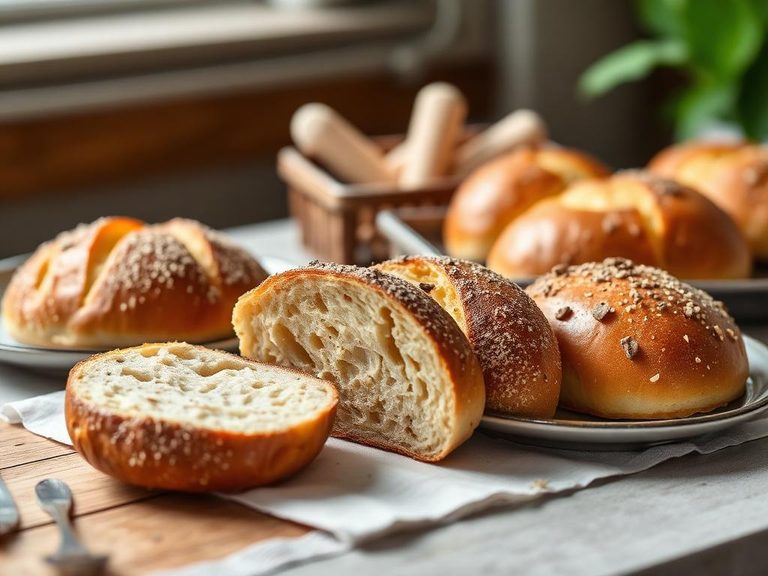
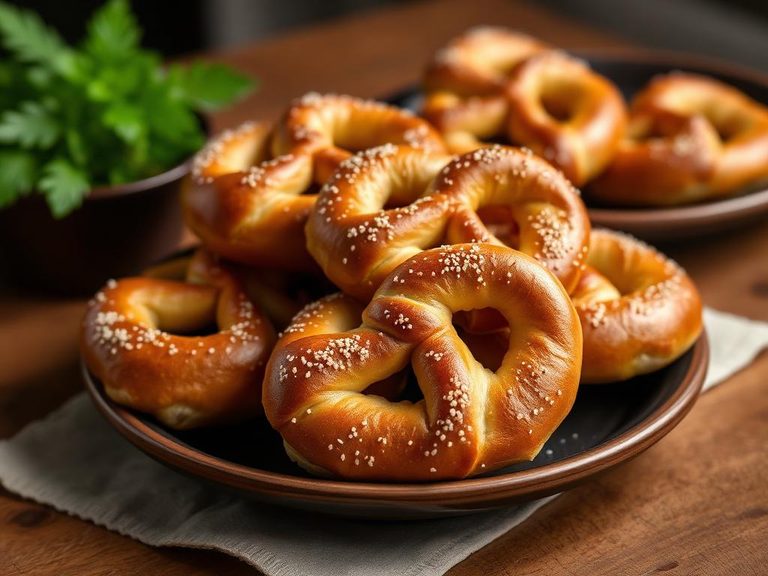
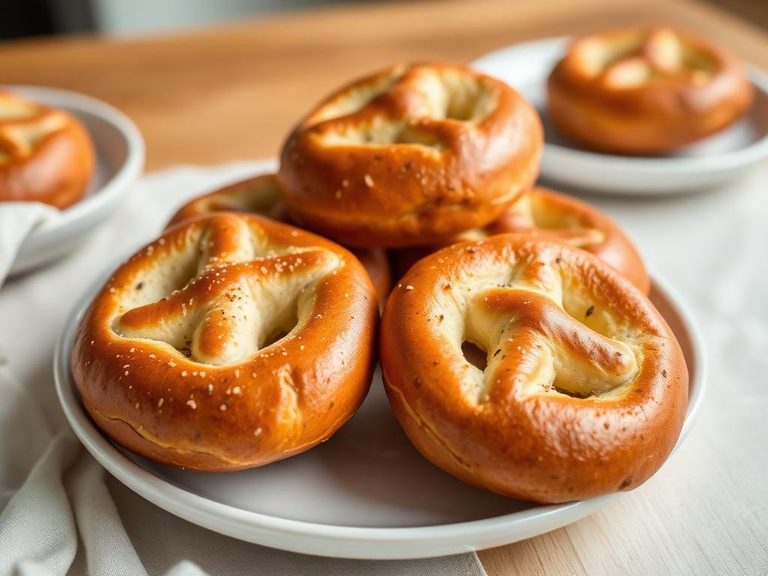
Homemade bread and rolls are fresh, yeast-leavened baked goods made from simple pantry staples like flour, water, yeast, and salt. They are a universal staple food, with countless regional variations from crusty European loaves to soft dinner rolls. The act of baking them at home is a timeless tradition that fills a kitchen with a comforting aroma.
🍽️ Nutrition at a glance
This dish is primarily a source of carbohydrates, providing quick energy, and can also offer some plant-based protein and B vitamins depending on the flour used. A typical serving, like a medium roll, contains roughly 150-200 calories.
Nutrition breakdown
| Calories | 170 kcal |
| Protein | 5 g |
| Carbs | 30 g |
| Fat | 2 g |
| Fiber | 2 g |
| Sugar | 3 g |
| Sodium | 230 mg |
| Thiamin (B1) | 0.3 mg |
| Niacin (B3) | 3 mg |
| Folate | 60 mcg |
| Iron | 1.8 mg |
| Magnesium | 20 mg |
| Phosphorus | 60 mg |
| Selenium | 10 mcg |
| Manganese | 0.4 mg |
Per 1 medium roll (approx. 57 g) · estimated, varies by recipe
💡 What's interesting
The magic of homemade bread lies in fermentation; yeast consumes sugars, producing carbon dioxide that creates the airy texture and developing complex flavors that store-bought versions often lack. Nutritionally, whole-grain versions are a good source of dietary fiber, which supports digestive health.
🍽️ Related dishes



AI estimate may be inaccurate · Terms