

Fruit Scones
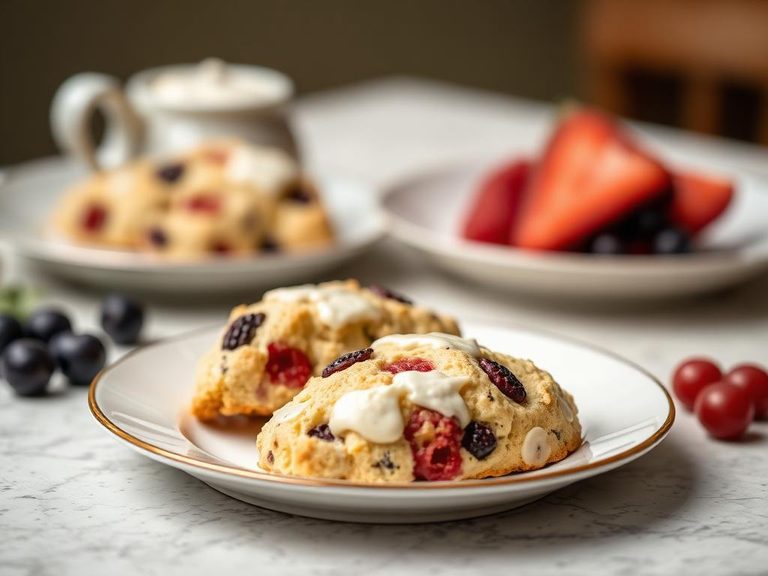
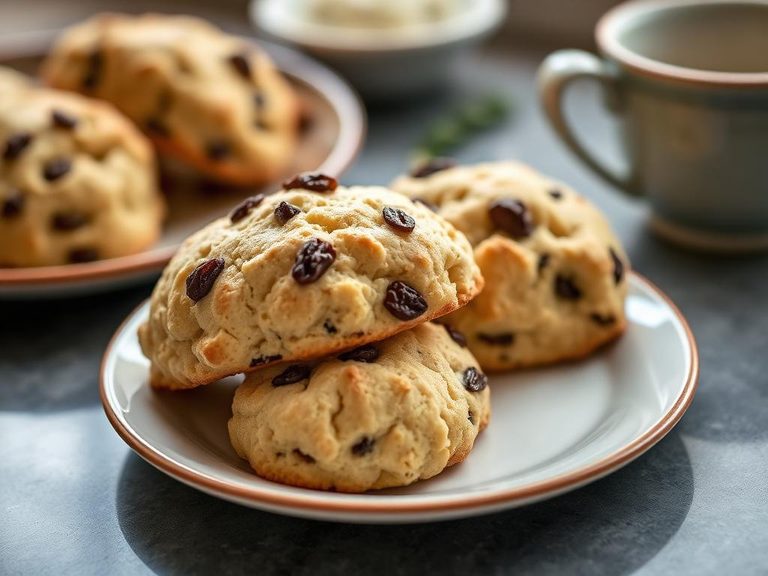
Fruit scones are a classic British baked good, a slightly sweet, crumbly quick bread traditionally served as part of afternoon tea. They are made from a simple dough of flour, butter, sugar, and baking powder, with dried fruit like currants, raisins, or sultanas folded in. They are a staple of British and Commonwealth cuisine, often enjoyed warm with clotted cream and jam.
🍽️ Nutrition at a glance
Fruit scones are primarily a source of carbohydrates from flour and sugar, with a moderate amount of fat from butter. They provide quick energy and some key minerals like iron and calcium from the flour and dairy, with a typical serving containing roughly 250-300 calories.
Nutrition breakdown
| Calories | 260 kcal |
| Protein | 4 g |
| Carbs | 38 g |
| Fat | 10 g |
| Fiber | 2 g |
| Sugar | 12 g |
| Sodium | 320 mg |
| Iron | 2.1 mg |
| Calcium | 60 mg |
| Potassium | 100 mg |
| Magnesium | 12 mg |
| Phosphorus | 70 mg |
| Thiamin (B1) | 0.2 mg |
| Folate | 45 µg |
| Selenium | 8 µg |
Per 1 medium scone (approx. 65 g) · estimated, varies by recipe
💡 What's interesting
The scone is central to the British tradition of 'cream tea,' and there is a famous, lighthearted debate in Devon and Cornwall about whether to spread the cream or the jam on first. Nutritionally, while not a health food, the dried fruit adds small amounts of fiber and antioxidants compared to a plain scone.
🍽️ Related dishes




AI estimate may be inaccurate · Terms