Salt, table, iodized
Whole food · Spices and Herbs
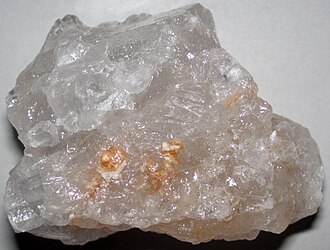
Photo: Wikipedia
Table salt is a crystalline mineral, primarily sodium chloride, that delivers an immediate, sharp, and essential savory punch. Its fine, free-flowing texture dissolves instantly on the tongue, making it a universal flavor enhancer. Nutritionally, it provides zero calories but is a critical source of sodium and, in its iodized form, a key public health tool for preventing iodine deficiency disorders.
💚 Why it's loved
People love salt for its unparalleled ability to make food taste more like itself, amplifying sweetness and suppressing bitterness. It is the most fundamental and versatile seasoning in global culinary traditions, indispensable for everything from baking to seasoning a steak.
⚠️ Watch-outs & how to enjoy it better
Excessive intake is linked to high blood pressure and cardiovascular strain, particularly for those with sodium sensitivity. To counteract, use it sparingly, focus on potassium-rich foods (like bananas or leafy greens) to balance sodium, and choose unsalted or low-sodium versions of packaged foods.
Key benefits
- Essential for nerve function and muscle contraction
- Iodized versions prevent iodine deficiency and goiter
- Enhances and balances the flavor of virtually all foods
- Acts as a preservative for pickling and curing
- Helps regulate fluid balance in the body
🍽️ Popular dishes





🌍 Where it's eaten
💡 Did you know?
The word 'salary' comes from the Latin 'salarium,' which was money given to Roman soldiers to buy salt, highlighting its historical value as a precious commodity.
Full nutrition (scales with serving)
| Water | 0.42 g |
| Ash | 99.0 g |
| Calcium, Ca | 50.0 mg |
| Iron, Fe | 0.00 mg |
| Magnesium, Mg | 0.00 mg |
| Phosphorus, P | 0.00 mg |
| Potassium, K | 2.0 mg |
| Sodium, Na | 38700 mg |
| Zinc, Zn | 0.00 mg |
| Copper, Cu | 0.00 mg |
| Manganese, Mn | 0.03 mg |
| Iodine, I | 5080 ug |
FAQ
What is the difference between iodized and non-iodized salt?
Iodized salt has a small amount of potassium iodide added to prevent iodine deficiency, which can cause goiter. Non-iodized salt, like sea salt or kosher salt, does not contain this additive but is otherwise chemically similar in sodium content.
How much salt should I consume daily?
The American Heart Association recommends no more than 2,300 milligrams of sodium per day, with an ideal limit of 1,500 mg for most adults. This is roughly equivalent to one teaspoon of table salt.
Does salt have any calories or nutritional value?
Table salt contains zero calories, protein, carbs, or fat. Its primary nutritional role is providing sodium and, if iodized, iodine, both of which are essential minerals for bodily functions.