

Scone
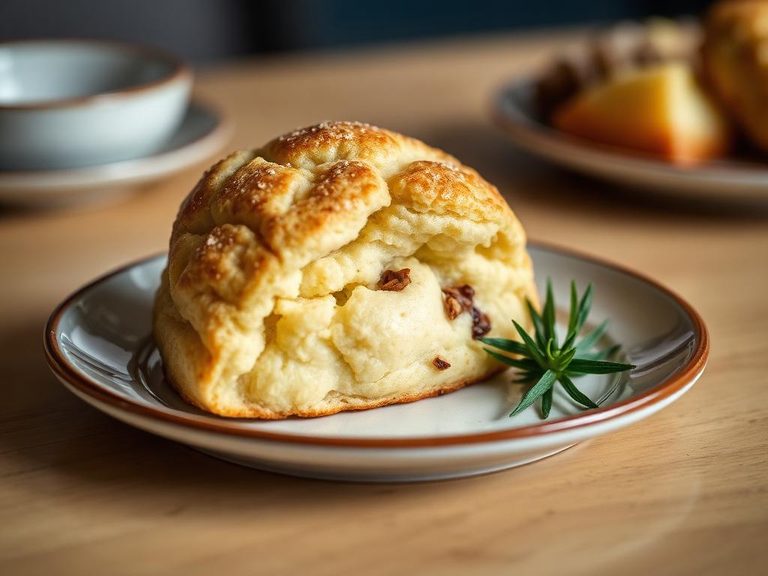
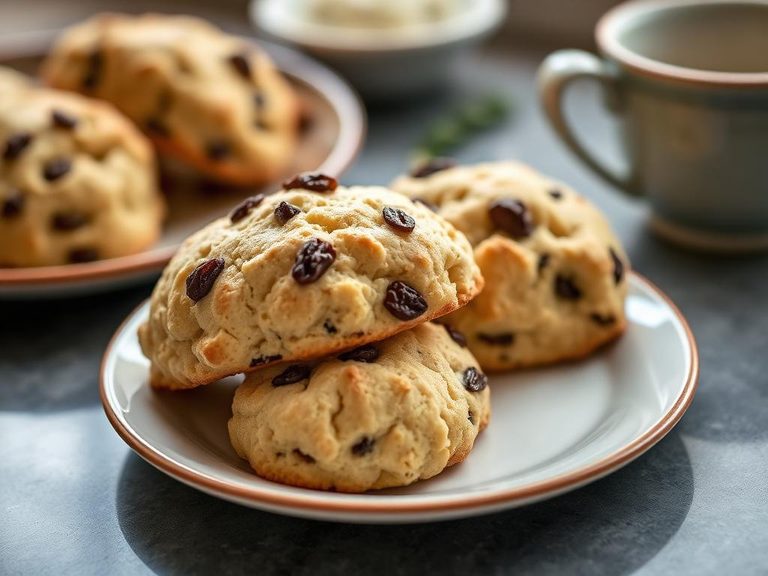
A scone is a small, quick bread, typically round or triangular, that originated in Scotland. It is made from a simple dough of flour, butter, sugar, and a leavening agent like baking powder, often with milk or cream added for moisture.
🍽️ Nutrition at a glance
Scones are generally high in carbohydrates and fat due to their flour and butter content, providing a quick source of energy. A typical plain scone contains roughly 200-300 calories per serving, with modest amounts of protein and essential nutrients like calcium and iron.
Nutrition breakdown
| Calories | 220 kcal |
| Protein | 4.5 g |
| Carbs | 28 g |
| Fat | 10 g |
| Fiber | 1.2 g |
| Sugar | 5 g |
| Sodium | 320 mg |
| Calcium | 80 mg |
| Iron | 1.8 mg |
| Potassium | 65 mg |
| Magnesium | 10 mg |
| Phosphorus | 100 mg |
| Vitamin B1 (Thiamin) | 0.15 mg |
| Vitamin B2 (Riboflavin) | 0.12 mg |
| Folate | 40 mcg |
Per 1 scone (approx. 60 g) · estimated, varies by recipe
💡 What's interesting
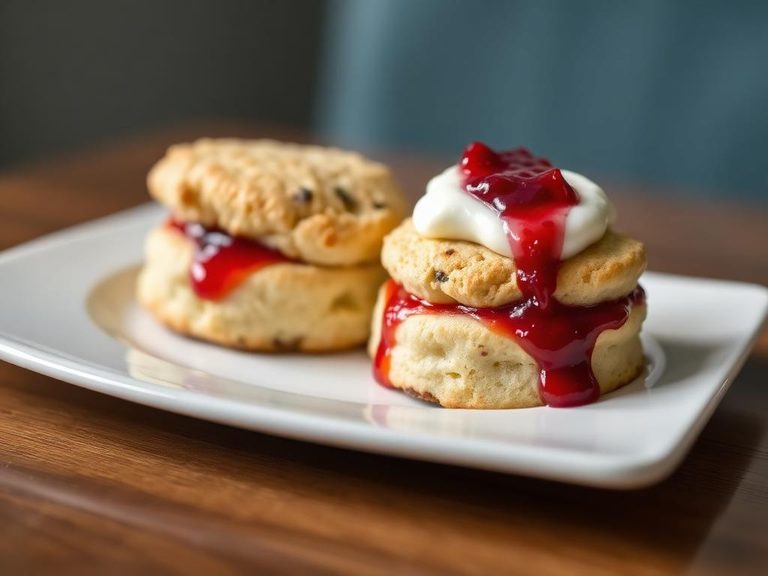
Culturally, scones are a cornerstone of the British afternoon tea tradition, often served with clotted cream and jam. Nutritionally, their quick-bread nature means they are best enjoyed fresh, as their texture can become dry and crumbly over time.
🍽️ Related dishes




AI estimate may be inaccurate · Terms