Russian borscht
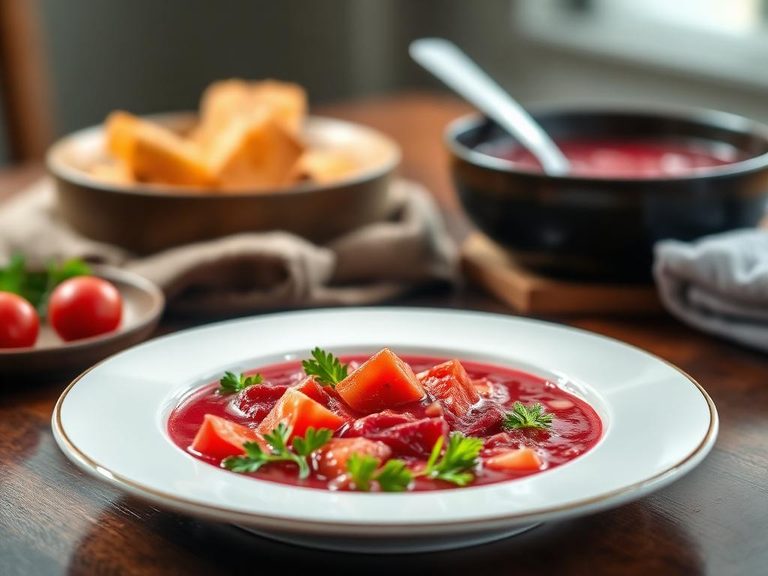
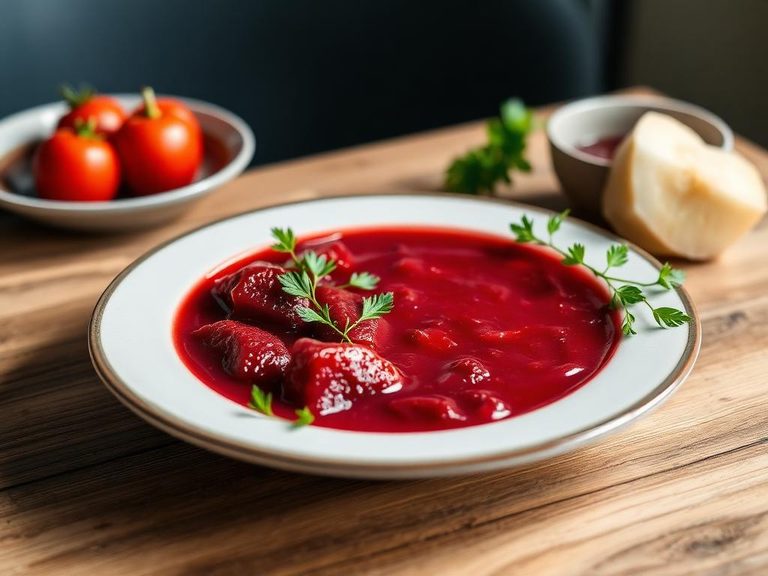
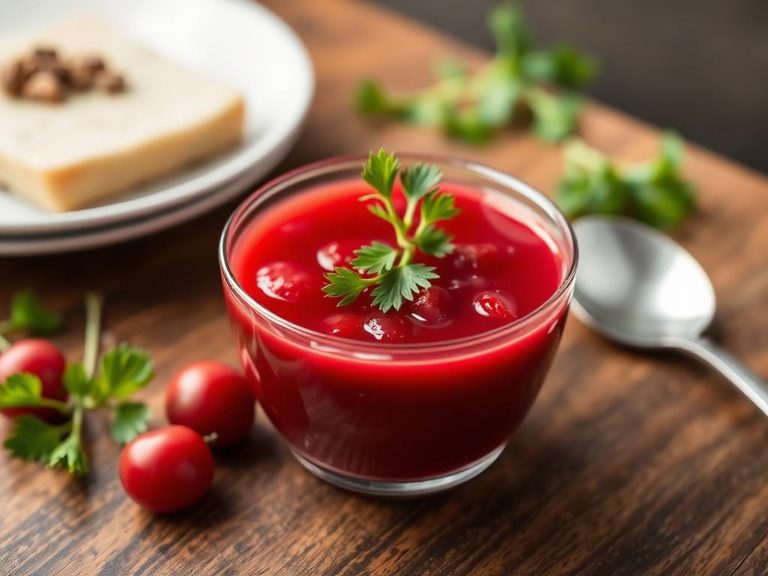
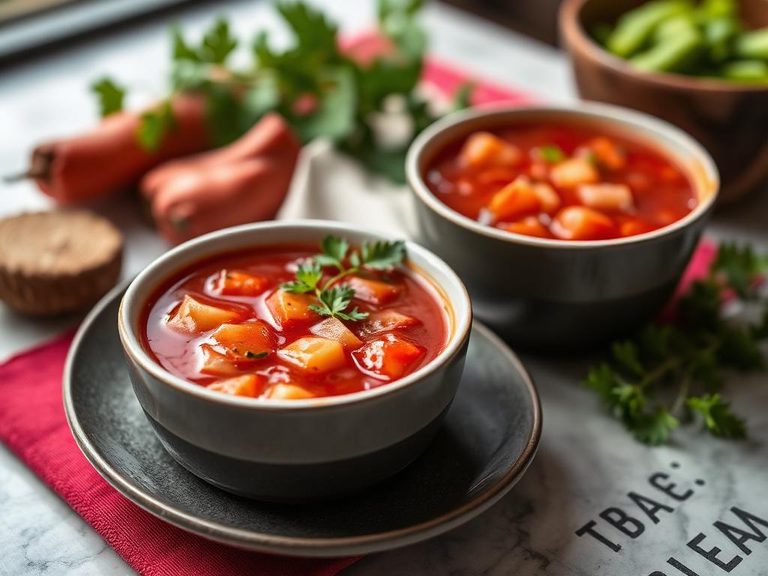
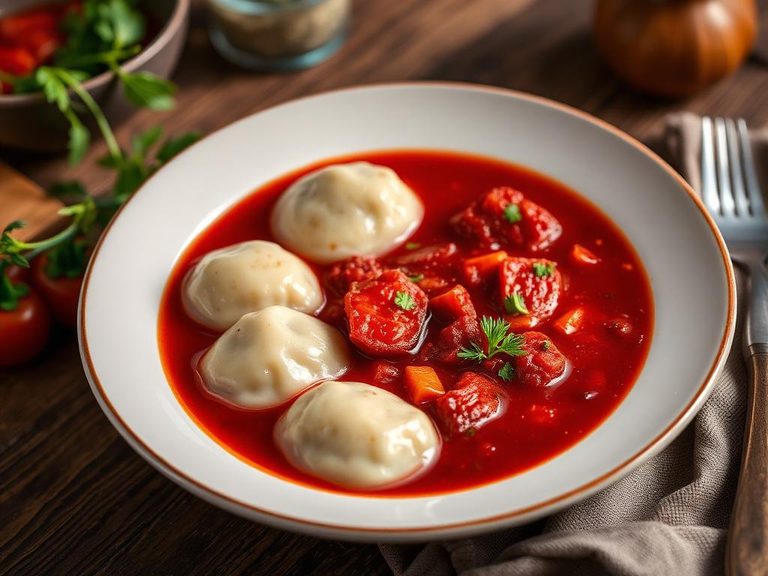
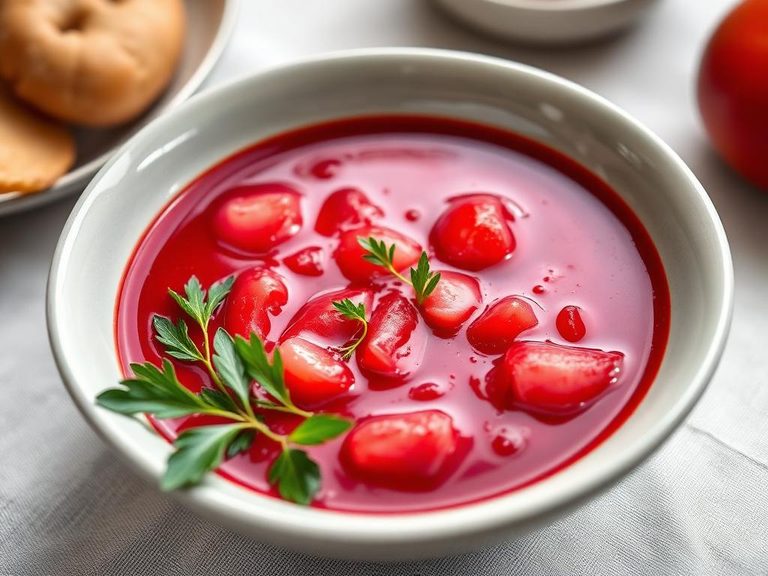
Russian borscht is a vibrant, hearty soup characterized by its deep red color from beets, a staple in Eastern European cuisine. It typically features a rich broth with cabbage, potatoes, carrots, onions, and often includes meat like beef or pork, seasoned with dill and served with a dollop of sour cream.
🍽️ Nutrition at a glance
This soup is generally balanced, offering moderate carbohydrates from vegetables, some protein if meat is included, and is low in fat. It provides key nutrients like fiber, vitamin C, potassium, and antioxidants from beets, with a typical serving ranging from 150 to 250 calories.
Nutrition breakdown
| Calories | 150 kcal |
| Protein | 5 g |
| Carbs | 25 g |
| Fat | 4 g |
| Fiber | 4 g |
| Sugar | 10 g |
| Sodium | 680 mg |
| Vitamin A | 120 mcg RAE |
| Vitamin C | 12 mg |
| Vitamin K | 15 mcg |
| Folate | 60 mcg DFE |
| Potassium | 450 mg |
| Iron | 1.5 mg |
| Magnesium | 30 mg |
| Manganese | 0.4 mg |
Per 1 cup (240 g) · estimated, varies by recipe
💡 What's interesting
Culturally, borscht is a symbol of home and heritage in many Slavic countries, with recipes varying widely by region and family tradition. Nutritionally, beets give it unique compounds like betalains, which are known for their anti-inflammatory properties.