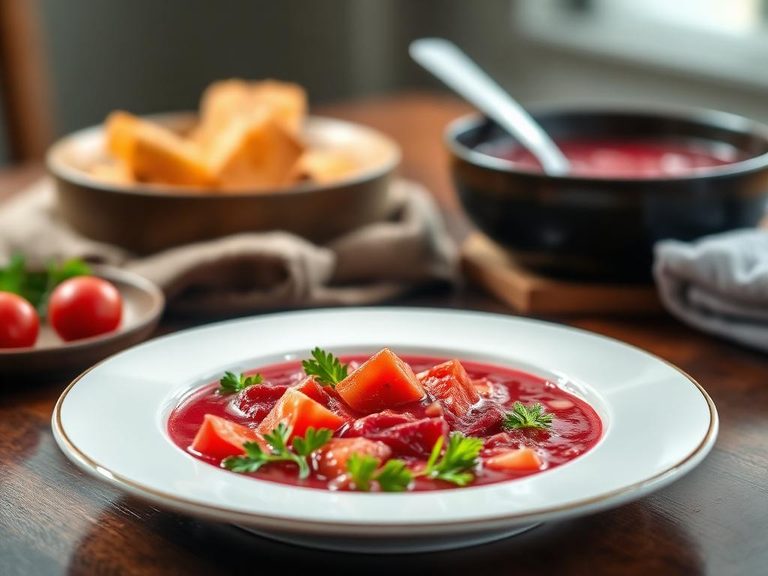
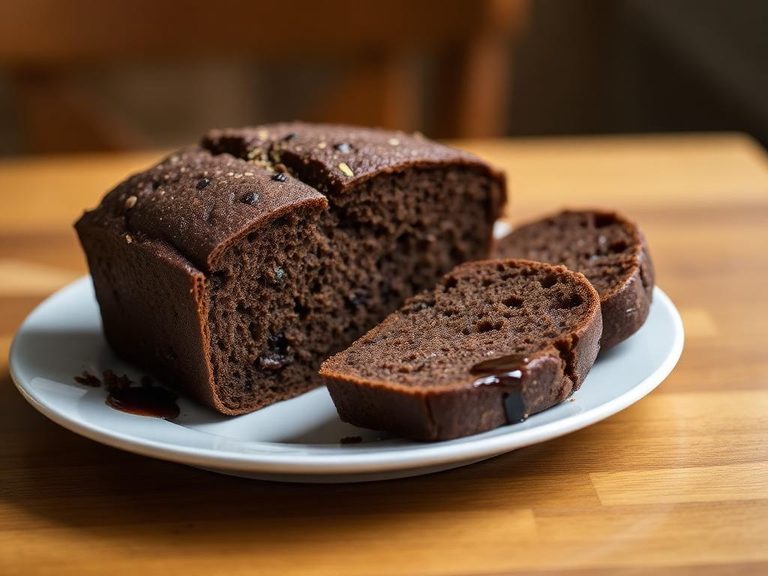
Black bread with borscht

Black bread with borscht is a traditional Eastern European meal pairing, featuring a hearty, dark rye or sourdough bread served alongside a vibrant beet-based soup. The bread is typically dense and tangy, while the borscht is made from beets, cabbage, carrots, onions, and often potatoes, sometimes with meat. This combination is a staple in countries like Ukraine, Russia, and Poland, symbolizing rustic, comforting home cooking.
🍽️ Nutrition at a glance
This meal is moderate in carbohydrates from the bread and vegetables, with a good amount of dietary fiber and plant-based protein. It provides key nutrients like iron, vitamin C, and potassium, with a typical serving containing roughly 300-400 calories, depending on the bread's density and whether the borscht includes meat.
Nutrition breakdown
| Calories | 350 kcal |
| Protein | 10 g |
| Carbs | 65 g |
| Fat | 5 g |
| Fiber | 8 g |
| Sugar | 12 g |
| Sodium | 800 mg |
| Potassium | 450 mg |
| Vitamin C | 25 mg |
| Iron | 3 mg |
| Vitamin A | 150 mcg |
| Calcium | 50 mg |
| Magnesium | 40 mg |
| Folate | 60 mcg |
| Manganese | 1.5 mg |
Per 1 bowl of borscht (300 g) with 2 slices of black bread (80 g total) · estimated, varies by recipe
💡 What's interesting
Culturally, black bread is revered in Slavic traditions for its long shelf life and symbolic role in hospitality, often served with salt. Nutritionally, the pairing is unique because the fermented bread aids digestion, while the beets in borscht are rich in nitrates that support heart health.