

Russian Borsch
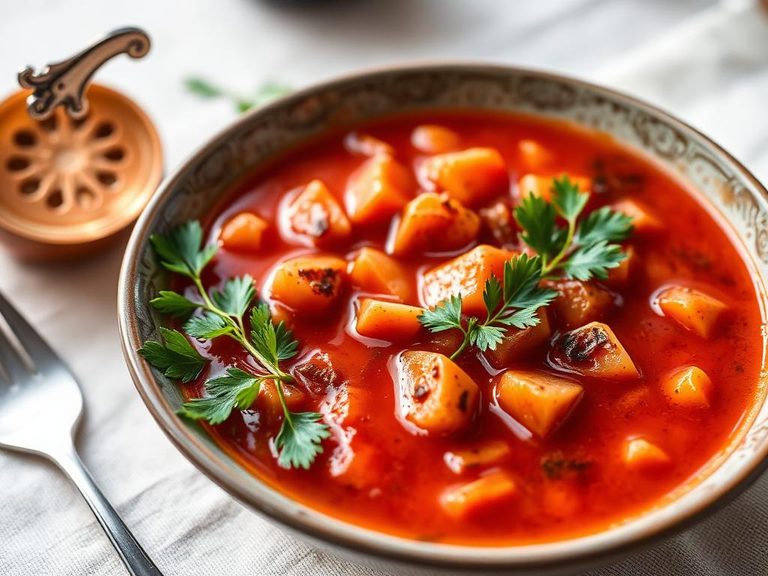
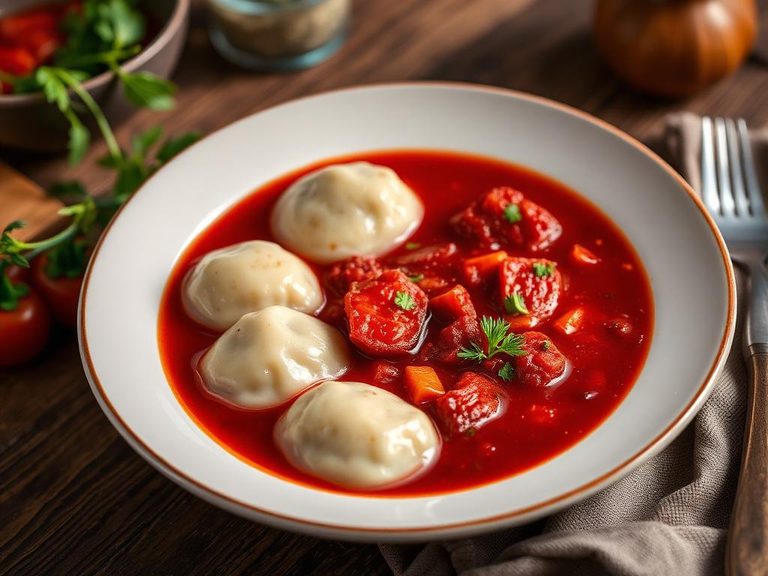
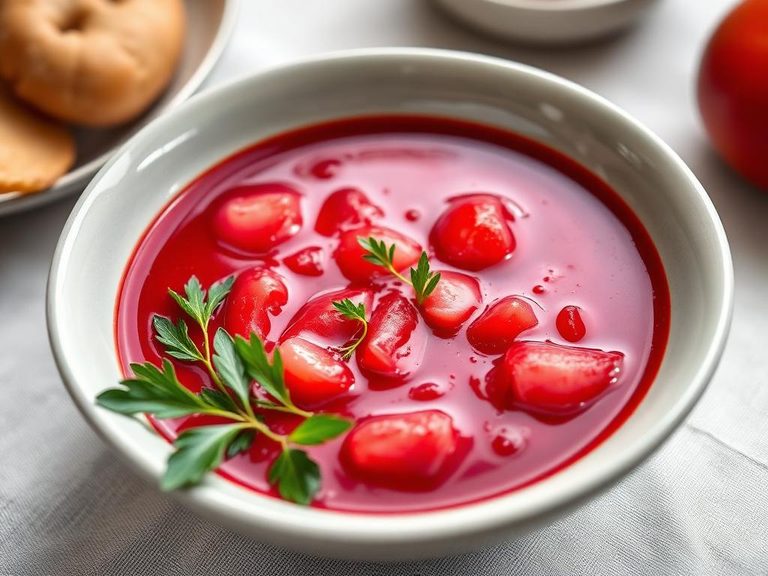
Russian Borsch is a vibrant, hearty beet soup that's a staple in Eastern European cuisine. Its signature deep red color comes from beets, and it typically includes a rich broth with cabbage, potatoes, carrots, onions, and often a protein like beef or pork. It's traditionally served hot, frequently with a generous dollop of sour cream and fresh dill.
🍽️ Nutrition at a glance
Borsch is generally a balanced, nutrient-dense dish, not excessively high in any single macronutrient. It's an excellent source of fiber, vitamins C and K, and antioxidants from the beets and vegetables, with a rough calorie range of 150-300 per serving depending on the meat and cream added.
Nutrition breakdown
| Calories | 135 kcal |
| Protein | 3.5 g |
| Carbs | 22 g |
| Fat | 4.5 g |
| Fiber | 3.5 g |
| Sugar | 8 g |
| Sodium | 680 mg |
| Vitamin A | 120 mcg RAE |
| Vitamin C | 18 mg |
| Vitamin K | 25 mcg |
| Folate | 60 mcg DFE |
| Potassium | 450 mg |
| Iron | 1.5 mg |
| Manganese | 0.4 mg |
| Copper | 0.15 mg |
Per 1 cup (240 g) · estimated, varies by recipe
💡 What's interesting
Culturally, Borsch is a symbol of home and heritage, with countless regional and family variations sparking friendly debates over the 'authentic' recipe. Nutritionally, the fermented beet component in some traditional versions can provide beneficial probiotics, making it a gut-friendly comfort food.
🍽️ Related dishes


AI estimate may be inaccurate · Terms