Rice Porridge / Congee
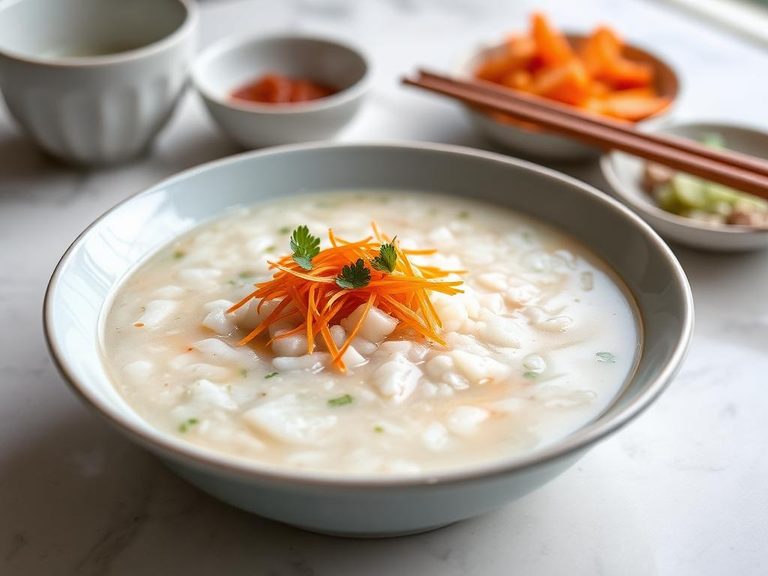
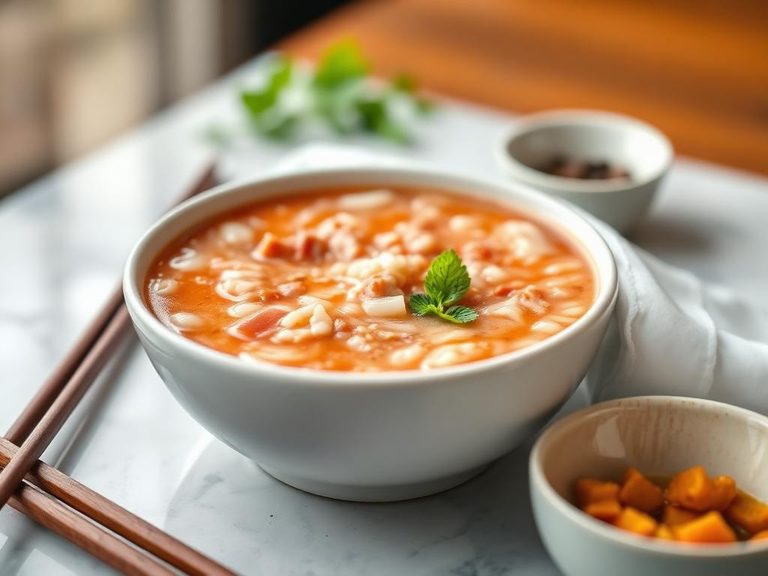
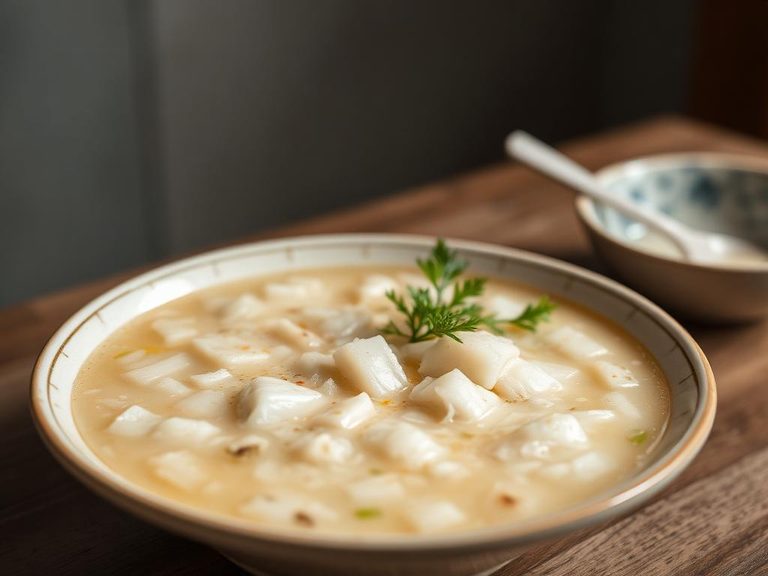
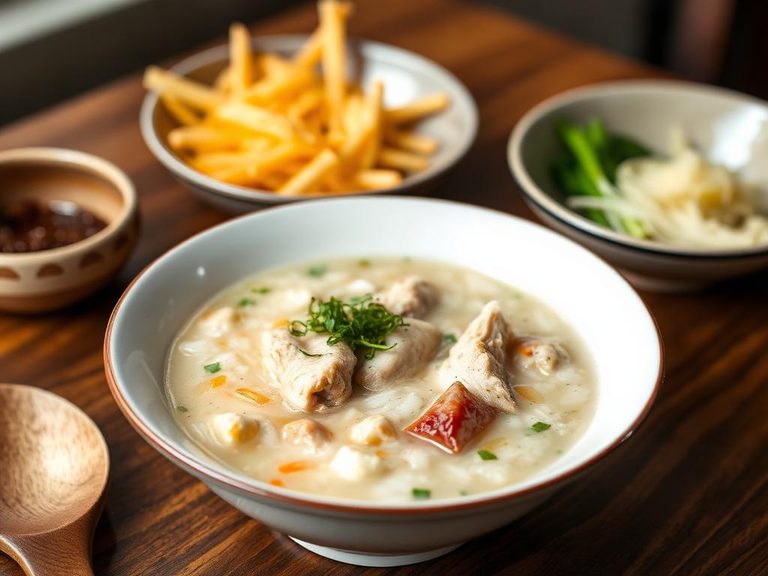
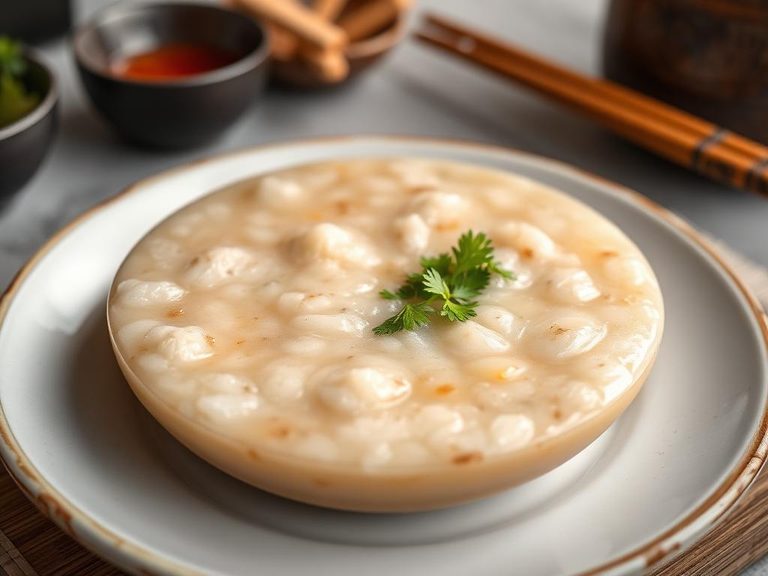
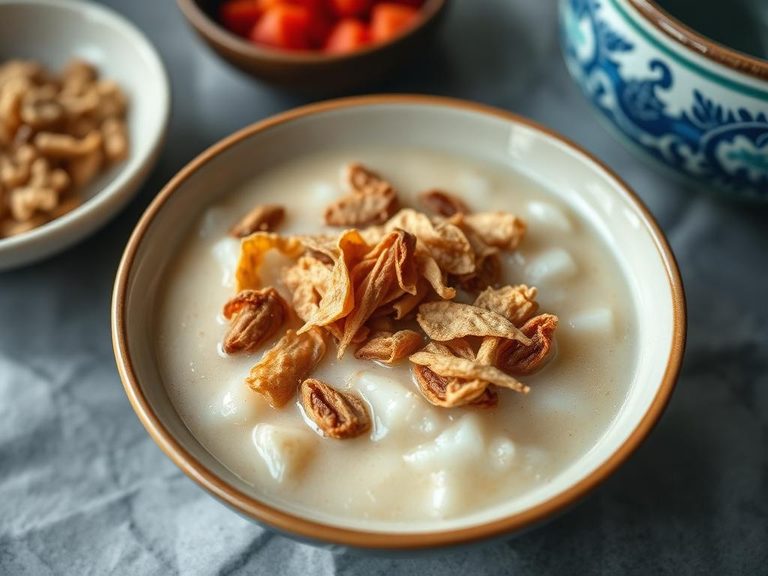
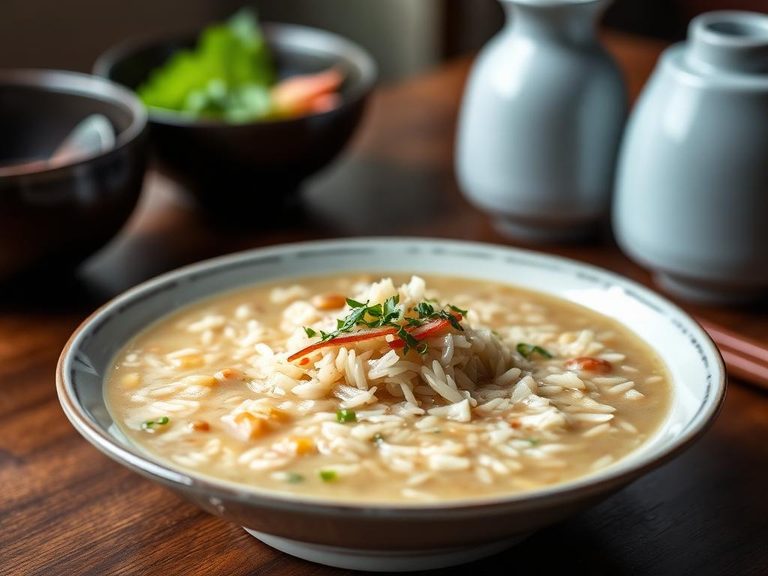
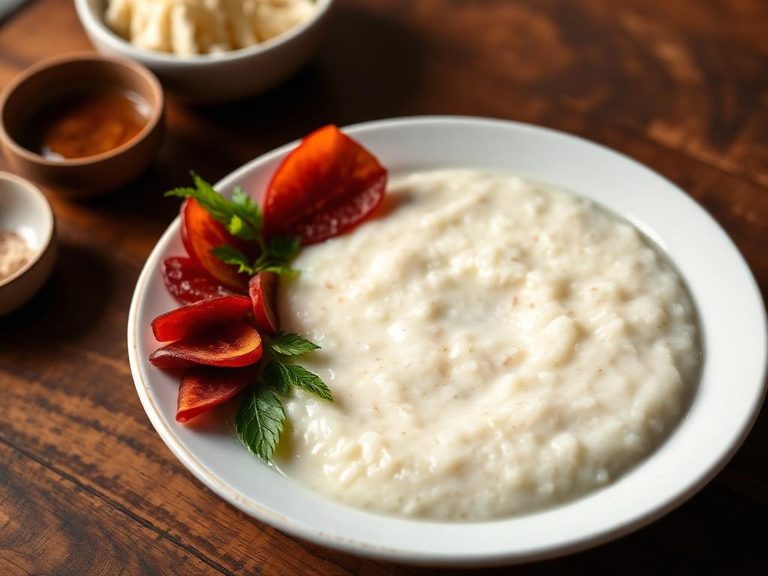
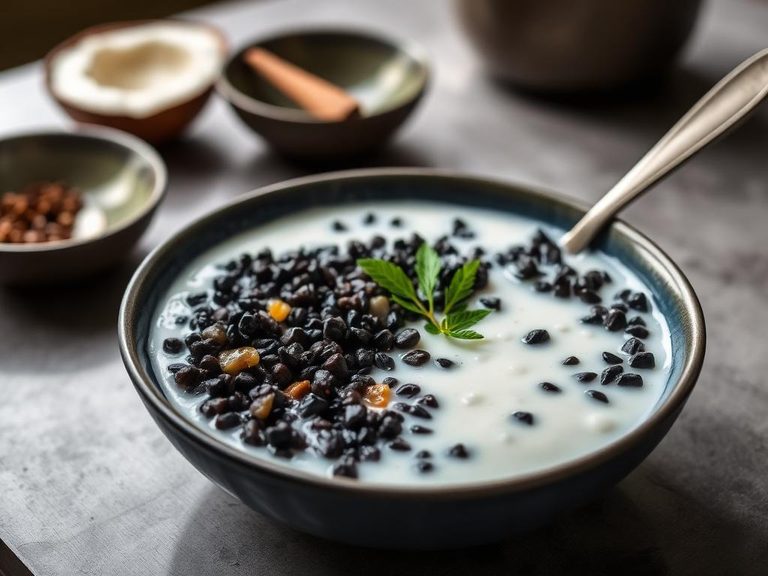
Rice porridge, also known as congee, is a warm and comforting dish made by boiling rice in a large amount of water or broth until it breaks down into a thick, creamy consistency. It is a staple breakfast or light meal across many Asian cultures, including China, Japan, Korea, and Southeast Asia, and is often flavored with savory toppings like ginger, scallions, preserved eggs, or shredded chicken.
🍽️ Nutrition at a glance
This dish is primarily a source of carbohydrates, providing easily digestible energy and key nutrients like B vitamins and minerals such as selenium and manganese. A typical savory serving without heavy additions generally ranges from 150 to 250 calories.
Nutrition breakdown
| Calories | 60 kcal |
| Protein | 1.2 g |
| Carbs | 13 g |
| Fat | 0.1 g |
| Fiber | 0.3 g |
| Sugar | 0 g |
| Sodium | 5 mg |
| Potassium | 35 mg |
| Magnesium | 5 mg |
| Phosphorus | 15 mg |
| Manganese | 0.2 mg |
| Selenium | 4 mcg |
| Thiamin (B1) | 0.03 mg |
| Niacin (B3) | 0.8 mg |
| Folate | 20 mcg |
Per 1 cup (240 g) · estimated, varies by recipe
💡 What's interesting
Congee is renowned for its gentle, soothing nature, making it a go-to comfort food for those feeling unwell or recovering, as it's easy on the digestive system. Nutritionally, the long cooking process breaks down starches, making the nutrients highly bioavailable and the dish exceptionally hydrating.