Congee with Wild Rice
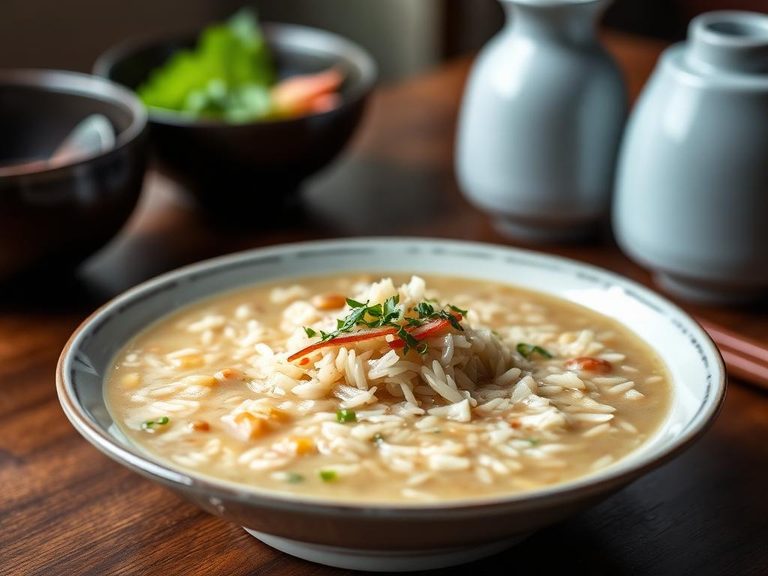
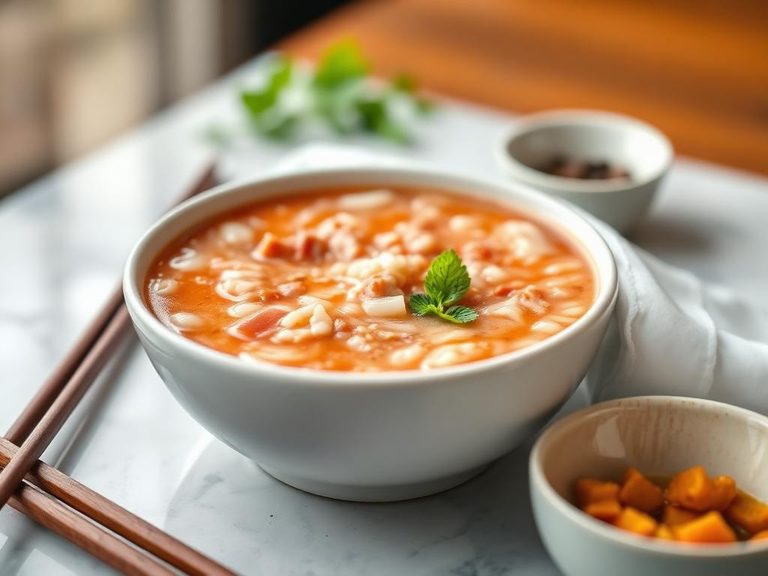
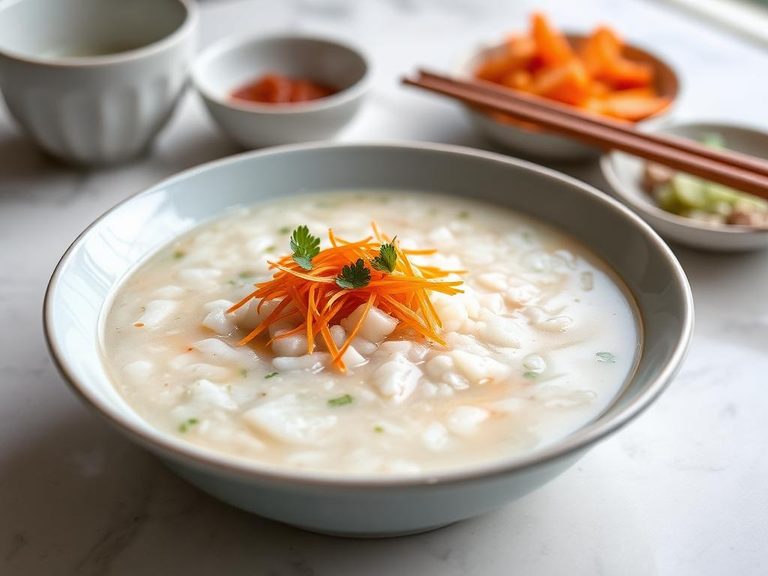
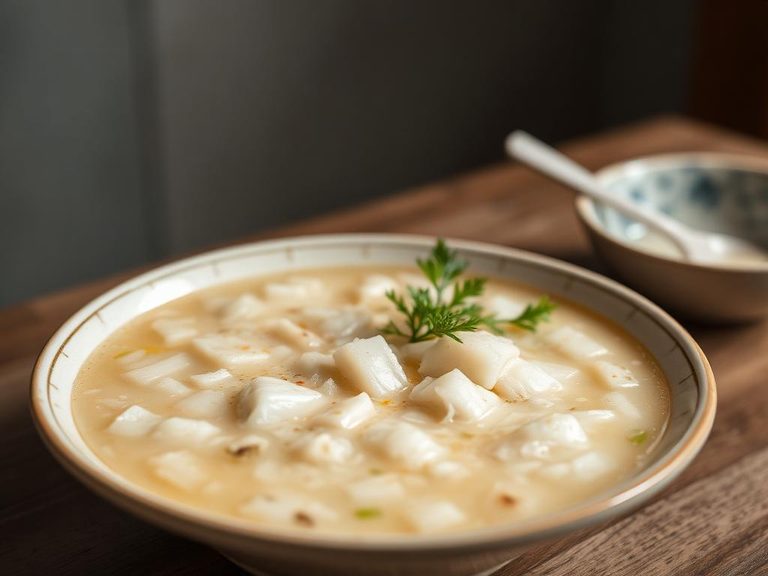
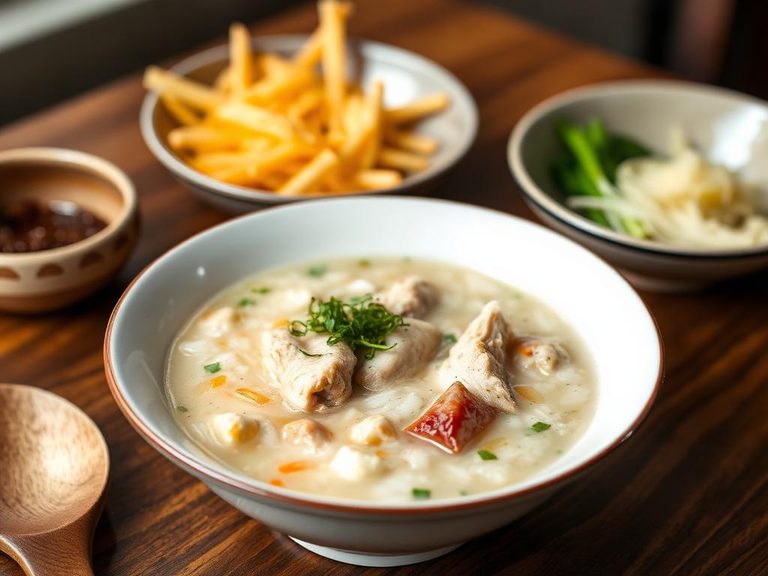
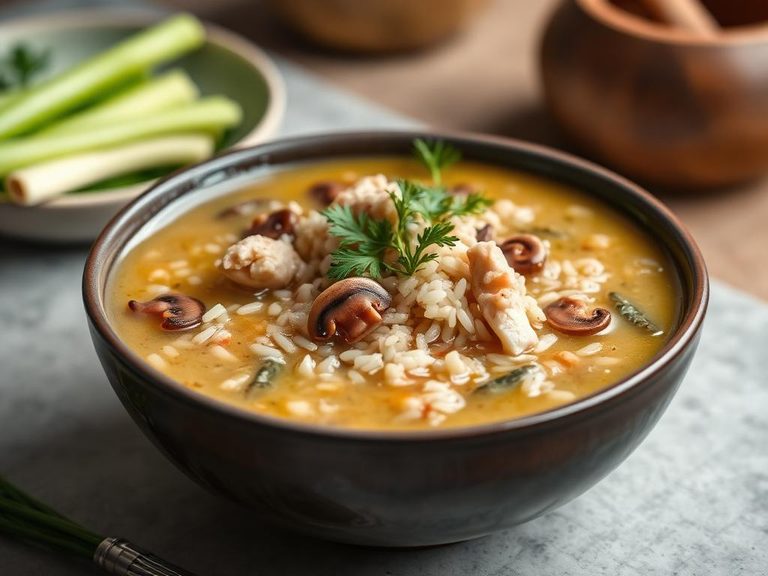
Congee with Wild Rice is a comforting, savory rice porridge that blends the creamy, slow-cooked texture of traditional congee with the nutty, chewy bite of wild rice. It typically starts with a base of white rice simmered until broken down, with wild rice added for texture and depth, and is often flavored with ginger, scallions, and a light protein like chicken or tofu. This dish is a modern, nutritious twist on the classic congee found across East and Southeast Asia.
🍽️ Nutrition at a glance
This dish is primarily a source of complex carbohydrates, with a moderate amount of protein if prepared with meat or tofu, and is generally low in fat. It provides key nutrients like B vitamins, magnesium, and dietary fiber from the wild rice, and a typical serving contains roughly 250-350 calories, depending on the specific ingredients and portion size.
Nutrition breakdown
| Calories | 130 kcal |
| Protein | 3.5 g |
| Carbs | 27 g |
| Fat | 1 g |
| Fiber | 2.5 g |
| Sugar | 1 g |
| Sodium | 300 mg |
| Potassium | 120 mg |
| Magnesium | 45 mg |
| Phosphorus | 80 mg |
| Iron | 1.5 mg |
| Zinc | 1.0 mg |
| Thiamin (B1) | 0.15 mg |
| Niacin (B3) | 2.0 mg |
| Manganese | 0.8 mg |
Per 1 cup (240 g) · estimated, varies by recipe
💡 What's interesting
Culturally, congee is a staple comfort food across Asia often eaten for breakfast or when feeling unwell, and the addition of wild rice—a grain native to North America—creates a unique fusion. Nutritionally, the wild rice boosts the dish's fiber and antioxidant content, making it a heartier, more nutrient-dense version of the traditional porridge.