Paired with a charcuterie board
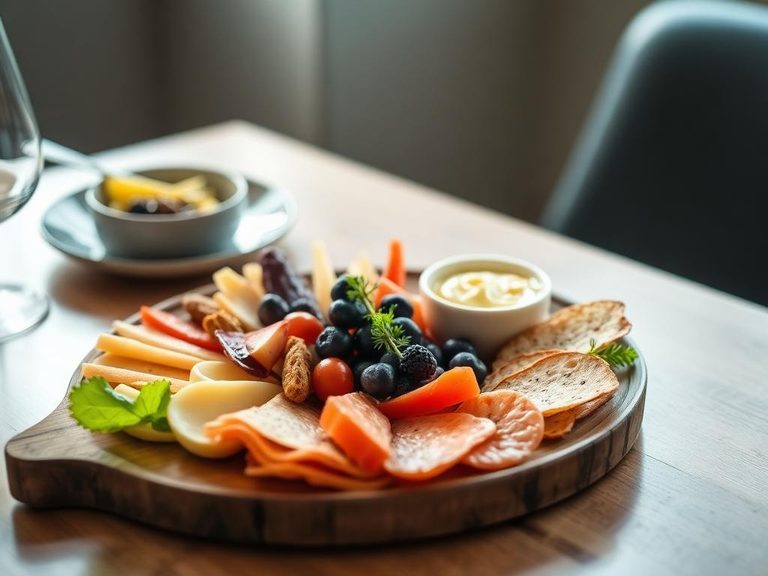
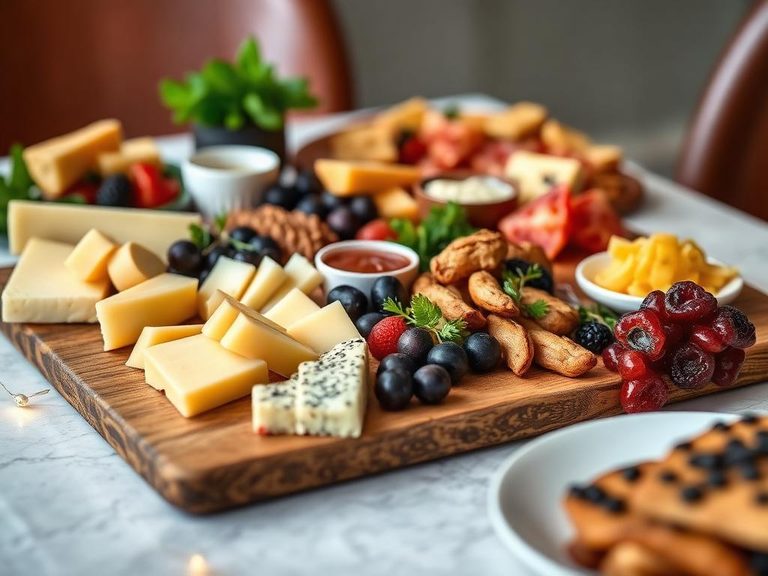
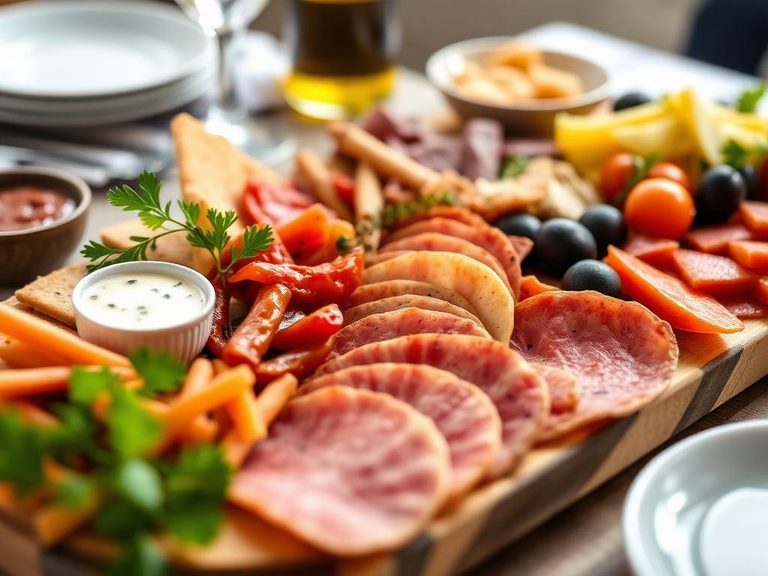
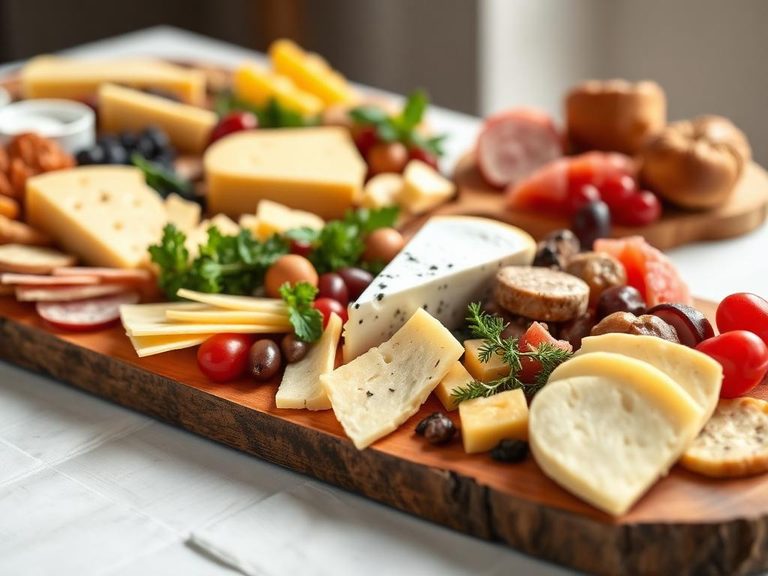
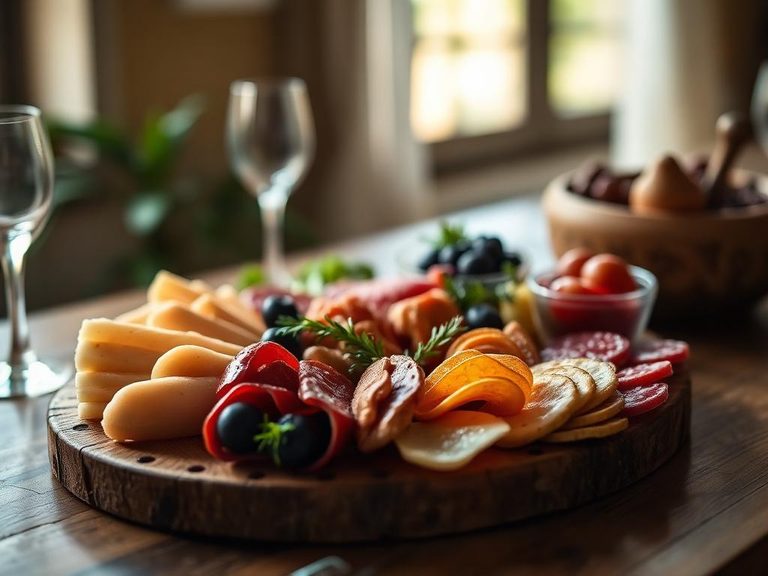
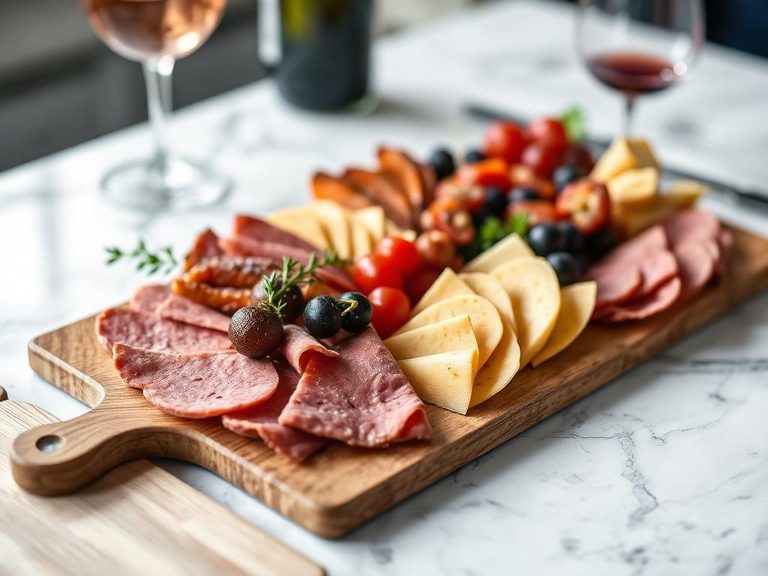
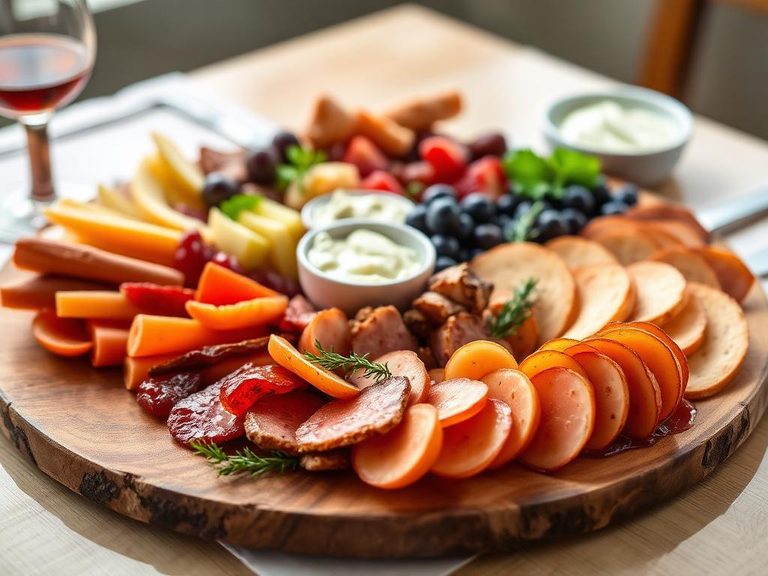
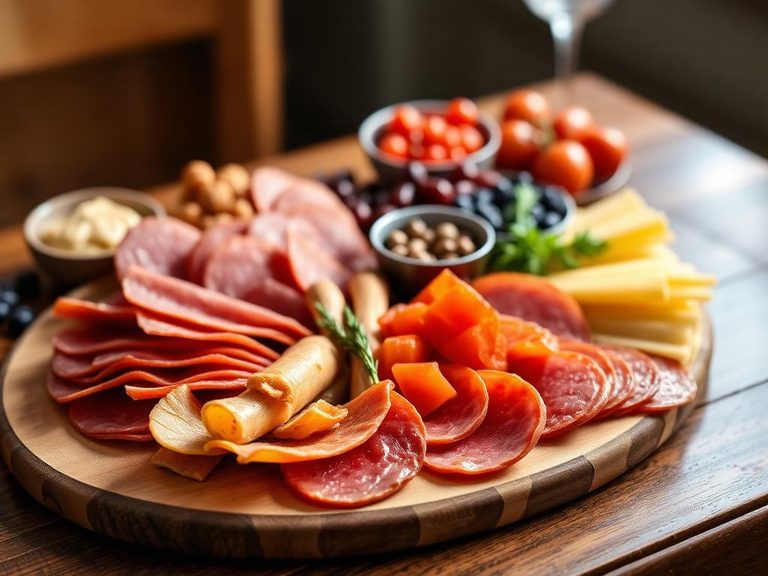
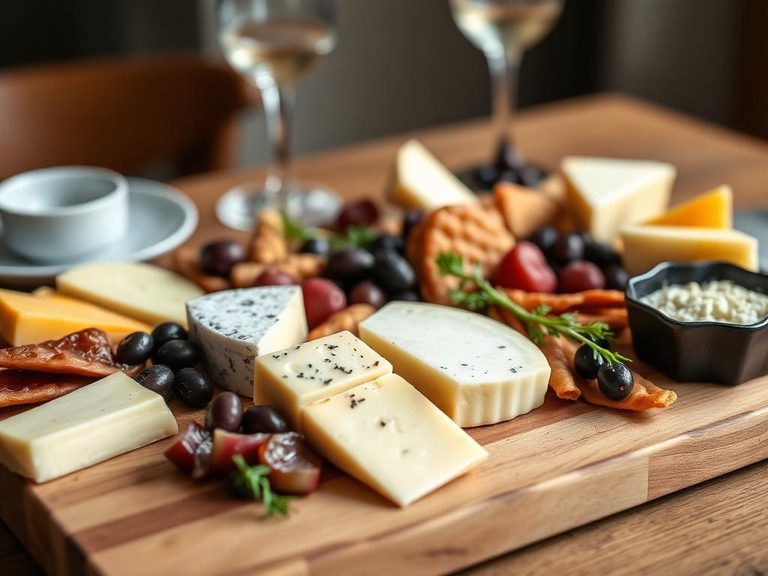
A charcuterie board is an elegant, shareable appetizer platter featuring an assortment of cured meats, cheeses, and complementary accompaniments. Originating from the French culinary tradition of preparing cured pork products, it has evolved into a global social dining experience. The board typically includes a variety of sliced meats like prosciutto, salami, and pâté, paired with cheeses, crackers, fruits, nuts, and condiments.
🍽️ Nutrition at a glance
This platter is generally high in protein and fat from the meats and cheeses, with moderate carbohydrates from crackers or bread. It provides a good source of iron, zinc, and B vitamins, with a typical serving ranging from 400 to 600 calories depending on the specific selections and portion sizes.
Nutrition breakdown
| Calories | 480 kcal |
| Protein | 25 g |
| Carbs | 20 g |
| Fat | 32 g |
| Fiber | 2 g |
| Sugar | 5 g |
| Sodium | 1200 mg |
| Iron | 2.5 mg |
| Zinc | 3.8 mg |
| Vitamin B12 | 1.8 mcg |
| Niacin (B3) | 5 mg |
| Phosphorus | 280 mg |
| Selenium | 15 mcg |
| Vitamin K | 8 mcg |
| Calcium | 180 mg |
Per 1 board serving (approx. 150 g total) · estimated, varies by recipe
💡 What's interesting
The word 'charcuterie' comes from the French 'chair cuite,' meaning 'cooked flesh,' reflecting its historical roots in preserving meat before refrigeration. Nutritionally, fermented and cured meats can offer probiotics and are often rich in bioavailable iron, making them a nutrient-dense, though high-sodium, food choice.