Moose Stew
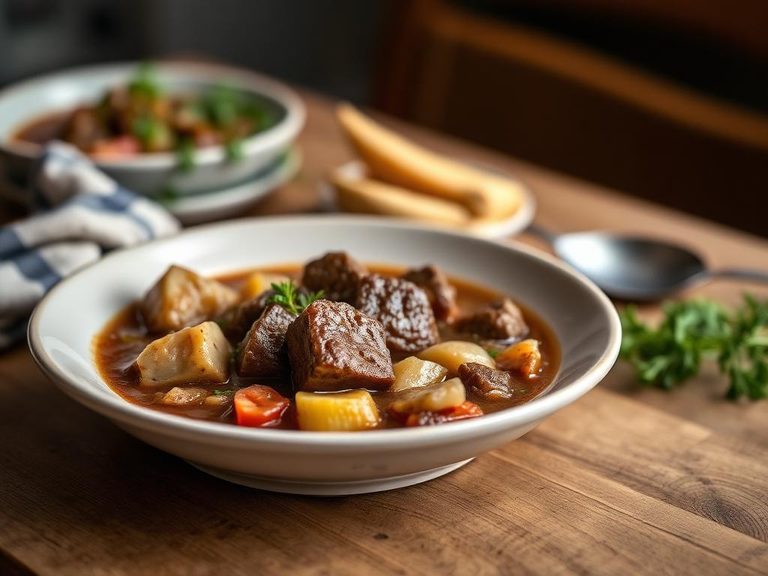
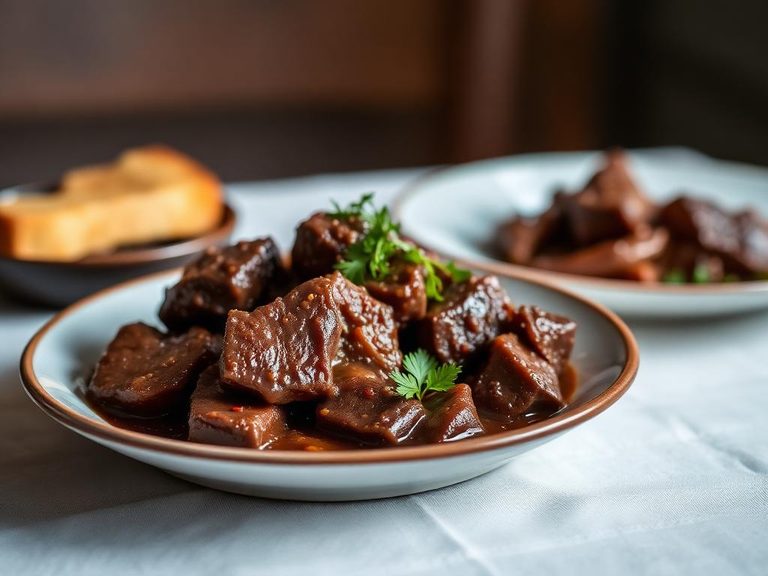
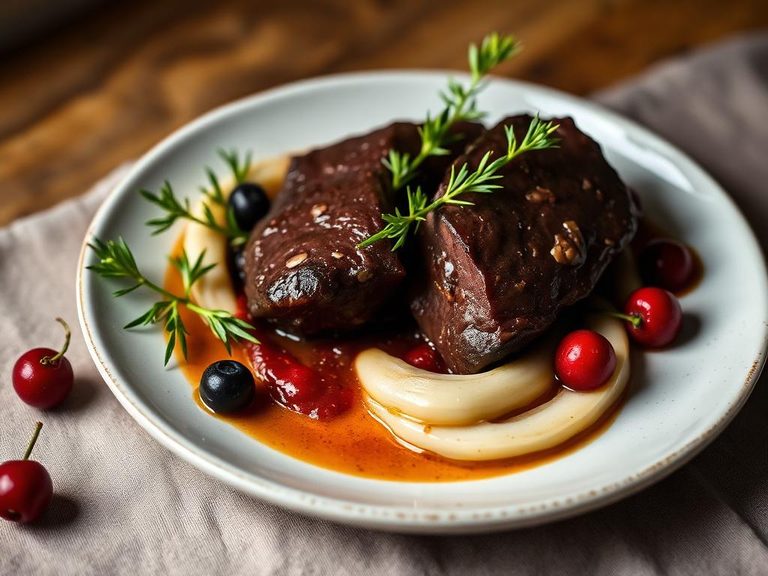
Moose stew is a hearty, slow-cooked dish featuring tender chunks of moose meat simmered with root vegetables like potatoes, carrots, and onions in a rich broth. Originating from North American wilderness cuisine, particularly in Canada and Alaska, it's a staple for hunters and outdoor enthusiasts. The dish often incorporates herbs like thyme and bay leaves for depth of flavor.
🍽️ Nutrition at a glance
Moose stew is high in protein and relatively low in fat compared to other red meat stews, making it a lean, nutrient-dense meal. A typical serving provides a good source of iron, zinc, and B vitamins, with a rough calorie ballpark of 300-400 kcal per serving depending on the recipe.
Nutrition breakdown
| Calories | 350 kcal |
| Protein | 32 g |
| Carbs | 18 g |
| Fat | 14 g |
| Fiber | 3 g |
| Sugar | 4 g |
| Sodium | 580 mg |
| Iron | 4.2 mg |
| Zinc | 6.8 mg |
| Potassium | 620 mg |
| Vitamin B12 | 2.5 mcg |
| Niacin (B3) | 8.5 mg |
| Phosphorus | 280 mg |
| Selenium | 22 mcg |
| Vitamin B6 | 0.6 mg |
Per 1 cup (240 g) · estimated, varies by recipe
💡 What's interesting
Culturally, moose stew represents a connection to subsistence hunting traditions in northern regions, where moose meat is valued for its sustainability and rich flavor. Nutritionally, moose meat is exceptionally lean and high in protein, often containing less fat than chicken breast while offering more iron and omega-3 fatty acids than beef.