

Mixed into plain Greek yogurt
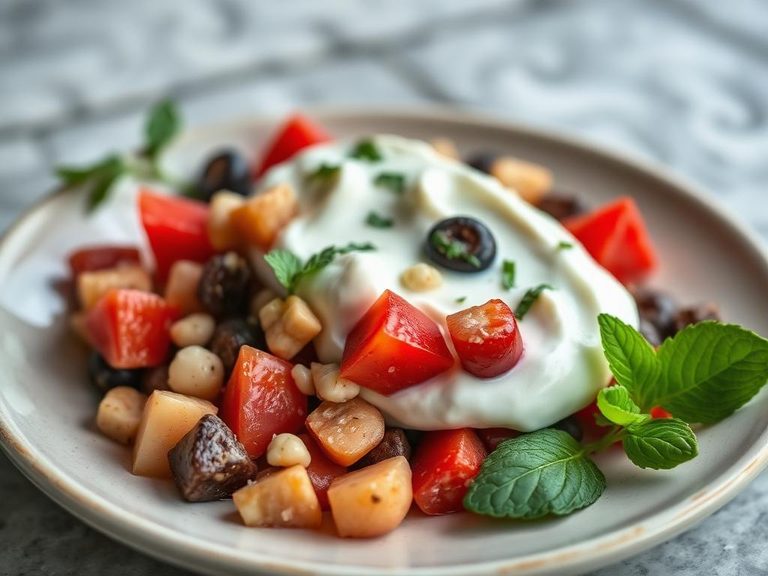
Mixed into plain Greek yogurt is a versatile preparation where various ingredients are stirred into thick, strained yogurt. It typically involves adding fruits, nuts, seeds, honey, or savory elements like herbs and olive oil. This dish is a staple in Mediterranean and Middle Eastern cuisines, often served as a breakfast, snack, or side dish.
🍽️ Nutrition at a glance
This dish is high in protein and can be low in carbs depending on the mix-ins, providing a good source of calcium and probiotics. A typical serving ranges from 150 to 300 calories, depending on the additions.
Nutrition breakdown
| Calories | 200 kcal |
| Protein | 20 g |
| Carbs | 8 g |
| Fat | 10 g |
| Fiber | 0 g |
| Sugar | 7 g |
| Sodium | 60 mg |
| Calcium | 200 mg |
| Potassium | 300 mg |
| Phosphorus | 250 mg |
| Vitamin B12 | 1.5 mcg |
| Riboflavin (B2) | 0.3 mg |
| Probiotics | Live active cultures |
| Selenium | 15 mcg |
| Zinc | 1.5 mg |
Per 1 cup (240 g) · estimated, varies by recipe
💡 What's interesting
Culturally, it's a foundational element in many diets, from Turkish breakfasts to Indian raita, showcasing yogurt's global adaptability. Nutritionally, the live cultures in Greek yogurt support gut health, while mix-ins can tailor it for energy, recovery, or weight management.
🍽️ Related dishes







AI estimate may be inaccurate · Terms