Light orange glaze for roasted vegetables
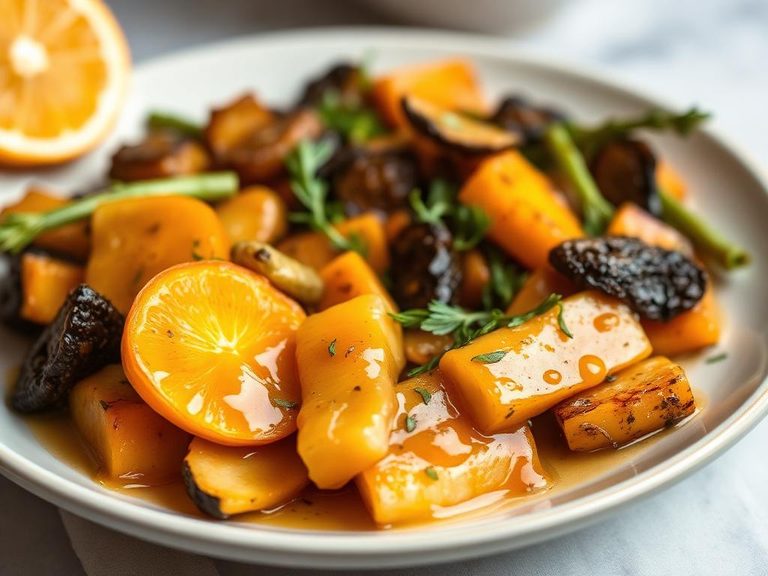
A light orange glaze for roasted vegetables is a tangy, sweet, and savory sauce used to coat and enhance roasted vegetables. It typically features orange juice or zest as the base, combined with ingredients like olive oil, honey or maple syrup, Dijon mustard, garlic, and herbs. This style of glaze is popular in modern Western and Mediterranean-inspired cooking, adding brightness and depth to simple roasted dishes.
🍽️ Nutrition at a glance
This glaze is generally moderate in carbohydrates from the orange juice and sweetener, with minimal fat and protein. It provides a good source of vitamin C from the citrus and may offer small amounts of other antioxidants. A typical serving of the glaze itself (about 2 tablespoons) contains roughly 40-60 calories.
Nutrition breakdown
| Calories | 50 kcal |
| Protein | 0.3 g |
| Carbs | 10 g |
| Fat | 1.2 g |
| Fiber | 0.2 g |
| Sugar | 9 g |
| Sodium | 35 mg |
| Vitamin C | 15 mg |
| Potassium | 45 mg |
| Folate | 5 mcg |
| Vitamin B6 | 0.02 mg |
Per 2 tablespoons (30 g) · estimated, varies by recipe
💡 What's interesting
Culturally, this glaze represents a common technique in many cuisines to balance rich, caramelized roasted flavors with a bright, acidic element. Nutritionally, the citrus component adds a fresh dose of vitamin C, which can help enhance the absorption of iron from plant-based vegetables.