Greek Koulourakia
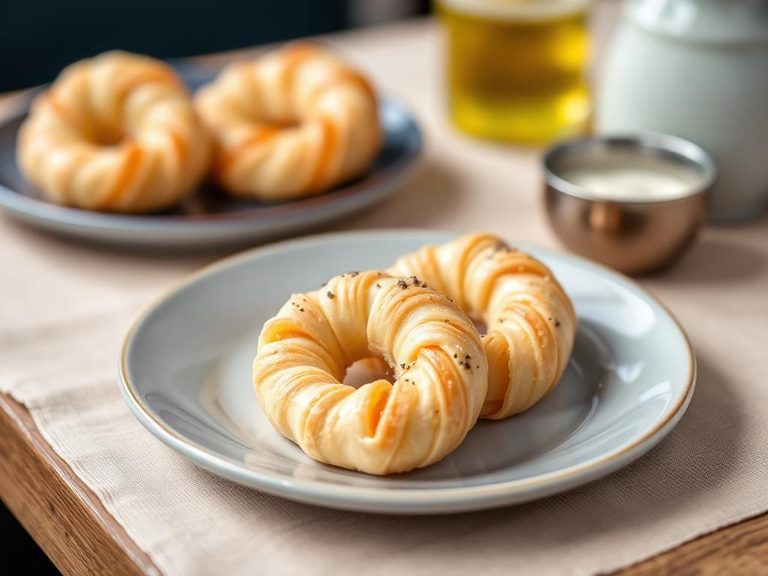
Greek Koulourakia are traditional butter-based Easter cookies, shaped into elegant braids, twists, or rings. They are made from a simple dough of flour, butter, eggs, sugar, and often flavored with vanilla or mastic, and are a staple of Greek holiday celebrations.
🍽️ Nutrition at a glance
These cookies are high in carbohydrates and fat, primarily from flour and butter, with a moderate amount of protein from eggs. A typical serving of two small cookies provides roughly 100-150 calories, along with some calcium and iron.
Nutrition breakdown
| Calories | 180 kcal |
| Protein | 3 g |
| Carbs | 24 g |
| Fat | 8 g |
| Fiber | 0.5 g |
| Sugar | 10 g |
| Sodium | 120 mg |
| Iron | 1.2 mg |
| Calcium | 20 mg |
| Potassium | 45 mg |
| Vitamin B1 (Thiamine) | 0.1 mg |
| Vitamin B2 (Riboflavin) | 0.05 mg |
| Vitamin B3 (Niacin) | 0.8 mg |
| Magnesium | 8 mg |
| Phosphorus | 35 mg |
Per 2 cookies (40 g) · estimated, varies by recipe
💡 What's interesting
Koulourakia are uniquely significant as a symbol of Easter and family tradition in Greece, often shaped by hand in a communal baking ritual. Nutritionally, their firm, crunchy texture is designed to be dunked in coffee or milk, making them a durable and comforting treat.